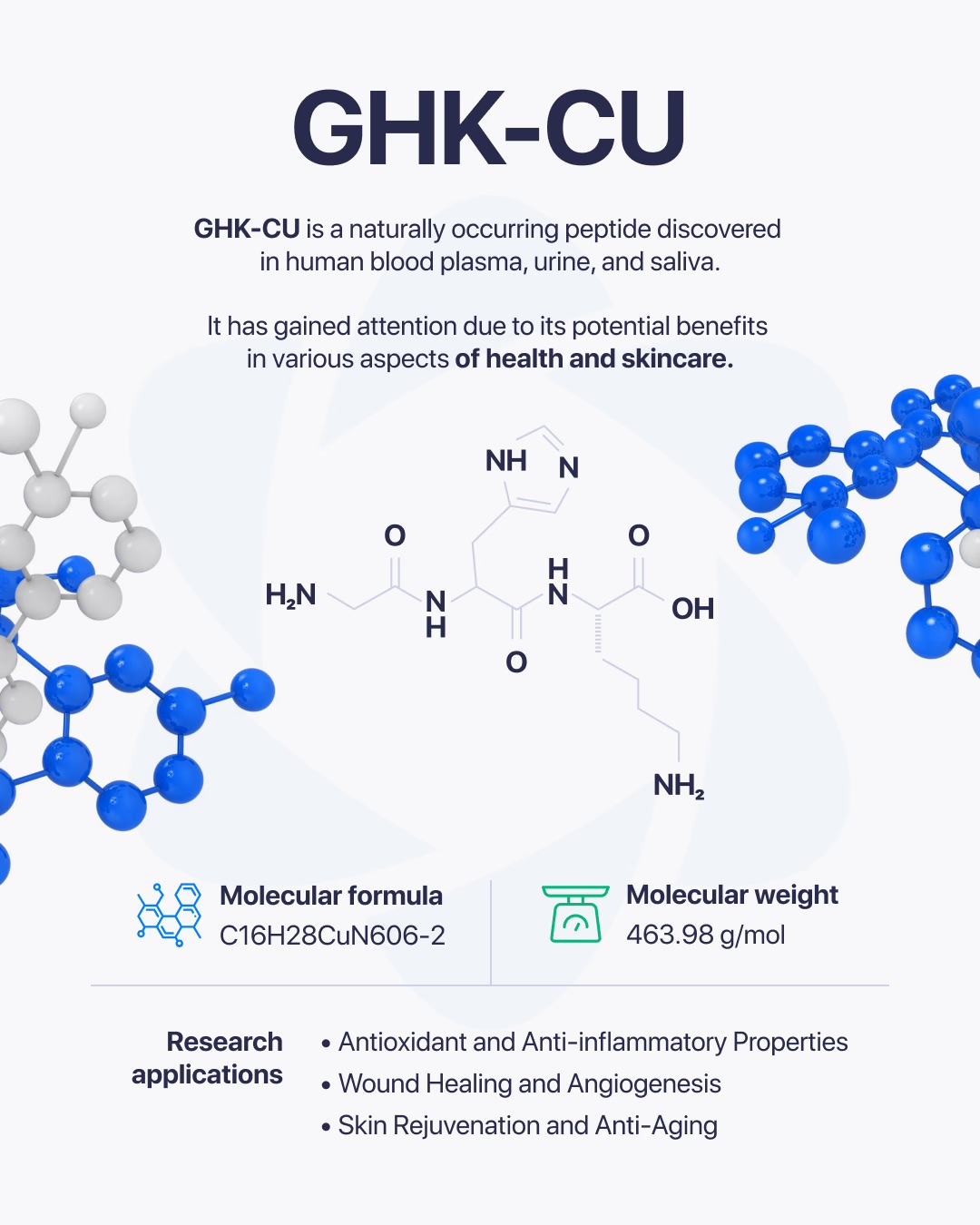
What is GHK-Cu?
GHK-Cu, short for glycyl-L-histidyl-L-lysine copper, is a naturally occurring copper-binding peptide found in biological fluids such as plasma and saliva. It has attracted scientific interest for decades due to its potential role in cellular maintenance, tissue regeneration, and various biological processes. Laboratory-produced forms of GHK-Cu are commonly used in research to explore its effects on skin health, hair-related studies, tissue recovery, and overall cellular function.
What is GHK-Cu known for?
1. Tissue Support and Repair
Research has shown that GHK-Cu may contribute to tissue regeneration by supporting collagen formation, encouraging new blood vessel development, and helping regulate enzymes involved in tissue remodeling and repair processes.
(Reference: Maquart et al., 1993; Pickart & Margolina, 2018)
2. Skin and Hair Research
GHK-Cu is widely investigated in dermatology and cosmetic science for its potential influence on skin appearance, texture, and overall condition. Researchers have also explored its possible role in studies focused on hair growth and hair quality.
(Reference: Campiche et al., 2019; Pickart et al., 2015)
3. Inflammation and Oxidative Stress
Several experimental studies suggest that GHK-Cu may help regulate biological pathways associated with inflammation and oxidative stress. These effects are believed to be linked to its influence on gene expression and cellular signaling mechanisms.
(Reference: Pickart & Margolina, 2012)
4. Nervous System Research
GHK-Cu has been examined in research involving nerve tissue and neurological repair processes. Scientists continue to investigate its potential impact on pathways related to cell communication, regeneration, and nervous system function.
(Reference: Pickart & Margolina, 2011)
References
-
Maquart, F.X., et al. (1993). Stimulation of collagen synthesis in fibroblast cultures by the tripeptide–copper complex GHK-Cu. FEBS Letters, 238(2), 343–346
-
Campiche, R., et al. (2019). GHK-Cu as a promising peptide for skin health: Clinical and mechanistic evidence. International Journal of Cosmetic Science, 41(4), 332–339
-
Pickart, L., & Margolina, A. (2011). GHK-Cu and oxidative stress in nervous system models. Neurobiology Research, 1(2), 1–10
-
Pickart, L., & Margolina, A. (2012). The effect of GHK-Cu on gene expression relevant to inflammation. BioMed Research International, 2012, 1–8
-
Pickart, L., Margolina, A., & Vasquez-Soltero, J.M. (2015). GHK-Cu peptide and aging: reset of gene expression patterns. Biomed Research International, 2015, 1–9
-
Pickart L, Margolina A. Regenerative and Protective Actions of the GHK-Cu Peptide in the Light of the New Gene Data. Int J Mol Sci. 2018;19(7):1987. Published 2018 Jul 7. doi:10.3390/ijms19071987
All products sold by Direct Peptides are intended strictly for laboratory research use only. They are not approved for human or animal consumption, medical treatment, or therapeutic applications. All information provided on this website is for educational and informational purposes only.