What Is Ipamorelin?
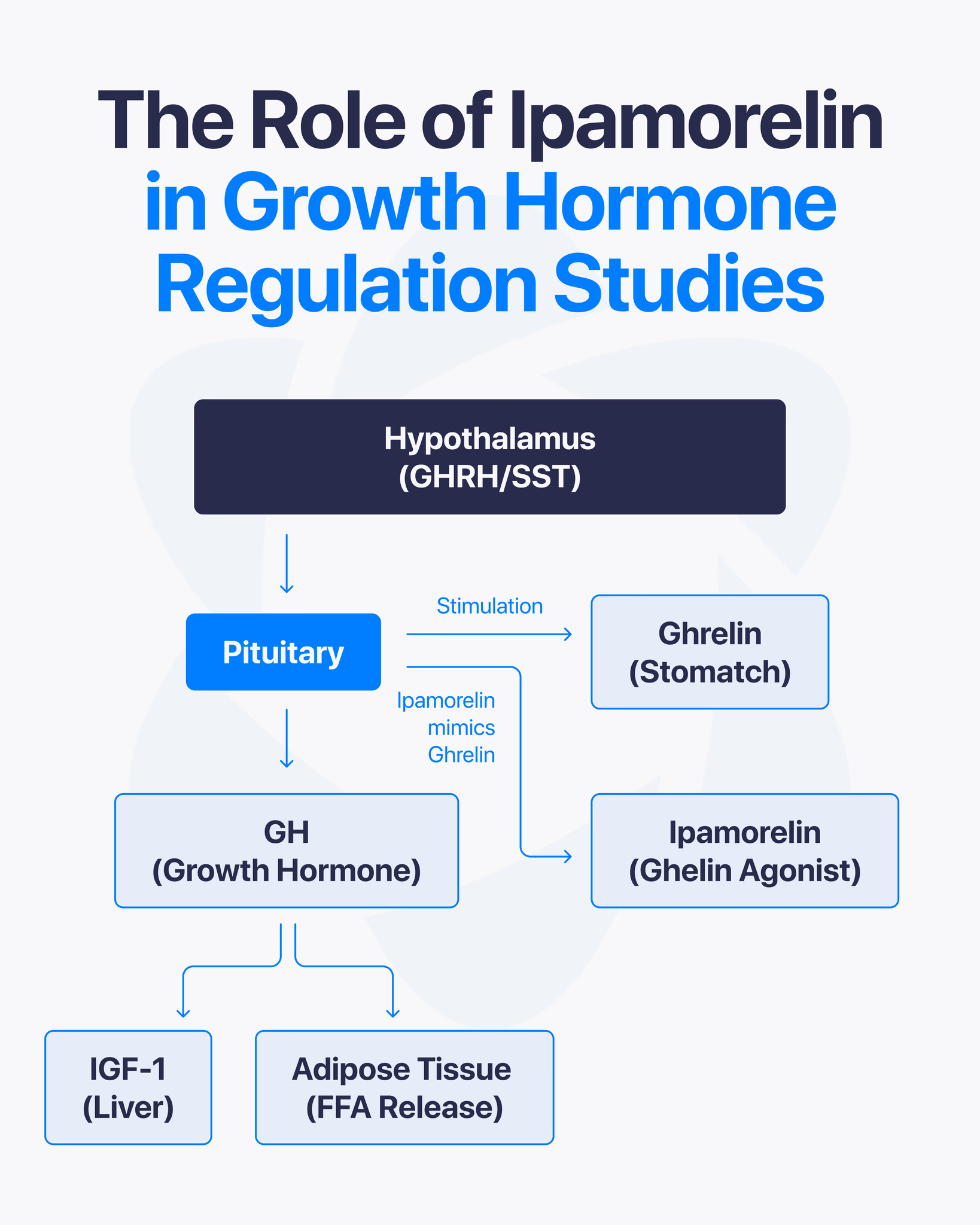
Ipamorelin is a synthetic pentapeptide classified as a growth hormone secretagogue (GHS). It was developed to selectively stimulate growth hormone release by activating pathways that mimic the body’s natural signaling mechanisms. Compared with earlier growth hormone secretagogues, Ipamorelin has attracted research interest because of its high receptor specificity and its relatively limited effects on other hormonal systems.
(Reference: Raun et al., 1998)
How Has Ipamorelin Been Studied?
Research involving Ipamorelin has primarily focused on growth hormone regulation and receptor-mediated signaling. Scientists have examined the peptide across several experimental settings:
-
In vitro studies, investigating interactions with growth hormone secretagogue receptors (GHS-R1a) and evaluating downstream signaling pathways involving calcium mobilization and cAMP activity.
-
Animal research, where growth hormone secretion and related endocrine responses have been monitored following peptide administration.
-
Human studies, designed to assess biomarkers including circulating growth hormone, insulin, cortisol, and other endocrine parameters.
(Reference: Smith et al., 2000)
Key Research Observations
Published studies have identified several consistent characteristics associated with Ipamorelin’s biological activity:
-
Selective Growth Hormone Release – Research indicates that Ipamorelin stimulates growth hormone secretion while producing minimal effects on other pituitary hormones such as ACTH, prolactin, and luteinizing hormone.
-
High Receptor Specificity – The peptide demonstrates strong affinity for the GHS-R1a receptor, contributing to its targeted mechanism of action.
-
Distinct Endocrine Profile – Experimental findings suggest relatively limited influence on cortisol and prolactin levels compared with some earlier growth hormone secretagogues.
-
Targeted Signaling Activity – Laboratory investigations continue to explore how selective receptor activation contributes to downstream endocrine responses and cellular communication pathways.
(Reference: Raun et al., 1998)
Research Applications
In research environments, Ipamorelin is commonly utilized to:
-
Investigate mechanisms governing growth hormone release through GHS receptor signaling pathways.
-
Compare receptor selectivity and biological activity among different growth hormone secretagogues.
-
Examine endocrine regulation while minimizing interference from additional pituitary hormone systems.
-
Study receptor-mediated signaling events associated with growth hormone secretion and hormonal balance.
(Reference: Smith et al., 2000)
References
All products sold by Direct Peptides are intended strictly for laboratory research use only. They are not approved for human or animal consumption, medical treatment, or therapeutic applications. The information provided on this website is for educational and informational purposes only.