What Is Peptide Synthesis?
Peptide synthesis is the laboratory process used to create peptides by linking amino acids together through peptide bonds. These synthetic peptides can replicate naturally occurring biological sequences or be specifically designed for research applications. Because peptides are involved in cellular communication, enzyme regulation, and structural functions, synthetic production enables scientists to investigate their properties under controlled laboratory conditions.
(Reference: Merrifield, 1963)
How Is Peptide Synthesis Performed?
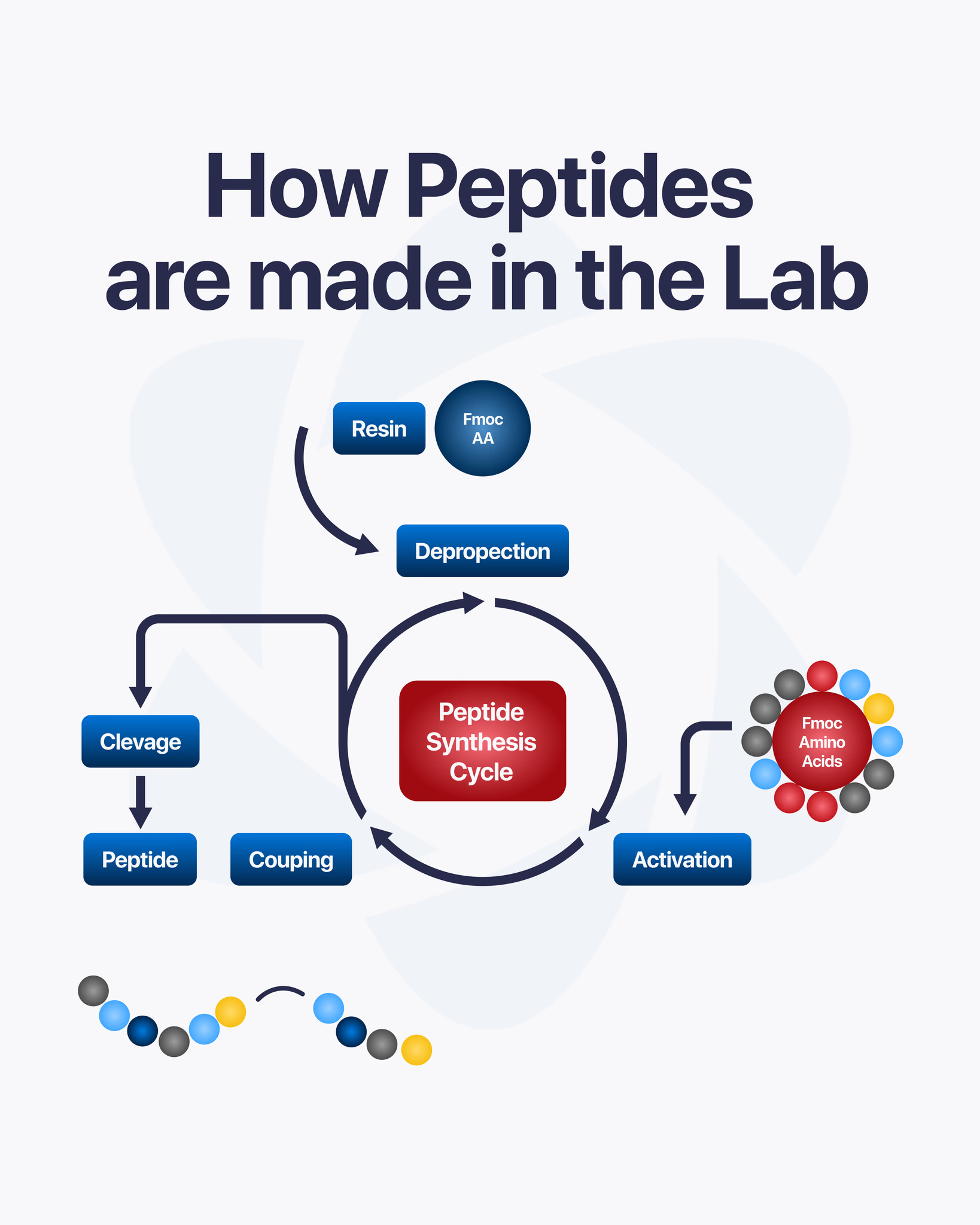
The most widely used method for producing peptides is known as solid-phase peptide synthesis (SPPS). In this process, the initial amino acid is attached to a solid resin support, allowing additional amino acids to be added sequentially until the desired peptide sequence is complete.
Each synthesis cycle generally includes the following steps:
-
Activation – Preparing the incoming amino acid so it can efficiently participate in peptide bond formation.
-
Coupling – Forming a peptide bond between the growing peptide chain and the newly added amino acid.
-
Deprotection – Removing temporary protecting groups to expose reactive sites for the next synthesis cycle.
After the sequence has been assembled, the peptide is cleaved from the resin support and purified before being used in laboratory experiments.
(Reference: Chan & White, 2000)
Key Features of Synthetic Peptide Production
Modern peptide synthesis provides several advantages for scientific research:
-
Precision – Researchers can construct exact amino acid sequences with a high degree of control.
-
Flexibility – Specialized modifications, including non-natural amino acids, fluorescent labels, and other molecular tags, can be incorporated into peptide structures.
-
Scalability – Peptides can be produced in quantities ranging from small research samples to larger amounts suitable for extensive laboratory testing.
-
Quality Verification – Analytical techniques such as high-performance liquid chromatography (HPLC) and mass spectrometry are routinely used to confirm peptide identity and purity.
(Reference: Coin, 2010)
What Researchers Have Observed
Advancements in automated synthesis equipment have significantly improved the efficiency and reproducibility of peptide manufacturing. Modern synthesizers can assemble increasingly complex peptide sequences while minimizing manual intervention.
Improvements in coupling reagents, protecting-group strategies, and resin technologies have also reduced unwanted side reactions and enhanced overall synthesis yields. Despite these advances, certain peptide classes—particularly long sequences and highly hydrophobic peptides—continue to present manufacturing challenges and often require specialized synthesis approaches.
(Reference: Merrifield, 1986)
Research Applications
Synthetic peptide production is commonly used in research to:
-
Develop peptide standards and controls for laboratory assays.
-
Investigate structure-function relationships within biologically active peptides.
-
Create modified peptide analogs for receptor, enzyme, and signaling studies.
-
Support biochemical, pharmaceutical, and molecular biology research programs.
(Reference: Chan & White, 2000)
References
-
Merrifield, R.B. (1963). Solid Phase Peptide Synthesis. I. The Synthesis of a Tetrapeptide. Science, 138(3549), 1059–1060.
-
Chan, W.C., & White, P.D. (2000). Fmoc Solid Phase Peptide Synthesis: A Practical Approach. Oxford University Press.
-
Coin, I. (2010). High-throughput peptide synthesis and screening. Nature Methods, 7, 431–433.
-
Merrifield, R.B. (1986). Solid-phase synthesis: The early years. Angewandte Chemie International Edition, 25(9), 869–878.
All products sold by Direct Peptides are intended strictly for laboratory research use only. They are not approved for human or animal consumption, medical treatment, or therapeutic applications. The information provided on this website is for educational and informational purposes only.