What Are Excipients?
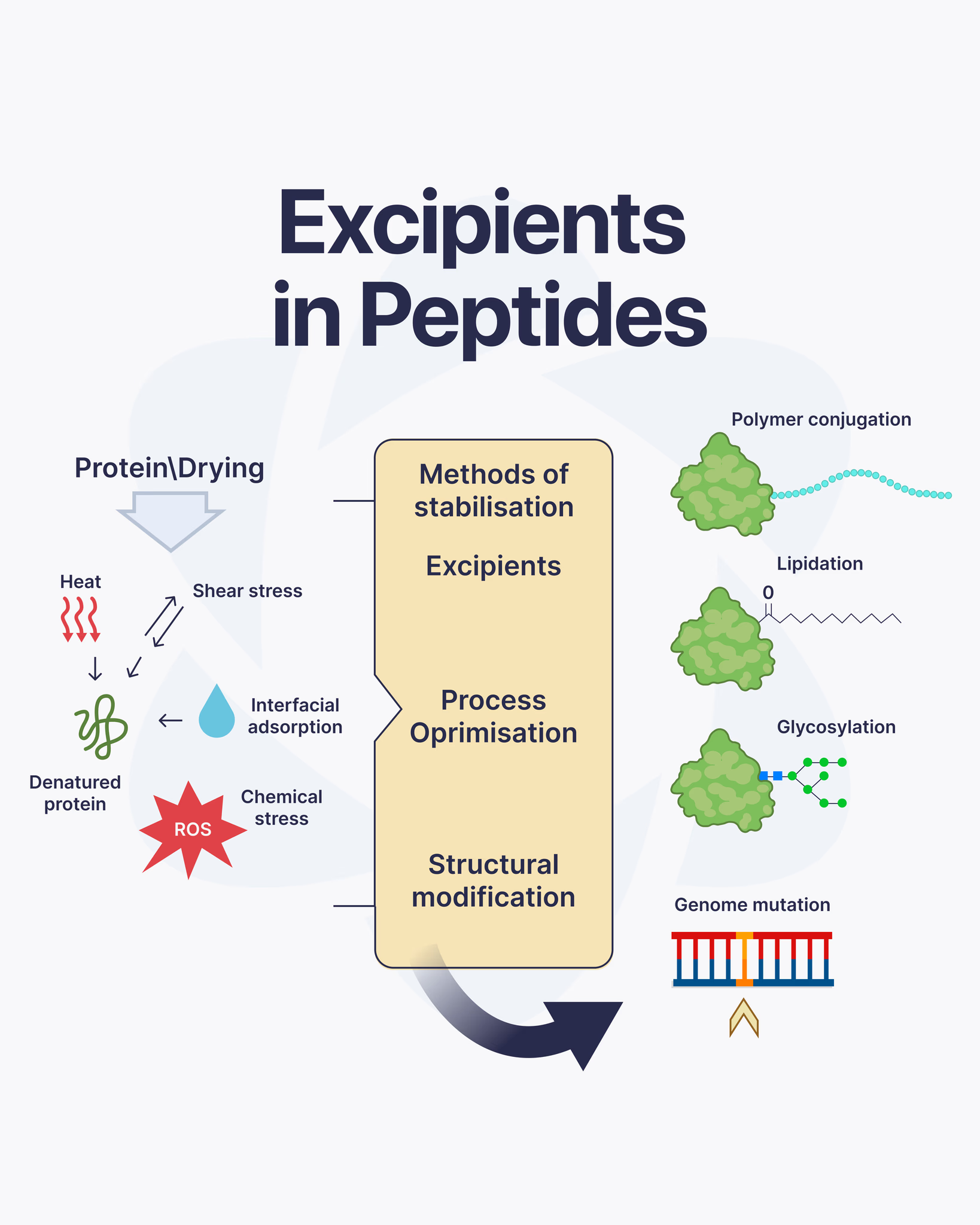
Excipients are inactive ingredients added to a formulation alongside the primary active compound. In peptide research and pharmaceutical development, excipients are used to improve stability, solubility, storage characteristics, and handling properties. Although they do not typically produce direct biological effects, excipients play a critical role in maintaining the integrity and performance of peptide preparations throughout manufacturing, storage, and laboratory use.
(Reference: Rowe et al., 2006)
Why Are Excipients Important for Peptides?
Peptides are sensitive molecules that can be affected by environmental conditions such as temperature fluctuations, moisture exposure, oxidation, and pH changes. Excipients are incorporated into formulations to help minimize these challenges and maintain product quality during storage and research applications.
Common functions of excipients include:
-
Reducing peptide aggregation and precipitation.
-
Protecting against oxidation and degradation.
-
Maintaining an optimal pH environment.
-
Improving solubility and reconstitution characteristics.
-
Supporting freeze-drying and long-term storage stability.
(Reference: Maa & Hsu, 1996)
Common Types of Excipients Used in Peptide Research
Several excipients are commonly used in peptide formulations because of their well-established stabilization properties:
-
Mannitol and Trehalose – Frequently used as cryoprotectants and bulking agents during lyophilization to help preserve peptide structure.
-
Glycine and Arginine – Often included to improve solubility and reduce aggregation in solution.
-
Buffer Systems – Ingredients such as phosphate and citrate help maintain pH stability during storage and experimentation.
-
Polysorbates – Surfactants such as Tween 20 and Tween 80 help prevent adsorption to surfaces and reduce aggregation.
(Reference: Wang, 2000)
Research Applications of Excipients
Although excipients are not typically the primary focus of peptide research, they are essential components of many laboratory formulations. Their inclusion helps ensure that experimental outcomes reflect the properties of the peptide itself rather than changes caused by degradation or instability.
Researchers commonly use excipients to:
-
Maintain peptide stability during storage and transport.
-
Improve reproducibility across repeated laboratory experiments.
-
Support cell culture and analytical testing workflows.
-
Facilitate freeze-drying and reconstitution procedures.
-
Enhance consistency in formulation development studies.
(Reference: Carpenter et al., 2002)
References
-
Rowe, R.C., Sheskey, P.J., & Quinn, M.E. (2006). Handbook of Pharmaceutical Excipients. Pharmaceutical Press.
-
Maa, Y.F., & Hsu, C.C. (1996). Protein denaturation by freeze-drying: stabilization by excipients. Journal of Pharmaceutical Sciences, 85(10), 1050–1056.
-
Wang, W. (2000). Lyophilization and development of solid protein pharmaceuticals. International Journal of Pharmaceutics, 203(1–2), 1–60.
-
Carpenter, J.F., et al. (2002). Rational design of stable protein formulations: theory and practice. Journal of Controlled Release, 78(1–3), 1–9.
All products sold by Direct Peptides are intended strictly for laboratory research use only. They are not approved for human or animal consumption, medical treatment, or therapeutic applications. The information provided on this website is for educational and informational purposes only.