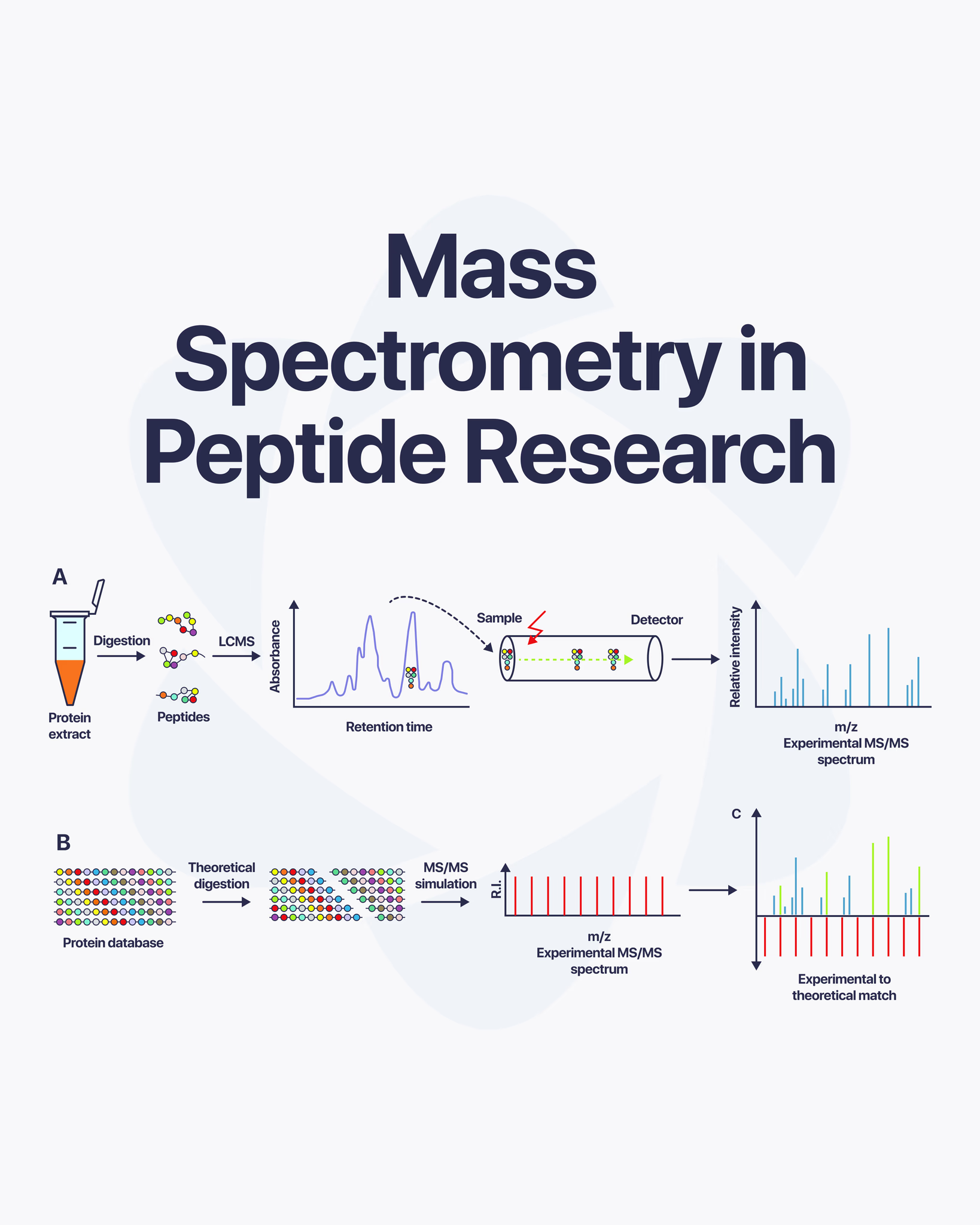
What Is Mass Spectrometry?
Mass spectrometry (MS) is an analytical technique used to identify and characterize molecules by measuring their mass-to-charge ratio. By converting compounds into charged ions and separating them according to their physical properties, MS enables researchers to determine molecular weight, detect structural modifications, and analyze complex biological samples with exceptional sensitivity and accuracy.
(Reference: Aebersold & Mann, 2003)
Why Is Mass Spectrometry Important in Peptide Research?
Peptides are complex molecules that can vary in sequence, purity, and chemical modifications. Mass spectrometry has become one of the most valuable tools in peptide research because it provides detailed molecular information that cannot be obtained through visual inspection alone. Researchers commonly use MS to:
-
Confirm peptide identity through precise molecular weight analysis.
-
Detect synthetic or naturally occurring peptide modifications.
-
Evaluate purity and identify impurities or synthesis by-products.
-
Determine amino acid sequences through fragmentation analysis.
(Reference: Yates et al., 2009)
Common Mass Spectrometry Techniques
Several MS methods are widely used in peptide and protein analysis:
-
MALDI-TOF (Matrix-Assisted Laser Desorption/Ionization–Time of Flight) – Frequently used for rapid peptide mass determination and sample screening.
-
Electrospray Ionization (ESI) – Generates ions directly from solution and is commonly paired with liquid chromatography systems.
-
LC-MS/MS (Liquid Chromatography–Tandem Mass Spectrometry) – Combines chromatographic separation with fragmentation analysis for detailed structural characterization and sequencing.
-
High-Resolution MS – Provides highly accurate mass measurements, enabling identification of subtle molecular differences and modifications.
(Reference: Domon & Aebersold, 2006)
Research Applications
Mass spectrometry plays a central role in modern peptide science and is commonly used to:
-
Verify synthetic peptide batches for identity and purity.
-
Study peptide-protein interactions and binding partners.
-
Profile naturally occurring peptides within biological samples.
-
Characterize post-translational modifications and sequence variants.
-
Support quality control workflows in peptide synthesis and purification.
(Reference: Aebersold & Mann, 2016)
Advantages and Limitations
Advantages
-
Exceptional sensitivity for detecting low-abundance compounds.
-
Accurate molecular weight determination.
-
Ability to identify structural modifications and impurities.
Limitations
-
Requires specialized instrumentation and technical expertise.
-
Sample preparation can influence analytical outcomes.
-
Complex biological samples often require additional separation techniques before analysis.
(Reference: Domon & Aebersold, 2006)
References
-
Aebersold, R., & Mann, M. (2003). Mass spectrometry-based proteomics. Nature, 422, 198–207.
-
Yates, J.R., et al. (2009). Proteomics by mass spectrometry: approaches, advances, and applications. Annual Review of Biochemistry, 78, 243–272.
-
Domon, B., & Aebersold, R. (2006). Mass spectrometry and protein analysis. Science, 312(5771), 212–217.
-
Aebersold, R., & Mann, M. (2016). Mass-spectrometric exploration of proteome structure and function. Nature, 537, 347–355.
All products sold by Direct Peptides are strictly for laboratory research purposes only. They are not intended for human or animal consumption, medical, or therapeutic use. The information provided on this website is for educational and informational purposes only.