Peptides are short chains of amino acids that act as biological messengers, signaling your cells to perform specific functions like releasing growth hormone, repairing tissue, or regulating metabolism. This peptides for beginners guide covers everything you need to start safely: how to choose the right compound, calculate your dose, prepare and inject correctly, and track your results. The field spans applications from muscle recovery and fat metabolism to anti-aging and cellular repair. Getting the fundamentals right from day one separates people who see real results from those who create unnecessary risk.
What peptide is right for your wellness goals?
Choosing the right peptide starts with identifying one clear goal. Fitness enthusiasts often pursue muscle growth, recovery, or fat loss. Others focus on sleep quality, joint repair, or longevity. Each goal maps to a distinct peptide category, and starting with the wrong one wastes time and clouds your data.
The main categories relevant to beginners are:
- Metabolic peptides target fat oxidation and insulin sensitivity. GLP-class compounds fall here, and Synthrolab’s metabolic modulation category covers this range.
- Recovery and repair peptides accelerate tissue healing. BPC-157 is the most studied entry point. BPC-157 has a well-documented safety profile and is commonly recommended for beginners.
- Growth hormone secretagogues stimulate natural GH release. CJC-1295 NO DAC paired with Ipamorelin is a classic beginner protocol in this class.
- Anti-aging and longevity peptides target cellular repair and mitochondrial function. Synthrolab’s lifespan extension category covers these compounds.
The single most important rule for beginners: start with one peptide. Introducing multiple peptides simultaneously, sometimes called “stacking syndrome,” makes it impossible to know which compound caused which effect. One peptide at a time gives you clean, readable feedback on your physiology.
Regulatory status also matters. Most research peptides are unapproved by the FDA and sold strictly for research purposes. That means purity verification falls on you. Always confirm third-party certificate of analysis (COA) data before using any compound.
How do you calculate your starting peptide dose?
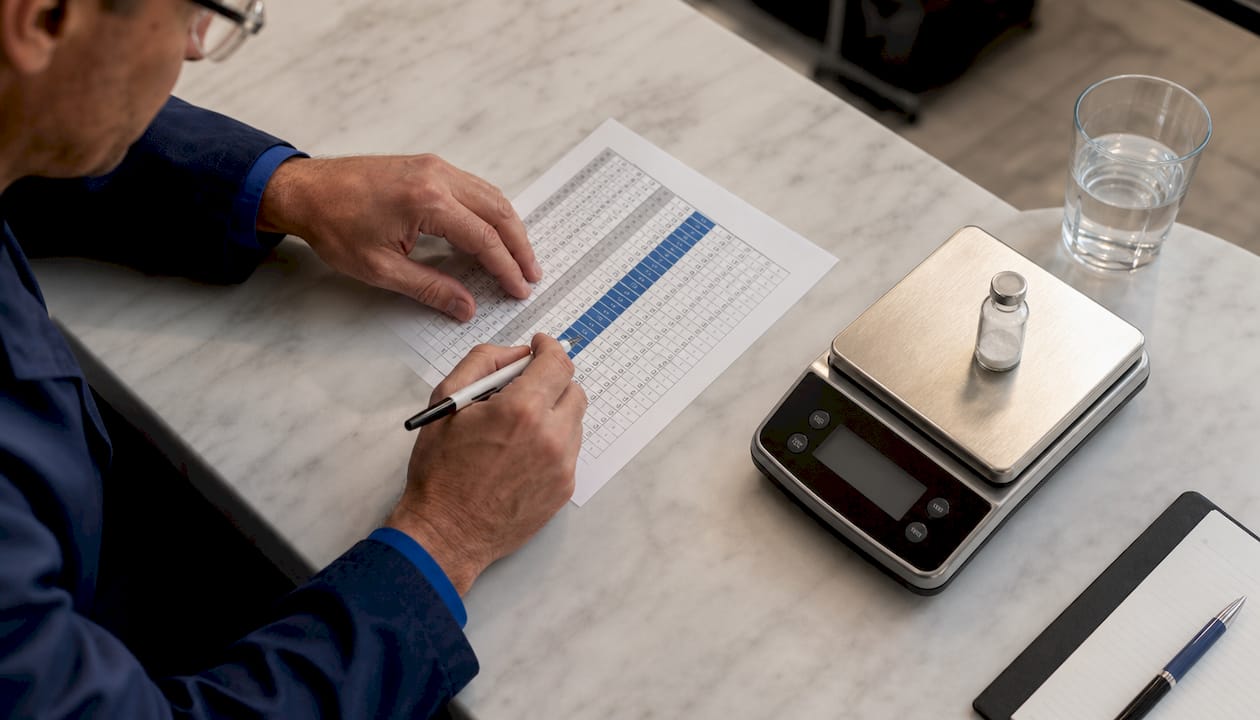
Dosage math is where most beginners make dangerous mistakes. The most common error is confusing milligrams (mg) with micrograms (mcg). One milligram equals 1,000 micrograms. Misreading a label and injecting in mg when the protocol calls for mcg produces a 1,000x overdose risk. Write the unit on every label you create.
The golden formula for peptide dosing is straightforward:
| Step |
Formula |
Example |
| Calculate concentration |
Total peptide (mg) ÷ BAC water added (mL) |
5mg ÷ 2mL = 2.5mg/mL (2,500mcg/mL) |
| Convert to mcg/unit |
Concentration (mcg/mL) ÷ 100 units per mL |
2,500 ÷ 100 = 25mcg per unit |
| Draw your dose |
Desired dose (mcg) ÷ mcg per unit |
250mcg ÷ 25 = 10 units on syringe |
This dosage calculation method applies to every injectable peptide. Master it once and it works across all compounds.
The “start low, go slow” protocol
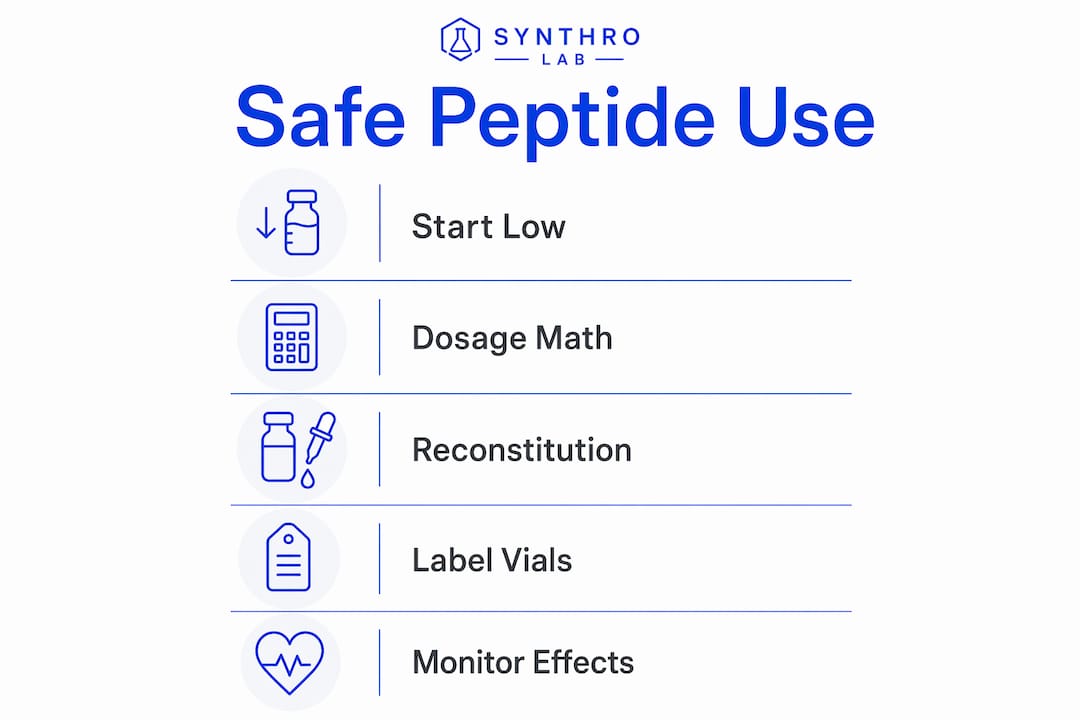
Standard GH secretagogue protocols begin at 200–300 mcg once daily, with adjustments made only after 1–2 weeks at that dose. This reflects the “start low, go slow” philosophy that practitioners universally recommend. The therapeutic index of a peptide defines its safe dosing margin. Staying well inside that margin during the first weeks protects you from avoidable side effects while your body establishes a baseline response.
Pro Tip: Label every vial with the peptide name, concentration in mcg/mL, reconstitution date, and expiration date. A 30-second labeling habit prevents a potentially serious dosing error weeks later.
How do you prepare and inject peptides safely at home?
Proper preparation is non-negotiable. A contaminated vial or incorrect solvent can cause infection, degraded peptide, or both.
- Gather your supplies. You need bacteriostatic water (BAC water), insulin syringes (typically 29–31 gauge), alcohol swabs, and the lyophilized peptide vial.
- Reconstitute with BAC water only. Bacteriostatic water containing 0.9% benzyl alcohol prevents bacterial growth in the solution. Plain sterile water has no preservative and degrades quickly. Inject the BAC water slowly down the side of the vial. Never shake the vial. Swirl gently until the powder dissolves.
- Store correctly. Refrigerate reconstituted peptides at 2–8°C. Keep vials upright, protected from light, and away from the rubber stopper to reduce contamination risk. Properly stored peptides maintain potency for up to 28 days. Never freeze a reconstituted vial.
- Inject subcutaneously. Pinch a small fold of skin at the injection site, typically the lower abdomen or outer thigh. Insert the needle at a 45-degree angle and inject slowly. Rotate sites with each injection to prevent tissue irritation.
- Watch for adverse reactions. Redness, swelling beyond a small welt, or systemic symptoms like nausea or dizziness warrant stopping and consulting a healthcare provider.
Sterility is the single most controllable variable in peptide safety. Wipe every vial top and your injection site with a fresh alcohol swab before every use. Let the alcohol dry fully before inserting the needle. A 20-second wait prevents contamination that no refrigerator can fix after the fact.
Pro Tip: Draw air into the syringe equal to your dose volume before inserting into the vial. This creates positive pressure that makes drawing the solution easier and reduces needle trauma to the stopper.
How do you monitor your response and adjust responsibly?
Tracking your response is not optional. Individual responses can vary by 30% or more from population averages. What works at 200mcg for one person may be too much or too little for another.
Maintain a daily log that records:
- Sleep quality and duration. Many peptides, especially GH secretagogues, affect sleep architecture noticeably.
- Energy and mood. Subtle shifts in energy often appear before physical changes do.
- Appetite changes. Metabolic peptides frequently alter hunger signals within the first week.
- Injection site response. Note any redness, swelling, or bruising and whether it resolves within 24 hours.
- Any systemic symptoms. Headache, water retention, or tingling are common at higher doses and usually dose-dependent.
Get baseline laboratory bloodwork before you start. IGF-1 levels, a metabolic panel, and HbA1c give you objective reference points. Without them, you cannot distinguish a real peptide effect from a placebo response or a coincidental change.
Adverse side effects are dose-dependent and rarely appear at physiological low doses. If side effects emerge, reduce the dose before stopping entirely. Fast dose escalation is the most common cause of avoidable problems. Wait 4–12 weeks at your starting dose before considering any change. Adding a second peptide before you understand your baseline response to the first one creates a confounding variable that makes troubleshooting nearly impossible.
Key Takeaways
Safe, effective peptide use requires one compound at a time, precise dosage math, proper reconstitution with bacteriostatic water, correct storage, and consistent daily tracking before any protocol adjustment.
| Point |
Details |
| Start with one peptide |
Avoid stacking until you have 4–12 weeks of clear baseline data from a single compound. |
| Master the dosage formula |
Concentration equals total peptide in mg divided by BAC water in mL; always verify units before drawing. |
| Use bacteriostatic water |
BAC water with 0.9% benzyl alcohol prevents bacterial growth and extends potency up to 28 days. |
| Store and label every vial |
Refrigerate at 2–8°C, protect from light, and label with name, concentration, and reconstitution date. |
| Track daily and test baseline |
Log sleep, energy, appetite, and injection site response; get IGF-1 and metabolic bloodwork before starting. |
What I’ve learned from watching beginners get this wrong
Most beginners underestimate how much the math matters. They read a protocol, feel confident, and then reconstitute with the wrong volume or misread mcg as mg. The result is either a sub-therapeutic dose that produces nothing, or a dangerously high one. Neither outcome is useful, and both are entirely preventable.
The other pattern I see consistently is impatience. Someone runs a peptide for two weeks, feels nothing dramatic, and immediately adds a second compound or doubles the dose. They have now made it impossible to know what caused what. Peptides work on biological timescales, not supplement timescales. Four weeks is the minimum meaningful window for most compounds, and twelve weeks gives you genuinely reliable data.
The mindset that actually works is data-driven patience. You are running an experiment on yourself. Good experiments change one variable at a time, record everything, and wait long enough for a real signal to emerge. That is not a personality type. It is a discipline anyone can practice. The people who get the most from peptide protocols are not the ones who know the most compounds. They are the ones who know their own physiology best, because they tracked it carefully from the start.
— Mitch
Synthrolab’s research-grade peptides for your first protocol
Synthrolab supplies research-grade peptides with verified purity, backed by certificates of analysis from third-party testing. For beginners, that verification is not a nice-to-have. It is the difference between a clean experiment and an unknown variable. Synthrolab’s product categories cover metabolic modulation, cellular regeneration, anabolic signaling, and longevity compounds, so you can match your starting compound to your actual goal. Browse the full peptide catalog to find single-compound options with documented purity before committing to a protocol.
FAQ
What are peptides and how do they work?
Peptides are short chains of amino acids that act as signaling molecules, instructing cells to perform specific functions like releasing hormones, repairing tissue, or regulating metabolism. They work by binding to receptors on cell surfaces and triggering targeted biological responses.
How long before peptides produce noticeable effects?
Most beginners notice initial changes in sleep quality or energy within 1–2 weeks, but meaningful physical changes typically require 4–12 weeks at a consistent dose. Tracking daily logs helps distinguish real effects from normal variation.
What is the safest peptide for a beginner to start with?
BPC-157 is widely cited as a beginner-friendly starting point due to its established safety profile and tissue repair applications. Always confirm third-party purity testing before use, since most research peptides are not FDA-approved.
Can you take multiple peptides at the same time?
Beginners should avoid stacking peptides until they have a clear baseline response from a single compound over at least 4–12 weeks. Running multiple peptides simultaneously makes it impossible to identify which compound is causing which effect.
What happens if you get the dose wrong?
Confusing mg with mcg is the most dangerous dosing error, creating a potential 1,000x overdose. Always calculate concentration using the standard formula, label every vial clearly, and start at the lowest published research dose to stay within the safe therapeutic index.
Recommended
 21+ verification