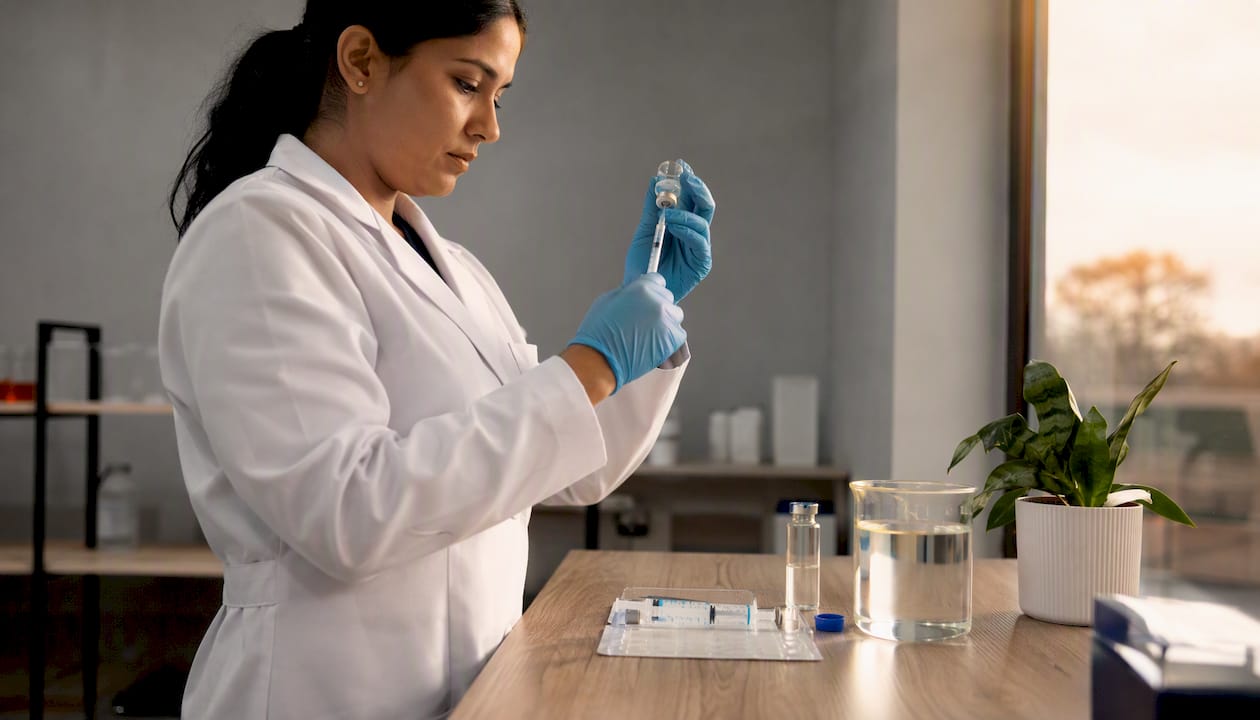
Bacto water, the shorthand researchers use for bacteriostatic water for injection (BWFI), is sterile water containing 0.9% benzyl alcohol as a preservative. That single ingredient is what separates it from plain sterile water and makes it the standard solvent for multi-dose peptide reconstitution in research workflows. If you need it now, the short answer is this: buy USP-grade, COA-backed bacteriostatic water from a traceable U.S. supplier. Synthrolab’s BAC Water 10 mL meets that standard.
- What it is: Sterile Water for Injection + 0.9% (9 mg/mL) benzyl alcohol, sterile-filtered, non-pyrogenic
- Primary use: Multi-dose reconstitution of research peptides; lab dilution workflows requiring repeated vial access
- Who should not use it: Neonates and benzyl-alcohol-sensitive populations (FDA/DailyMed contraindication)
- What to buy: USP-designated, lot-matched COA, sterility and endotoxin tested
Table of Contents
What is bacto water, exactly?
Bacteriostatic Water for Injection USP is a sterile, non-pyrogenic aqueous solution containing 0.9% (9 mg/mL) benzyl alcohol. The United States Pharmacopeia (USP) validates that concentration as effective for inhibiting microbial growth without meaningfully altering pH or interfering with most dissolved compounds. The solution carries a slightly acidic pH of around 5.7, which is close enough to neutral that the vast majority of common research peptides dissolve cleanly.
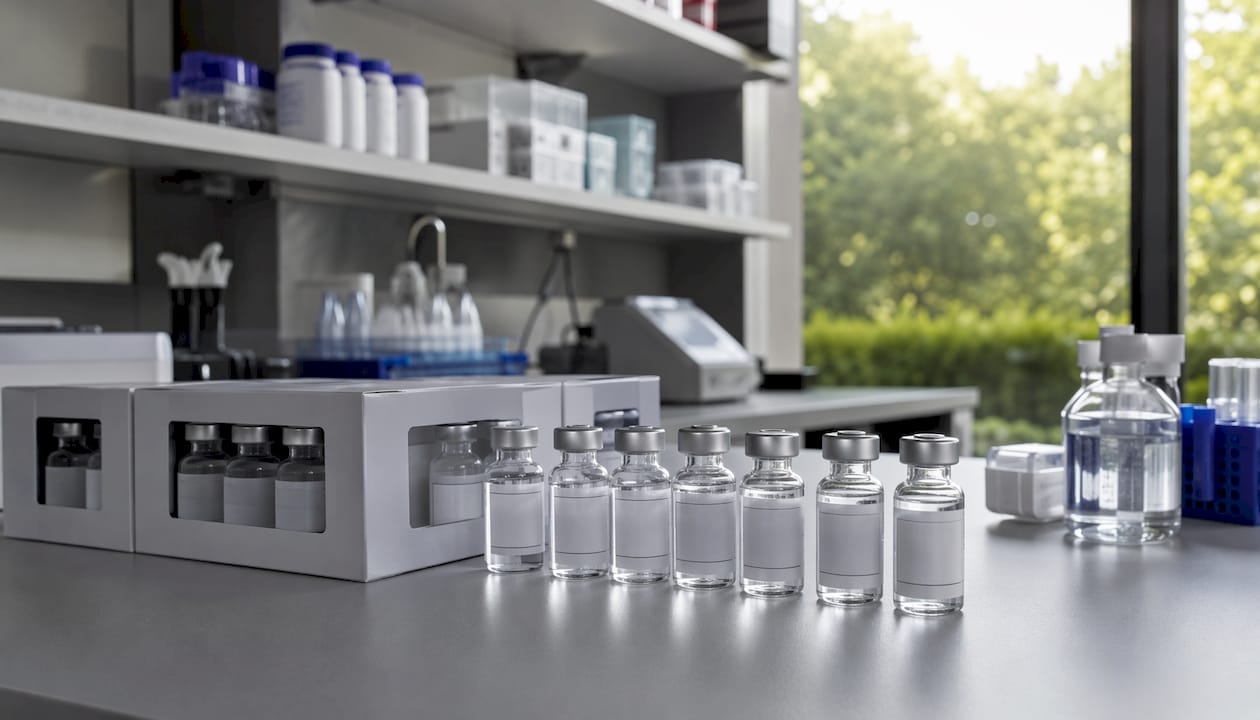
The “bacteriostatic” label is precise: benzyl alcohol disrupts bacterial cell membranes at this concentration, preventing colonization after the vial is punctured. It does not kill bacteria already present, and it does not sterilize the solution after each use. That distinction matters operationally.
Manufacturing follows strict aseptic conditions. Reputable suppliers sterile-filter through 0.22 µm membranes and validate sterility per USP <71>. The finished product is clear, colorless, and free of particulates.
What to look for on the label:
- “Bacteriostatic Water for Injection USP” designation
- Benzyl alcohol concentration stated as 0.9% or 9 mg/mL
- “Sterile” and “non-pyrogenic” statements
- Lot number and expiration date
- Manufacturer name and contact information
When to use it and when to reach for something else
The primary use case is multi-dose peptide reconstitution. When you dissolve a lyophilized peptide into bacto water, the benzyl alcohol preservative protects the solution from bacterial proliferation between withdrawals. Peptide solutions are nutrient-rich environments where even a single contaminant can degrade an entire vial over time. The 28-day multi-use window that CDC injection safety guidance references depends entirely on that preservative being present and the vial being handled aseptically.
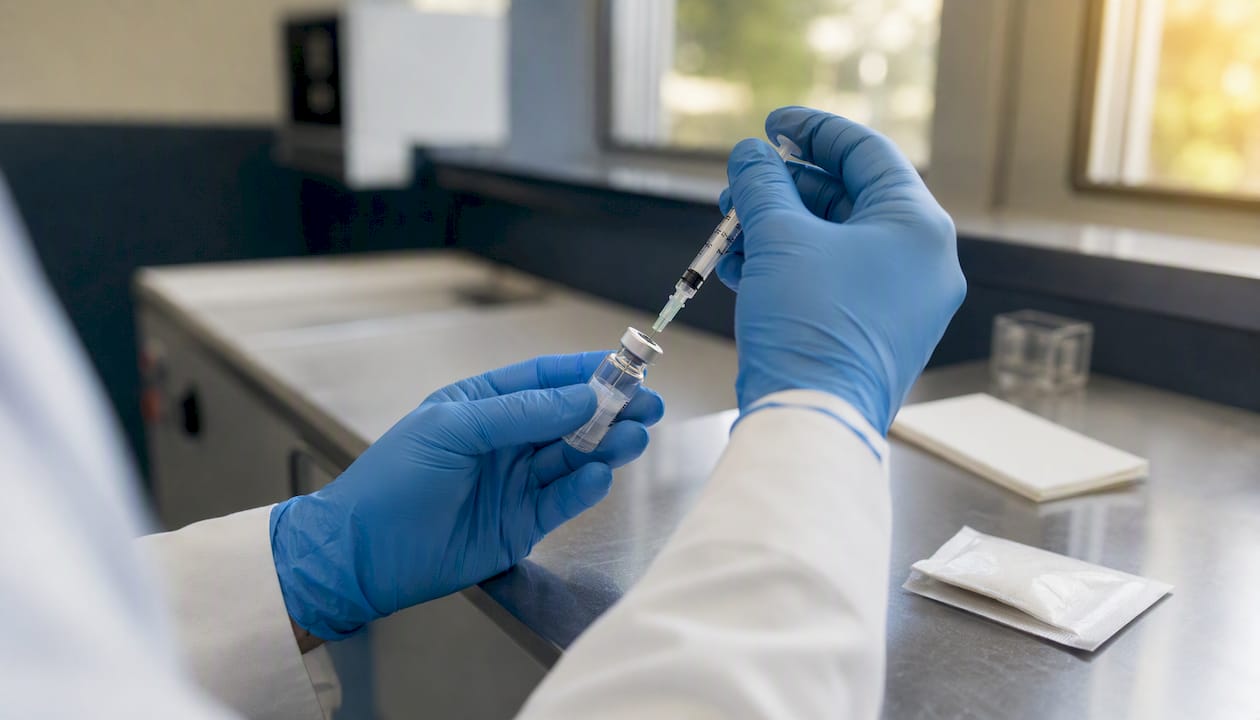
Most common research peptides work well with bacteriostatic water including BPC-157, TB-500, semaglutide, tirzepatide, CJC-1295, Ipamorelin, Epithalon, Semax, Selank, NAD+, Tesamorelin, PT-141, and Sermorelin A specific subset requires acetic acid water instead. GHK-Cu, IGF-1 LR3, AOD-9604, GHRP-2, GHRP-6, and Melanotan 1 and 2 won’t dissolve at near-neutral pH. If your reconstituted solution stays cloudy after adding bacto water, that is the signal to switch.
When bacteriostatic water is the wrong choice:
- Neonates: FDA/DailyMed labeling explicitly contraindicates benzyl alcohol use in newborns due to toxicity risk
- Single-use protocols: Where a single-use sterile water for injection is specified, bacteriostatic water is not a substitute
- Benzyl-alcohol-sensitive peptides: A small number of compounds show compatibility issues with benzyl alcohol over extended storage
- Saline confusion: Normal saline (0.9% sodium chloride) is for rehydration and electrolyte balance, not peptide reconstitution
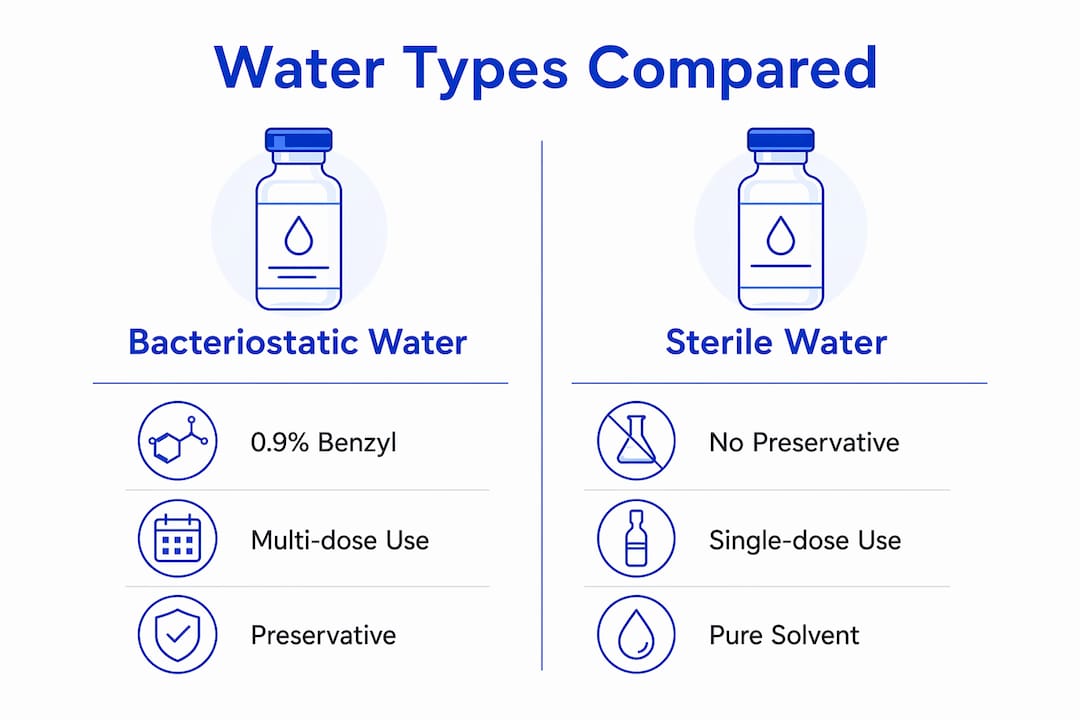
| Feature |
Bacteriostatic Water |
Sterile Water for Injection |
Normal Saline |
| Preservative |
0.9% benzyl alcohol |
None |
None |
| Multi-dose use |
Yes, up to 28 days |
Single use only |
Not for reconstitution |
| pH |
~5.7 |
— |
— |
| Best for |
Most research peptides |
Single-injection protocols |
Rehydration, electrolytes |
Safety warnings and U.S. regulatory status
Bacteriostatic Water for Injection USP is a pharmaceutical-grade product with an official FDA/DailyMed label. In the U.S., it is typically sold under research-use labeling when supplied by laboratory vendors, and under prescription labeling when dispensed through pharmacy channels. Research suppliers label their product accordingly; buyers should confirm the intended use context before ordering.
The benzyl alcohol contraindication for neonates is the most clinically significant safety warning on the DailyMed label. Beyond that, anyone with a known sensitivity to benzyl alcohol should not use this product. The preservative reduces contamination risk but does not eliminate the need for sterile technique on every vial entry.
Practical safety requirements:
- Use a new sterile needle and syringe for every vial puncture
- Swab the rubber septum with 70% isopropyl alcohol before each entry
- Inspect the solution visually before each use: discard if cloudy, particulate, or off-color
- Never use a vial past its expiration date or beyond 28 days after first puncture
- Store per manufacturer guidance; do not use if packaging integrity is compromised
Lot numbers and manufacturer traceability are not optional details. They are the mechanism by which a contamination event or out-of-spec batch can be traced and removed from use. Always retain lot documentation.
How to store and handle opened vials correctly
Proper storage is where most handling errors occur. The rules are straightforward, but skipping any one of them shortens the safe use window or introduces contamination risk.
- Unopened vials: Store at controlled room temperature, away from direct light and heat. Manufacturer expiration dates on unopened vials typically run several years from production. Check the date on every vial before use.
- After first puncture: Refrigerate immediately at 2–8°C (36–46°F). The use window begins at first puncture and is commonly recommended to be limited to about a month, not at the date of purchase.
- Septum preparation: Swab with 70% isopropyl alcohol and wait at least 30 seconds for the alcohol to dry completely before inserting the needle. Puncturing while the septum is still wet risks drawing alcohol into the vial.
- Needle and syringe discipline: Use a new sterile needle and syringe for every single entry. The CDC’s injection safety guidance is unambiguous on this point.
- Reconstitution technique: Inject slowly down the inside glass wall of the peptide vial, not directly onto the lyophilized cake. Gently swirl; never shake. Shaking causes foaming and can damage peptide structure.
- Do not freeze: Benzyl alcohol can separate at freezing temperatures, and the rubber stopper degrades. If you need to extend reconstituted peptide storage beyond 28 days, freeze the peptide solution in single-dose aliquots at -20°C, not the BAC water vial itself.
Discard triggers: cloudiness, visible particulates, unusual odor, expired date, or more than 28 days since first puncture. No exceptions.
How to choose a reliable U.S. supplier and what to expect at checkout
The difference between research-grade bacteriostatic water and generic repackaged stock comes down to documentation. A supplier that publishes lot-matched COAs and provides endotoxin results is not charging a premium for marketing. They are charging for the testing that protects your compounds and your data.
Supplier checklist before you order:
- USP designation on the label
- Lot-matched Certificate of Analysis (COA) available before or at purchase
- Sterility testing per USP <71> stated on the COA
- Benzyl alcohol concentration confirmed by assay (GC or HPLC)
- Endotoxin/LAL results where relevant to your protocol
- Intact, tamper-evident packaging with lot number and expiry printed on the vial
Ordering considerations: Vials commonly come in 10 mL, 20 mL, and 30 mL sizes. For most peptide reconstitution workflows, 10 mL vials are practical because they limit the number of punctures per vial and reduce the risk of contamination over the 28-day window. Multi-pack pricing typically reduces per-vial cost. Batch-tested products from verified suppliers may carry a slightly longer lead time than generic stock, but the documentation is worth it.
Typical U.S. pricing for research-grade bacteriostatic water runs in the range of a few dollars per 10 mL vial from established lab suppliers, with multi-pack orders reducing the per-unit cost. Shipping from domestic U.S. lab suppliers generally arrives within 2–5 business days for standard orders.
Procurement steps: Request the COA before completing your order. Confirm the lot number on the COA matches the lot number on the vial when your shipment arrives. Inspect packaging integrity on receipt. Store per guidelines immediately.
Pro Tip: Prefer suppliers that publish COAs online with lot traceability rather than providing them only on request. If a supplier cannot produce a lot-matched COA, that is a hard stop. Repackaged generic stock with no batch testing introduces uncontrolled variables into your experiments.
Why COAs and batch testing protect your research
A Certificate of Analysis is not a formality. It is the document that tells you whether the vial in your hand matches the specification on the label. For bacteriostatic water, a complete COA covers benzyl alcohol concentration by GC or HPLC assay, pH, sterility per USP <71>, and endotoxin by LAL assay.
Third-party lab testing distinguishes research-grade BAC water from generic stock. An independent assay confirming 0.9% benzyl alcohol means the preservative is actually present at the concentration that inhibits bacterial growth. An out-of-spec concentration, even slightly low, reduces antimicrobial effectiveness and leaves reconstituted peptide solutions vulnerable. Endotoxin contamination is a separate risk: even a sterile vial can carry pyrogens that interfere with cell-based assays or in vivo protocols.
What to read in a COA:
- Sterility test method and result (pass/fail per USP <71>)
- Benzyl alcohol assay method (GC or HPLC) and measured concentration
- pH result and acceptable range
- Endotoxin result (EU/mL) and test method (LAL)
- Lot number and expiration date matching the vial
Retain lot numbers in your experimental records. If a result is anomalous, lot traceability is how you determine whether the solvent was a variable. Batch-specific COAs from verified suppliers are the minimum standard for reproducible research.
Pro Tip: When comparing suppliers, ask specifically for the benzyl alcohol assay method. “Tested” without a named method (GC, HPLC) is not a verifiable claim. A real COA names the method and states the result.
Key Takeaways
Bacteriostatic water is sterile water plus 0.9% benzyl alcohol; for multi-dose peptide reconstitution, buy USP-grade with a lot-matched COA, refrigerate after opening, and discard after 28 days.
| Point |
Details |
| Composition and standard |
Sterile Water for Injection + 0.9% benzyl alcohol; USP-designated and non-pyrogenic. |
| Multi-use window |
Opened vials are commonly used up to 28 days when refrigerated at 2–8°C and handled aseptically. |
| Shelf life unopened |
Manufacturer expiration on unopened vials typically runs 2–3 years from production. |
| Supplier verification |
Require a lot-matched COA confirming sterility, benzyl alcohol assay, pH, and endotoxin before purchase. |
| Synthrolab |
Synthrolab’s BAC Water 10 mL is research-grade, COA-backed, and available for U.S. lab orders. |
The solvent decision matters more than most researchers admit
There is a tendency in research procurement to treat bacteriostatic water as a commodity, something to grab from the cheapest available source and move on. That logic works fine until it doesn’t. An out-of-spec benzyl alcohol concentration, an undetected endotoxin load, or a vial that was repackaged without proper sterility validation can corrupt an entire experimental series. The compounds being reconstituted are often expensive and time-sensitive. The solvent is the cheapest line item in the budget and the one most likely to introduce a variable that cannot be traced after the fact.
The 28-day window and the aseptic technique requirements are not conservative suggestions. They reflect the actual limits of what the preservative can do. Researchers who treat those limits as flexible tend to discover the problem at the assay stage, not at the vial stage.
Invest in a supplier that publishes COAs, names the assay methods, and provides lot traceability. The price difference between verified research-grade BAC water and generic stock is small. The cost of a failed experiment is not.
Synthrolab BAC water for U.S. research buyers
Researchers who need a verified U.S. source for bacteriostatic water will find Synthrolab’s offering built around the documentation standards this guide describes. The BAC Water 10 mL is formulated to research-grade specification: 0.9% benzyl alcohol, sterile, non-pyrogenic, with a lot-matched COA available through the Synthrolab COA page. Each batch is independently tested for sterility, benzyl alcohol concentration, and endotoxin, so the numbers on the label are verifiable, not assumed.
The 10 mL vial size is practical for standard peptide reconstitution workflows, limiting puncture count and keeping the 28-day window manageable. Synthrolab ships domestically across the U.S. with standard lead times. For researchers running protocols with compounds like BPC-157, TB-500, or GHK-Cu, having a verified solvent from the same supplier simplifies procurement and keeps documentation in one place.
To order: visit the BAC Water product page, request the lot COA before completing your purchase, confirm the lot number on arrival, and store per the refrigerated handling guidance above. For procurement questions or COA requests, Synthrolab’s research support team is reachable through the site.
Authoritative sources to consult before purchase
Primary regulatory and reference sources:
- DailyMed/FDA — Bacteriostatic Water for Injection USP label: official formulation, contraindications, and labeling requirements
- CDC — Injection Safety: One & Only Campaign: aseptic technique standards and multi-dose vial guidance
- USP monographs: sterility testing per USP <71>, benzyl alcohol assay methods, and endotoxin testing standards
Supplier documentation to request before purchase:
- Lot-matched Certificate of Analysis (COA) with benzyl alcohol assay method named (GC or HPLC) and result stated
- Sterility test result and method (USP <71> or equivalent)
- Endotoxin/LAL assay result in EU/mL
- pH result and acceptable range
- Lot number and expiration date matching the physical vial
This article is general research information, not medical or professional advice. Confirm current regulatory requirements and product specifications with the primary sources above or a qualified professional for your specific use case.
Recommended
 21+ verification