What Are Amino Acids?
Amino acids are organic molecules that serve as the fundamental building blocks of peptides and proteins. Each amino acid contains a central carbon atom attached to an amino group, a carboxyl group, a hydrogen atom, and a unique side chain known as an R-group. The chemical properties of these side chains determine how amino acids interact with one another and contribute to the structure and function of larger biological molecules.
(Reference: Nelson & Cox, 2017)
What Are Peptides?
Peptides are short chains of amino acids connected through peptide bonds. These bonds form when the carboxyl group of one amino acid reacts with the amino group of another, resulting in the release of a water molecule. Peptides can range from just a few amino acids to several dozen residues and are frequently studied in laboratory research because of their roles in cellular communication, receptor signaling, and biological regulation.
Although definitions vary, peptides are commonly described as chains containing approximately 2 to 50 amino acids. Beyond this range, molecules are often classified as proteins.
(Reference: Merrifield, 1963)
What Are Proteins?
Proteins are larger biological molecules composed of long chains of amino acids. Unlike many peptides, proteins fold into complex three-dimensional structures that are essential for their biological functions. These structures allow proteins to act as enzymes, receptors, transport molecules, structural components, and signaling mediators within living systems.
Research into protein structure and folding has provided important insights into cellular biology and has contributed to the understanding of disorders associated with protein misfolding and aggregation.
(Reference: Dobson, 2003)
How Are They Related?
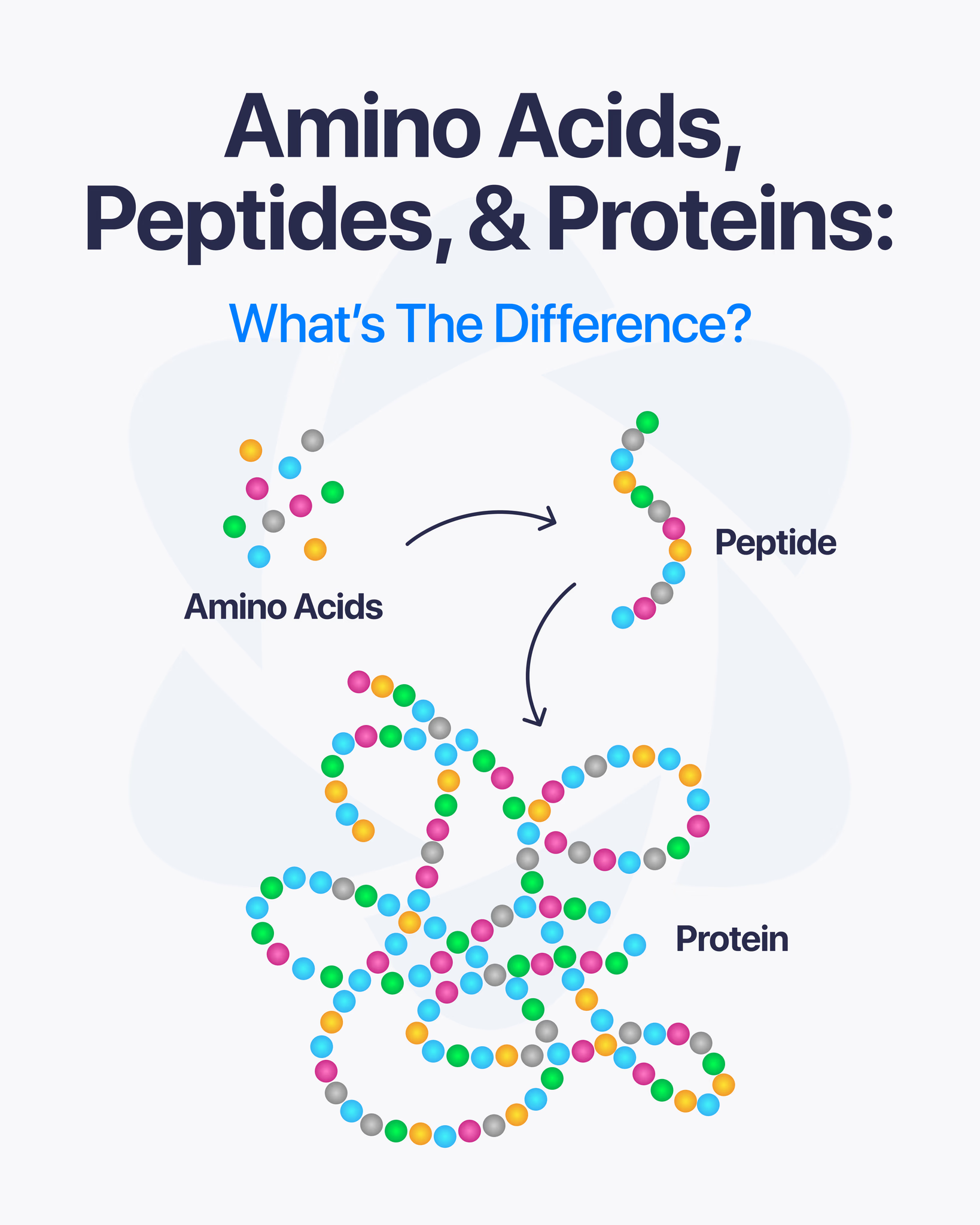
Amino acids, peptides, and proteins exist along a biological continuum:
-
Amino Acids – Individual molecular units that serve as building blocks.
-
Peptides – Short chains formed when amino acids are linked together through peptide bonds.
-
Proteins – Larger chains that fold into functional three-dimensional structures.
This relationship makes amino acids the foundation of both peptide and protein chemistry.
(Reference: Berg et al., 2002)
Key Differences Between Amino Acids, Peptides, and Proteins
-
Size – Amino acids are single molecules, peptides are short chains, and proteins are substantially larger molecular assemblies.
-
Structural Complexity – Proteins typically adopt stable three-dimensional conformations, whereas many peptides remain linear or only partially folded.
-
Biological Role – Amino acids function as molecular building blocks, peptides frequently participate in signaling and regulation, and proteins perform a wide range of specialized biological tasks.
-
Research Applications – Scientists study amino acids to understand molecular chemistry, peptides to investigate signaling pathways, and proteins to explore cellular mechanisms and biological function.
(Reference: Berg et al., 2002)
References
-
Nelson, D.L., & Cox, M.M. (2017). Lehninger Principles of Biochemistry. Springer.
-
Merrifield, R.B. (1963). Solid Phase Peptide Synthesis. I. The Synthesis of a Tetrapeptide. Science, 138(3549), 1059–1060.
-
Dobson, C.M. (2003). Protein folding and misfolding. Nature, 426, 884–890.
-
Berg, J.M., Tymoczko, J.L., & Stryer, L. (2002). Biochemistry. 5th Edition. W.H. Freeman.
All products sold by Direct Peptides are intended strictly for laboratory research use only. They are not approved for human or animal consumption, medical treatment, or therapeutic applications. The information provided on this website is for educational and informational purposes only.