What is BPC-157?
BPC-157 is a synthetic peptide derived from a naturally occurring protein found in gastric tissue. Researchers investigate it for its possible interactions with biological repair processes in experimental models. A notable line of inquiry focuses on how BPC-157 interacts with nitric oxide (NO) — a molecule tied to circulation and tissue response in laboratory research.
(Reference: Sikiric et al., 2010)
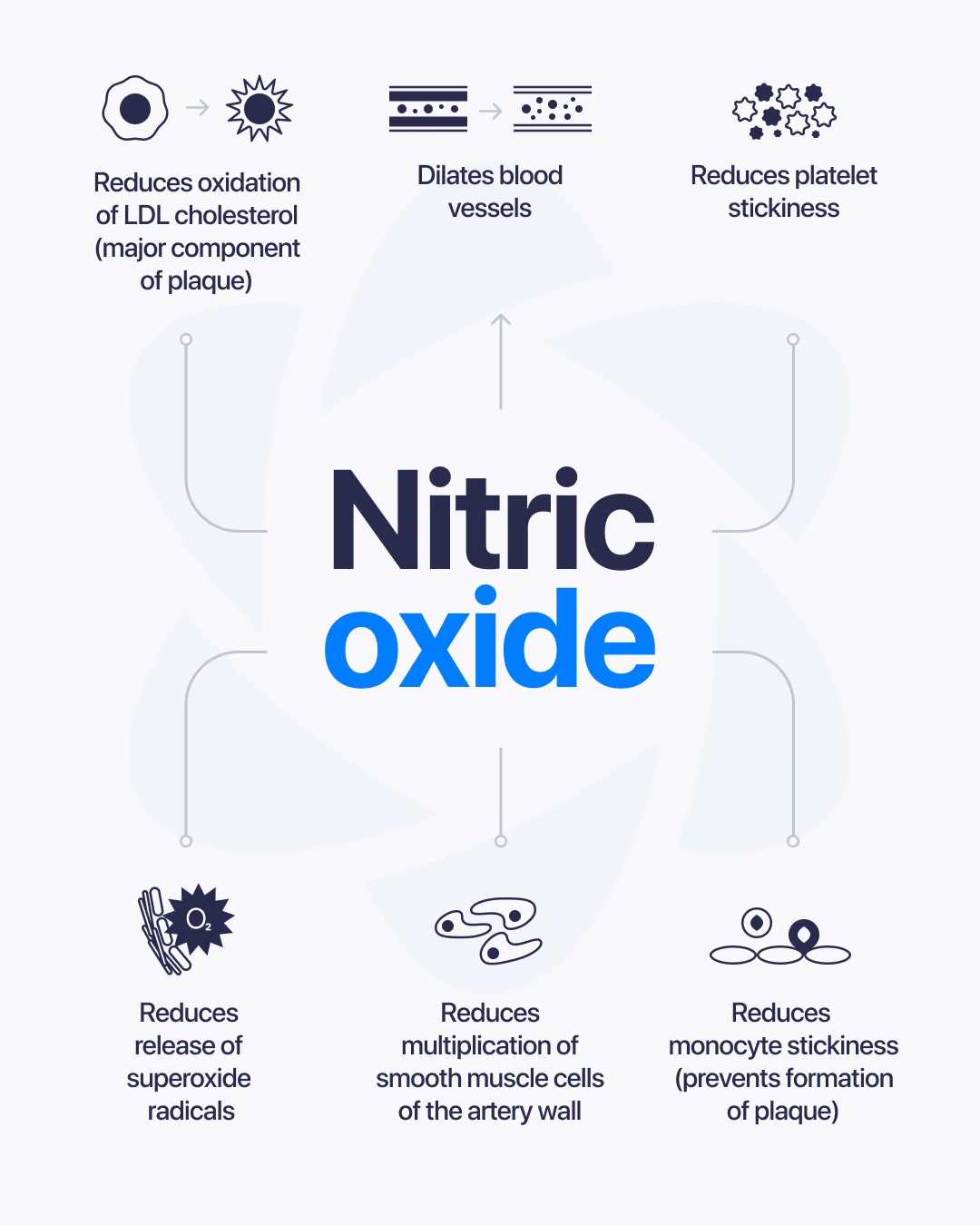
What is Nitric Oxide (NO)?
NO is a gaseous signaling molecule produced within the body. It carries out several important functions:
-
Drives vasodilation
-
Functions as a neurotransmitter
-
Participates in cellular repair signaling
-
Plays a part in immune system pathways
Both excess and deficiency of NO can cause problems, so researchers study how its levels are kept in balance.
The effects of BPC-157 on Nitric Oxide
1. Influences NO-Producing Enzymes
In rat models, BPC-157 was observed to affect eNOS activity, alongside correlated changes in vascular function.
(Reference: Vukojević et al., 2013)
2. Modulates Nitric Oxide During Recovery
In studies on muscle, tendon, and nerve injuries, BPC-157 appeared to shift NO toward baseline levels. Even when NO production was experimentally suppressed or overstimulated, BPC-157 was reported to modulate NO balance under both inhibited and stimulated conditions, with associated effects on tissue response markers. Researchers suggest this may also involve other repair-related signals such as VEGF.
(Reference: Sikiric et al., 2010; Seiwerth et al., 2018)
3. Supports Blood Vessel Function
In preclinical models of vascular stress, BPC-157 was observed to stabilize NO signaling and preserve markers of vessel integrity.
(Reference: Sikiric et al., 2016)
References
-
Vukojević, J., et al. (2013). Pentadecapeptide BPC 157 enhances NO release and modulates vasomotor tone in rats. Journal of Physiology and Pharmacology, 64(3), 355–365.
-
Sikiric, P., et al. (2010). Stable gastric pentadecapeptide BPC 157 modulates NO-system and promotes healing. Peptides, 31(9), 1601–1610.
-
Seiwerth, S., et al. (2018). BPC 157 and its possible mechanisms of action: an overview. Current Pharmaceutical Design, 24(19), 2000–2021.
-
Sikiric, P., et al. (2016). BPC 157 and blood vessel function: findings from preclinical research. Regulatory Peptides, 234, 16–27.
All products sold by Direct Peptides are strictly for laboratory research purposes only. They are not intended for human or animal consumption, medical, or therapeutic use. The information provided on this website is for educational and informational purposes only.