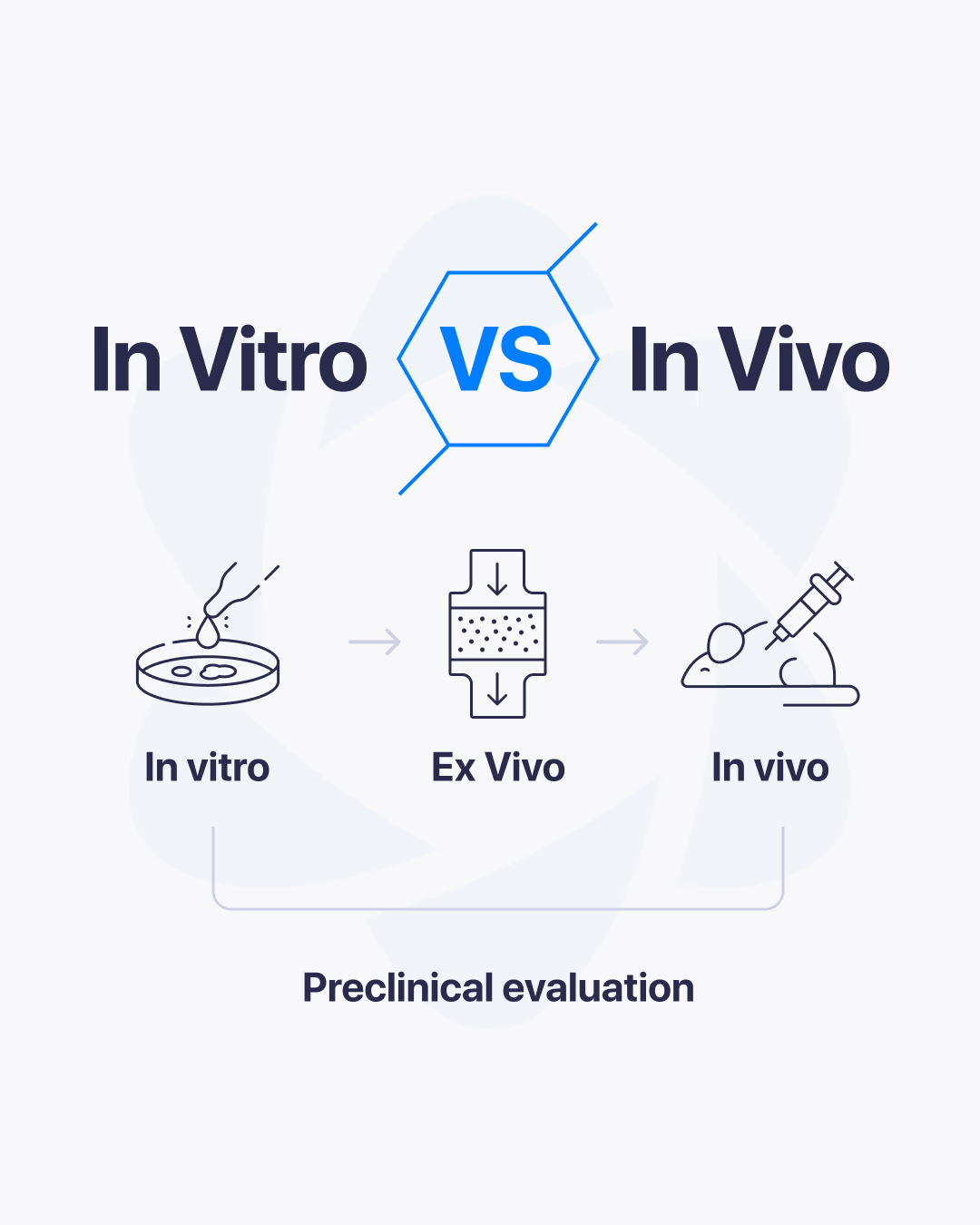
What Are In Vitro Studies?
In vitro studies are laboratory-based experiments conducted outside a living organism, typically using cell cultures, petri dishes, test tubes, or other controlled research environments. The phrase “in vitro” is derived from Latin and translates to “in glass.” These studies allow researchers to investigate how peptides and other compounds interact with cells and biological systems before progressing to animal or human research.
This research approach helps scientists evaluate potential effects on cellular communication, tissue repair pathways, inflammatory responses, and other biological mechanisms while maintaining a highly controlled experimental setting.
(Reference: Pampaloni et al., 2007)
How Are In Vitro Studies Used in Peptide Research?
Before peptides are evaluated in more complex biological systems, they are frequently examined through in vitro research. Peptides such as BPC-157, GHK-Cu, and Semaglutide are commonly investigated in laboratory settings to better understand their biological activity and cellular interactions.
These studies may be used to examine:
• Cellular growth and regeneration
• Collagen synthesis pathways
• Mechanisms involved in tissue repair
• Antioxidant-related activity
• Inflammatory signaling responses
Advantages of In Vitro Testing
-
Controlled Environment
In vitro models enable researchers to isolate specific variables and examine individual biological pathways with greater precision. This controlled setting allows detailed investigation of how a peptide may influence processes such as growth factor activity, cellular signaling, or nitric oxide production.
(Reference: Hartung, 2007)
-
Early Safety Insights
By studying peptide interactions with cultured cells, researchers can collect preliminary information regarding biological compatibility and determine whether additional investigation is justified.
-
Cost-Effective and Scalable
Compared with animal-based research, in vitro experiments are generally more efficient, easier to scale, and less resource-intensive, making them a valuable tool during the early stages of scientific investigation.
Limitations to Be Aware Of
Although in vitro research provides valuable insights, it cannot fully replicate the complexity of an entire living organism. A biological response observed in isolated cells or laboratory models may not necessarily produce the same outcome in animal studies or human research. For this reason, in vitro studies represent only one phase of the broader scientific evaluation process.
(Reference: van der Worp et al., 2010)
Common Peptide In Vitro Applications
• Evaluating cellular repair processes involving BPC-157
• Investigating collagen production and copper-binding activity with GHK-Cu
• Studying receptor interactions using GLP-1 analogs such as Semaglutide and Tirzepatide
References
-
Pampaloni, F., Reynaud, E.G., & Stelzer, E.H. (2007). The third dimension bridges the gap between cell culture and live tissue. Nature Reviews Molecular Cell Biology, 8(10), 839–845.
-
Hartung, T. (2007). Food for thought… on cell culture. ALTEX, 24(3), 143–147.
-
van der Worp, H.B., et al. (2010). Can animal models of disease reliably inform human studies? PLoS Medicine, 7(3), e1000245.
All products sold by Direct Peptides are intended strictly for laboratory research use only. They are not approved for human or animal consumption, medical treatment, or therapeutic applications. The information provided on this website is for educational and informational purposes only.