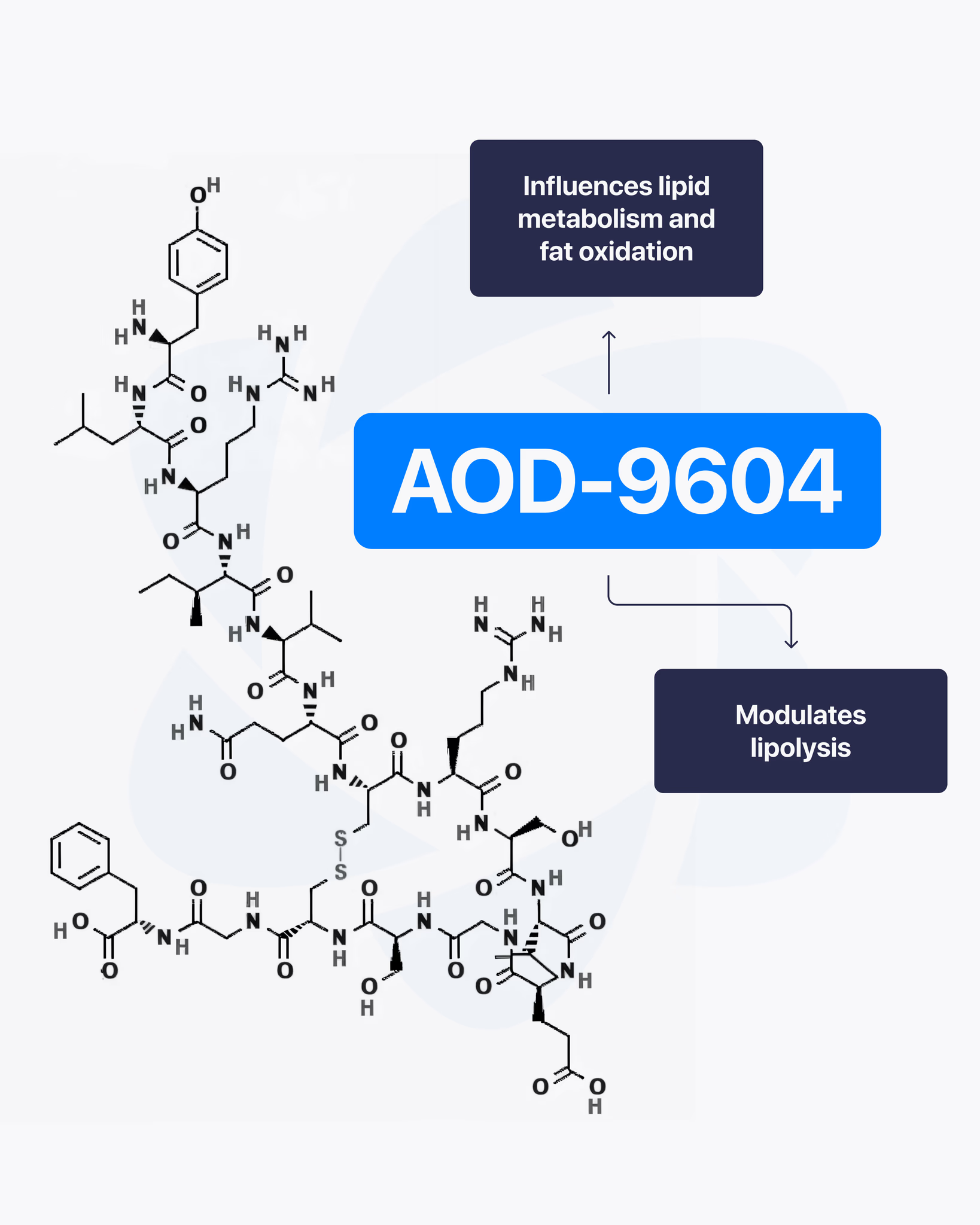
What Is AOD-9604?
AOD-9604 is a synthetic peptide developed from a specific region of human growth hormone (hGH). It consists of amino acids 177–191 from the C-terminal segment of hGH and includes an additional tyrosine residue to enhance stability. Researchers originally designed this peptide to investigate whether a smaller fragment of growth hormone could influence metabolic pathways associated with fat processing without activating the full spectrum of growth hormone functions.
(Reference: Ng et al., 2000)
How Has AOD-9604 Been Studied in Research?
AOD-9604 has been investigated across a range of research settings, including laboratory, animal, and human studies.
-
In vitro studies have been used to evaluate cellular responses, receptor activity, gene regulation, and toxicity profiles.
-
Animal research has focused on metabolic signaling pathways, lipid metabolism, and receptor-related mechanisms.
-
Human trials have monitored parameters such as IGF-1 levels, glucose metabolism, tolerability, and other biological markers.
Together, these studies help researchers better understand the biological characteristics of AOD-9604, although findings can differ depending on the experimental model being used.
(Reference: Heffernan et al., 2001)
Observations Reported in Studies
Published research involving AOD-9604 has documented several notable observations:
-
Receptor Pathways – Research in animal models has reported increased activity of beta-3 adrenergic receptors within adipose tissue, suggesting a potential role in fat-cell signaling pathways.
-
IGF-1 Independence – Multiple studies have shown that AOD-9604 does not appear to alter IGF-1 concentrations, distinguishing it from full-length growth hormone.
-
Safety Markers – Toxicology assessments and human studies have reported no evidence of genotoxicity, antibody formation, or major safety concerns when compared with placebo groups.
(Reference: Stier et al., 2013)
Advantages and Limitations in Experimental Settings
Advantages
-
Selective Pathway Investigation – Researchers can examine metabolic and fat-related pathways without activating many of the broader biological actions associated with growth hormone.
-
Extensive Safety Evaluation – AOD-9604 has undergone investigation in laboratory studies, animal research, and clinical trials, providing a substantial body of safety-related data.
-
Broad Research Utility – The peptide has been studied across multiple experimental models, supporting its use in diverse metabolic research applications.
Limitations
-
Incomplete Mechanistic Understanding – Although several signaling pathways have been identified, the precise molecular mechanisms remain under active investigation.
-
Differences Between Models – Results observed in cell cultures and animal studies may not always translate directly to findings in human research.
-
Focused Biological Activity – Current evidence suggests that AOD-9604 primarily affects metabolic pathways, which may limit its applicability in other areas of peptide research.
(Reference: Moré & Kenley, 2014)
References
-
Ng, F.M., et al. (2000). Metabolic studies of a synthetic lipolytic domain (AOD9604) of human growth hormone. Hormone Research, 53(6), 274–278.
-
Heffernan, M., et al. (2001). The effects of human GH and its lipolytic fragment (AOD9604) on lipid metabolism in obese and beta-3 AR knockout mice. Endocrinology, 142(12), 5182–5189.
-
Stier, H., Vos, E., & Kenley, D. (2013). Safety and tolerability of the hexadecapeptide AOD9604 in humans. Journal of Endocrinology and Metabolism, 3(1–2), 7–15.
-
Moré, M.I., & Kenley, D. (2014). Safety and metabolism of AOD9604: a research review. Journal of Endocrinology and Metabolism, 4(3), 64–77.
All products sold by Direct Peptides are intended strictly for laboratory research use only. They are not approved for human or animal consumption, medical treatment, or therapeutic applications. The information provided on this website is for educational and informational purposes only.