What Are Melanocortin Agonists?
Melanocortin agonists are compounds that activate receptors within the melanocortin system, a family of G protein-coupled receptors known as MC1R through MC5R. These receptors are distributed throughout the body and participate in a variety of biological processes, including pigmentation, energy regulation, immune function, and endocrine signaling. Melanocortin agonists may occur naturally, such as α-melanocyte-stimulating hormone (α-MSH), or be developed synthetically for research purposes.
(Reference: Cone, 2006)
How Have Melanocortin Agonists Been Studied?
Research involving melanocortin agonists has been conducted across a wide range of experimental models to better understand receptor function and physiological responses.
-
In vitro studies have examined receptor binding characteristics, cAMP-mediated signaling pathways, and selectivity among melanocortin receptor subtypes.
-
Animal models have been used to investigate appetite regulation, pigmentation processes, inflammatory signaling, and adrenal gland function.
-
Human research has evaluated responses including skin pigmentation, metabolic biomarkers, and endocrine hormone activity following receptor stimulation.
(Reference: Getting, 2006)
Key Mechanisms Identified
Scientific studies have identified several important mechanisms through which melanocortin agonists exert their biological effects.
-
MC1R Activation – Plays a central role in regulating skin and hair pigmentation by promoting melanin synthesis within melanocytes.
-
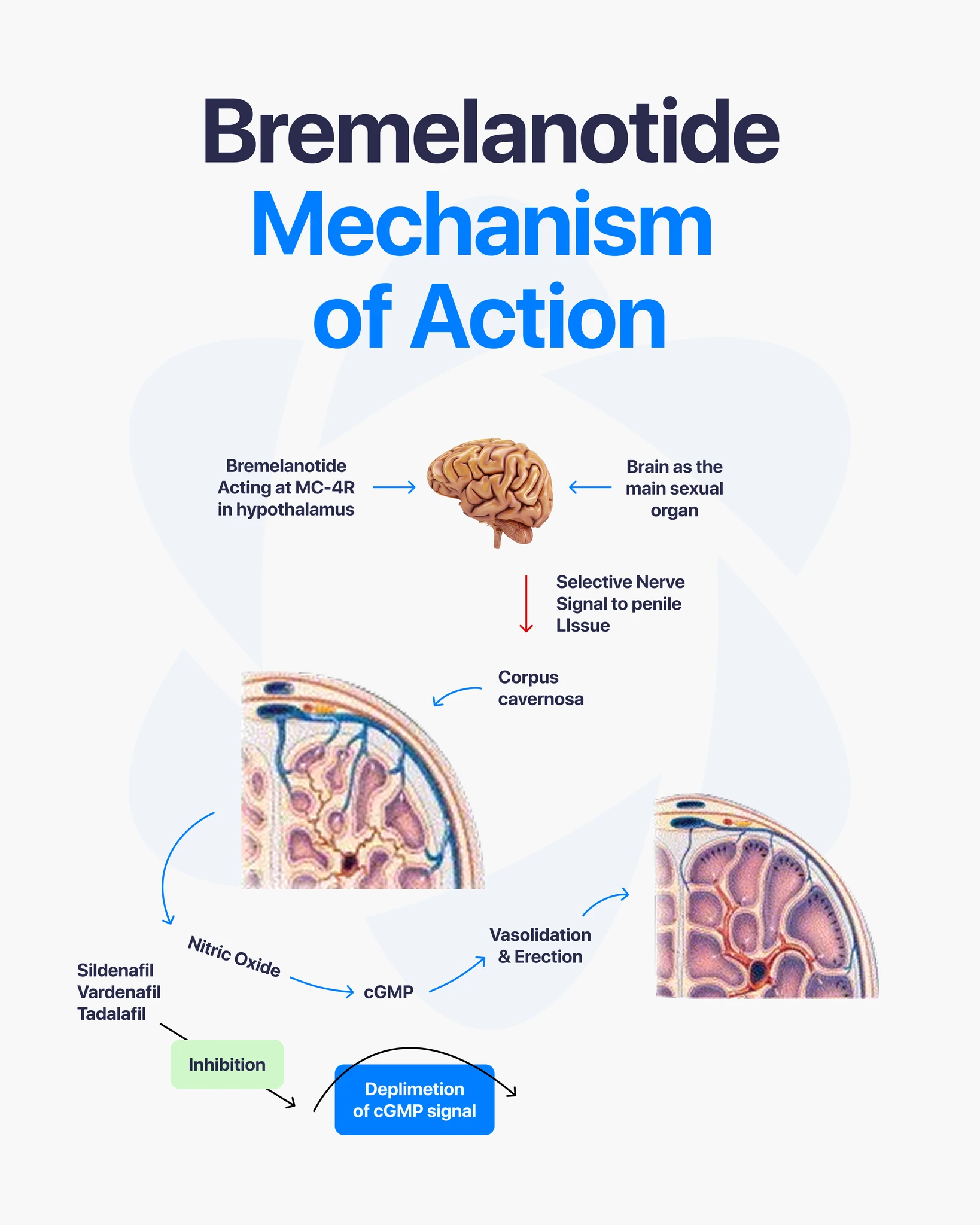
MC3R and MC4R Signaling – These receptors contribute to the regulation of appetite, energy expenditure, and feeding behavior and have been extensively studied in metabolic research.
-
MC2R Activity – Serves as the primary receptor for adrenocorticotropic hormone (ACTH) and is closely involved in adrenal hormone production.
-
MC5R Function – Has been associated with exocrine gland activity, including processes related to sebaceous gland regulation.
(Reference: Mountjoy, 2010)
Research Findings
Published studies have reported a variety of observations related to melanocortin receptor activation and signaling.
-
Pigmentation Regulation – Synthetic melanocortin analogs have been shown to increase melanin production in cultured melanocyte models through MC1R activation.
-
Energy Homeostasis – Activation of MC4R pathways has been linked to alterations in feeding behavior and hypothalamic signaling networks in animal studies.
-
Inflammatory Modulation – Laboratory and animal research has demonstrated reductions in certain inflammatory signals following melanocortin receptor activation.
-
Endocrine Regulation – ACTH-derived agonists targeting MC2R continue to serve as important research tools for studying adrenal steroid synthesis and hormone regulation.
(Reference: Catania et al., 2004)
Research Applications
Melanocortin agonists are commonly utilized in research settings to:
-
Investigate receptor-specific signaling pathways across the melanocortin receptor family.
-
Study pigmentation mechanisms and melanocyte biology.
-
Explore metabolic regulation and appetite-related signaling pathways.
-
Examine inflammatory and immune-response mechanisms associated with melanocortin receptor activation.
(Reference: Cone, 2006)
References
-
Cone, R.D. (2006). Studies on the melanocortin system. Endocrine Reviews, 27(7), 736–749.
-
Getting, S.J. (2006). Melanocortin peptides and their receptors in inflammation. Peptides, 27(2), 431–440.
-
Mountjoy, K.G. (2010). Functions for melanocortin receptors in regulation of physiology and behavior. Annals of the New York Academy of Sciences, 1200, 138–146.
-
Catania, A., et al. (2004). The melanocortin system in inflammation and autoimmunity. Trends in Pharmacological Sciences, 25(10), 502–507.
All products sold by Direct Peptides are intended strictly for laboratory research use only. They are not approved for human or animal consumption, medical treatment, or therapeutic applications. The information provided on this website is for educational and informational purposes only.