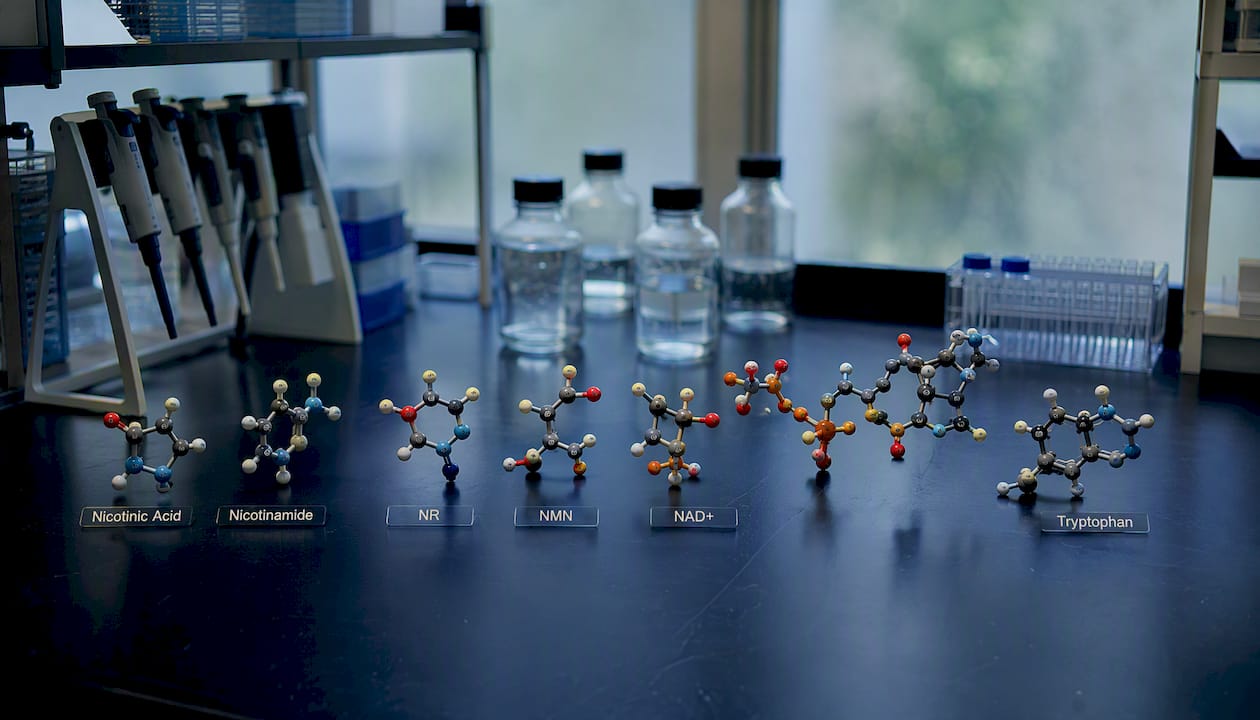
The five major types of NAD+ boosting precursors are nicotinic acid (NA/niacin), nicotinamide (NAM), nicotinamide riboside (NR), nicotinamide mononucleotide (NMN), and tryptophan. Each one enters NAD+ synthesis through a distinct enzymatic route, and that route determines where in the body it works, how efficiently it crosses cell membranes, and what safety signals researchers need to watch. Oral NAD+ itself is poorly cell-permeant and is broken down in the gut before it can reach intracellular pools, which is exactly why precursor identity matters so much.
The practical implication is this: pathway and transport are not interchangeable. NAMPT is the rate-limiting enzyme in the salvage pathway and governs how efficiently NAM converts to NMN inside cells. NRK1/2 phosphorylates NR directly. NAPRT handles NA in the Preiss–Handler route. Synthrolab supplies research-grade forms of these compounds with batch-verified certificates of analysis, specifically because formulation purity affects which enzymatic steps you can actually study.
At a glance:
- NA (niacin): Preiss–Handler pathway via NAPRT; strong NAD+ signal in liver; causes flushing at therapeutic doses.
- NAM: Salvage pathway via NAMPT; widely distributed; high doses may inhibit sirtuins and create methylation load.
- NR: Nucleoside salvage via NRK1/2; enters cells via equilibrative nucleoside transporters (ENTs); most human trial data available.
- NMN: Requires conversion to NR extracellularly in most tissues (SLC12A8 transporter debate unresolved); phosphorylated by NRKs or NMNATs.
- Tryptophan: De novo kynurenine pathway via QPRT; slow, diet-dependent, and metabolically costly.
Choose NR or NMN when you need a reliable biochemical NAD+ signal in blood-based endpoints. Use NA when liver-targeted NAD+ elevation is the goal. Flag tryptophan as a background dietary variable rather than a primary intervention.
Key Takeaways
The most important practical distinction among NAD+ precursors is not potency at the molecular level but which enzymatic pathway and transporter each compound uses, because those factors determine which tissues actually receive the NAD+ signal.
| Point |
Details |
| Pathway determines tissue access |
NA targets NAPRT-rich liver/kidney; NR/NMN reach broader tissues via NRK and ENTs; NAM is ubiquitous via NAMPT. |
| NMN transport remains unresolved |
SLC12A8 as an NMN transporter is contested; in most tissues NMN likely requires dephosphorylation to NR before cell entry. |
| Blood NAD+ is a surrogate, not a target |
Human trials consistently raise blood NAD+ metabolites, but tissue-level functional benefit is variable and population-dependent. |
| Safety profiles differ by class |
NA carries flushing and hepatotoxicity risk above 35 mg/day UL; NAM creates methylation load; NR/NMN are better tolerated at standard doses. |
| Synthrolab for research supply |
Synthrolab provides batch-tested, COA-verified NAD+ compounds for laboratory research, with lot-level purity confirmation before use. |
Table of Contents
What are the main NAD+ synthetic pathways you need to understand?
NAD+ (nicotinamide adenine dinucleotide) is a dinucleotide coenzyme present in every living cell. Its two core functions are redox chemistry, cycling between NAD+ and NADH to carry electrons in glycolysis, the TCA cycle, and oxidative phosphorylation, and signaling substrate supply for enzymes like sirtuins (SIRT1–7), PARP1/2, and CD38/CD157. Because these consumers continuously degrade NAD+, the NAD+ pool turns over rapidly and must be constantly resynthesized. Precursor availability directly sets the ceiling on that resynthesis rate, especially under metabolic stress.
Four canonical pathways feed NAD+ synthesis:
The four routes into NAD+: Salvage (NAM → NMN → NAD+ via NAMPT/NMNAT), Preiss–Handler (NA → NAMN → NAAD → NAD+ via NAPRT/NADSYN), de novo kynurenine (Trp → kynurenine → QUIN → NAMN → NAD+ via QPRT), and nucleoside salvage (NR/NRH → NMN/NMNH via NRK/AK). Each route uses distinct enzymes and is expressed at different levels across tissues.
Salvage pathway is the dominant route in most mammalian tissues. NAM (nicotinamide) is phosphoribosylated by NAMPT to form NMN, then adenylylated by NMNAT1/2/3 to produce NAD+. NAMPT is the rate-limiting step and its expression varies widely by tissue and age.
Preiss–Handler pathway starts with NA (nicotinic acid). NAPRT converts NA to nicotinic acid mononucleotide (NAMN), which is then converted to nicotinic acid adenine dinucleotide (NAAD) by NMNATs, and finally amidated to NAD+ by NAD synthetase (NADSYN). This route is particularly active in the liver and kidney.
De novo pathway begins with dietary tryptophan. A multi-step kynurenine cascade converts tryptophan to quinolinic acid (QUIN), and QPRT (quinolinate phosphoribosyltransferase) converts QUIN to NAMN, which then feeds into the Preiss–Handler route. The pathway is metabolically expensive and tightly regulated by immune and inflammatory signals.
Nucleoside salvage (NRK pathway) handles NR and its reduced analog NRH. NR is phosphorylated by NRK1 or NRK2 to NMN, which then enters NMNAT-mediated adenylylation. NRH appears to be phosphorylated by adenosine kinase (AK) to NMNH, which is subsequently converted to NADH and then oxidized to NAD+.
Key enzyme reference:
| Enzyme |
Reaction catalyzed |
Pathway |
| NAMPT |
NAM + PRPP → NMN |
Salvage |
| NRK1/2 |
NR → NMN |
Nucleoside salvage |
| NAPRT |
NA + PRPP → NAMN |
Preiss–Handler |
| NMNAT1/2/3 |
NMN/NAMN + ATP → NAD+/NAAD |
All (final adenylylation) |
| NADSYN |
NAAD + glutamine → NAD+ |
Preiss–Handler |
| QPRT |
QUIN + PRPP → NAMN |
De novo |
| AK |
NRH → NMNH |
Reduced nucleoside salvage |
Pro Tip: NMNAT isoforms are compartmentalized: NMNAT1 is nuclear, NMNAT2 is cytoplasmic/Golgi, and NMNAT3 is mitochondrial. When designing tissue-specific experiments, the subcellular localization of your target NMNAT isoform affects which precursor reaches the relevant pool most efficiently.
The distinct enzymatic routes mean that two precursors producing equivalent blood NAD+ increases may still differ dramatically in which tissues they actually replenish. That is the central problem the clinical literature has not yet resolved.
Profiles of the five major types of NAD+ boosting precursors
Nicotinic acid (NA / niacin)
NA enters the Preiss–Handler pathway via NAPRT, which is highly expressed in liver, kidney, and small intestine. The route is: NA → NAMN (NAPRT) → NAAD (NMNATs) → NAD+ (NADSYN). Because NAPRT is the entry enzyme and its expression is tissue-restricted, NA is particularly effective at raising hepatic NAD+.
Cellular uptake occurs through sodium-coupled monocarboxylate transporters (SMCT1/SLC5A8 and SMCT2/SLC5A12) and, at higher concentrations, through passive diffusion. NA does not require dephosphorylation before membrane crossing.
Human evidence: NA has the longest clinical history of any NAD+ precursor. Pharmacological doses (1–3 g/day) reliably raise NAD+ in liver and have been used to treat dyslipidemia for decades. A landmark study in mitochondrial myopathy patients showed that niacin supplementation substantially increased muscle NAD+ and improved mitochondrial function, one of the cleaner tissue-level signals in the field.
Safety: The NIH Office of Dietary Supplements sets the tolerable upper intake level (UL) for niacin at 35 mg/day for adults from supplements and fortified foods, specifically to avoid flushing. Pharmacological doses used in NAD+ research (500 mg to 3 g/day) far exceed this UL and require medical supervision. Flushing is mediated by prostaglandin D2 release via GPR109A on skin Langerhans cells and is dose- and formulation-dependent. Extended-release NA reduces flushing but carries a higher risk of hepatotoxicity at doses above 2 g/day.
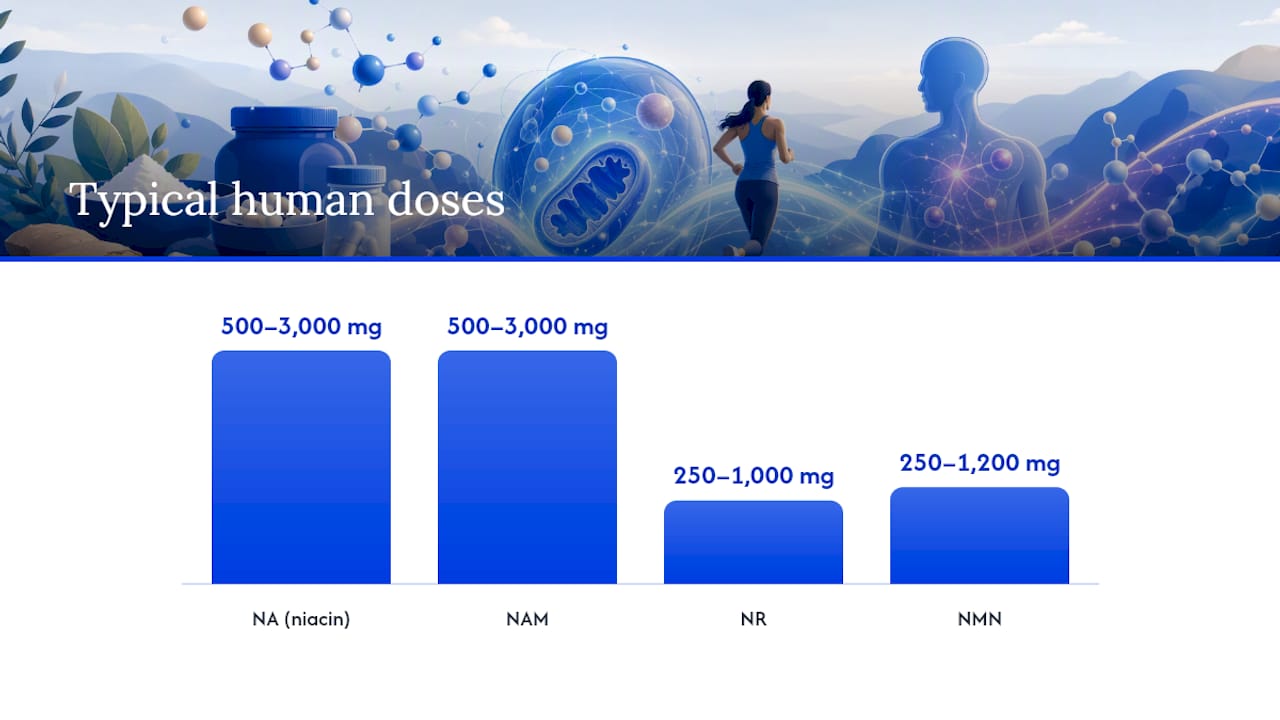
Typical research doses: 500 mg to 3 g/day orally in human trials; lower doses (250–500 mg) in combination protocols.
Nicotinamide (NAM)
NAM is the amide form of niacin and the direct product of NAD+ consumption by sirtuins, PARPs, and CD38. It re-enters NAD+ synthesis via the salvage pathway: NAM + PRPP → NMN (NAMPT) → NAD+ (NMNATs). Because NAMPT is ubiquitously expressed, NAM can be salvaged in virtually every tissue.
Uptake is passive at physiological concentrations; NAM is small and uncharged enough to diffuse across membranes without a dedicated transporter.
Human evidence: NAM raises blood NAD+ metabolites reliably. However, at high doses it inhibits sirtuins directly (by acting as a product inhibitor of the NAD±consuming reaction), which is the opposite of what most NAD±boosting protocols intend. This creates a paradox: NAM replenishes the pool but simultaneously blunts sirtuin activity.
Safety: NAM does not cause flushing. At doses above 3 g/day, hepatotoxicity has been reported. A subtler concern is methylation load: NAM is methylated by NNMT (nicotinamide N-methyltransferase) to methyl-NAM, consuming S-adenosylmethionine (SAM). Sustained high-dose NAM supplementation can therefore deplete the methyl donor pool, with downstream effects on one-carbon metabolism.
Typical research doses: 500 mg to 3 g/day in human studies; often used as a comparator arm.
Nicotinamide riboside (NR)
NR is a nucleoside form of NAM that enters the nucleoside salvage pathway. Inside cells, NRK1 or NRK2 phosphorylates NR to NMN, which NMNAT then converts to NAD+. NR can also be deamidated to nicotinic acid riboside (NaR) and enter the Preiss–Handler route, though this is a minor flux.
Cellular uptake is the clearest of any NAD+ precursor: NR is imported by equilibrative nucleoside transporters (ENT1/SLC29A1 and ENT2/SLC29A2), which are broadly expressed. This gives NR direct membrane access without requiring extracellular processing.
Human evidence: NR has the largest body of human trial data among the newer precursors. Multiple randomized controlled trials show consistent increases in blood NAD+ and related metabolites across a range of oral doses. Clinical trials consistently show biochemical NAD+ increases after oral NR, but functional or clinical endpoints (muscle strength, cognitive performance, cardiometabolic markers) have been mixed across populations.
Tissue targeting: NRK1 is expressed in many tissues including skeletal muscle, liver, and brain, though expression levels vary. NRK2 is more muscle-enriched. This makes NR a reasonable choice for muscle-focused NAD+ research.
Safety: NR is generally well-tolerated at doses up to 1,000 mg/day in published trials. No flushing. Methyl-NAM elevation is observed, indicating some methylation demand, though lower than with equivalent NAM doses.
Typical research doses: 250–1,000 mg/day orally; most trials run 6–12 weeks.
Nicotinamide mononucleotide (NMN)
NMN is a nucleotide (phosphorylated form of NR) and a direct precursor to NAD+ via NMNAT. The conversion is a single enzymatic step: NMN + ATP → NAD+ (NMNAT1/2/3). The appeal is obvious. The problem is getting NMN into cells.
The transport controversy is real and unresolved. Early work indicated NMN cannot cross the plasma membrane directly and must be dephosphorylated to NR by CD73 (ecto-5’-nucleotidase) or other ectonucleotidases before entering cells via ENTs. A later report proposed SLC12A8 as a dedicated NMN transporter, particularly in the small intestine and some other tissues, but this finding has been contested and replication has been inconsistent. The practical implication: in tissues where SLC12A8 is not expressed or is low, NMN likely behaves as a prodrug for NR.
Human evidence: Human NMN trials show blood NAD+ increases comparable to NR at similar doses. A trial in older adults showed increased muscle NAD+ and some improvement in physical performance metrics, though sample sizes were small. NAD+ responses to supplementation are nonlinear and influenced by dose, age, and metabolic state, which complicates cross-trial comparisons.
Safety: Similar to NR. No flushing. Methyl-NAM elevation observed. Long-term safety data beyond 12 weeks in humans remain limited.
Typical research doses: 250–1,200 mg/day orally in published human trials.
Tryptophan (de novo pathway)
Tryptophan is an essential amino acid and the starting substrate for the de novo NAD+ synthesis pathway. The kynurenine cascade converts tryptophan through a series of steps (kynurenine → 3-hydroxykynurenine → 3-hydroxyanthranilic acid → ACMSD branch point → quinolinic acid) before QPRT converts quinolinic acid to NAMN, which then feeds into the Preiss–Handler route.
This pathway is metabolically expensive: roughly 60 mg of tryptophan is required to synthesize 1 mg of niacin equivalents, and the pathway is heavily regulated by IDO1/IDO2 (indoleamine 2,3-dioxygenases), which are induced by inflammation and immune activation. Under inflammatory conditions, tryptophan flux is diverted away from NAD+ synthesis.
Human evidence: Tryptophan supplementation is not a practical NAD+ boosting strategy in isolation. It is better understood as a dietary background variable that sets a floor on de novo NAD+ synthesis capacity. Researchers should account for dietary tryptophan intake when interpreting NAD+ metabolome data.
Tissue targeting: The liver expresses the full de novo pathway. Most other tissues have limited QPRT activity and depend on liver-derived NAMN or on salvage pathways.
Safety: Tryptophan supplementation at gram-level doses has a historical safety concern (the 1989 eosinophilia-myalgia syndrome outbreak was linked to a contaminated batch, not tryptophan itself, but regulatory caution persists). At dietary levels, no significant NAD+ synthesis concern arises.
NRH (reduced NR) and NMNH (reduced NMN) have emerged from preclinical work as potentially more potent NAD+ precursors. NRH enters cells via ENTs and is phosphorylated by adenosine kinase (AK) to NMNH, which is then converted to NADH and subsequently oxidized to NAD+. Preclinical models suggest larger NAD+ responses than equivalent NR doses, but these compounds also show distinct immunometabolic effects, including inflammatory signaling changes, that require careful evaluation. No robust human clinical data exist yet. Treat these as research tools requiring validation, not established precursors.
Pro Tip: When sourcing NRH or NMNH for preclinical work, verify the certificate of analysis for both purity and the oxidation state of the compound. Reduced forms are inherently less stable than their oxidized counterparts and can degrade to NR or NMN during storage, confounding your results.
How do the precursors compare head to head?
The table below captures the six dimensions that most affect experimental design and interpretation. Blood NAD+ elevation is the most commonly reported endpoint, but it is a surrogate, not a direct measure of tissue NAD+ status.
| Precursor |
Pathway / key enzymes |
Cellular uptake |
Human evidence (blood NAD+) |
Tissue targeting |
Safety flags |
Typical human doses |
| NA (niacin) |
Preiss–Handler: NAPRT → NMNAT → NADSYN |
SMCT1/2; passive diffusion |
Strong; decades of clinical use |
Liver, kidney (NAPRT-rich) |
Flushing (GPR109A); hepatotoxicity >2 g/day |
500 mg–3 g/day |
| NAM |
Salvage: NAMPT → NMNAT |
Passive diffusion |
Reliable; raises NAD+ metabolites |
Ubiquitous (NAMPT-dependent) |
Sirtuin inhibition; methylation load; hepatotoxicity >3 g/day |
500 mg–3 g/day |
| NR |
Nucleoside salvage: NRK1/2 → NMNAT |
ENT1/ENT2 (direct import) |
Consistent across multiple RCTs |
Muscle (NRK2-enriched), liver, broad |
Well-tolerated; mild methyl-NAM elevation |
250–1,000 mg/day |
| NMN |
Single step: NMNAT (after transport) |
Debated: CD73 dephosphorylation to NR, or SLC12A8 (contested) |
Comparable to NR in trials |
Intestine (SLC12A8?); otherwise NR-dependent |
Well-tolerated; methyl-NAM elevation; long-term data limited |
250–1,200 mg/day |
| Tryptophan |
De novo: IDO → QPRT → NMNAT |
Dietary amino acid uptake |
Not a practical standalone booster |
Liver (full pathway); limited elsewhere |
IDO induction by inflammation diverts flux |
Dietary variable |
| NRH/NMNH |
Reduced salvage: AK → NMNH → NADH → NAD+ |
ENT-mediated (NRH) |
Preclinical only; no human RCTs |
Unknown in humans |
Immunometabolic effects; stability concerns |
Not established |
Three research-use verdicts:
- Systemic NAD+ biochemical endpoint: NR or NMN at 500–1,000 mg/day gives the most reproducible blood NAD+ signal across published trials. NR has the edge in transport clarity.
- Liver-targeted or dyslipidemia-adjacent research: NA via the Preiss–Handler pathway is the mechanistically appropriate choice, with the caveat that flushing management and liver function monitoring are non-negotiable.
- Muscle or mitochondrial research: NR is reasonable given NRK2 enrichment in muscle. NMN is plausible if SLC12A8 expression is confirmed in the target tissue. Neither has demonstrated unambiguous functional benefit in muscle in large trials.
Two caveats that belong on every study report: blood NAD+ is not a reliable surrogate for tissue NAD+, and transporter and enzyme expression vary enough across tissues and individuals that a precursor working in one context may be inert in another.
What do human trials actually show, and where are the gaps?
The consistent finding across human trials of NR, NMN, and NA is biochemical: oral supplementation reliably raises blood NAD+ and related metabolites (NMN, NAM, methyl-NAM) in most participants. That proof-of-principle is solid. What is not solid is the translation to clinical outcomes.
Strongest human signals by precursor:
- NA (niacin): The mitochondrial myopathy trial is the clearest example of tissue-level NAD+ repletion with functional consequences. Patients with POLG mutations or other mitochondrial defects showed measurable muscle NAD+ increases and improved mitochondrial respiration parameters. This is a disease-specific context where NAD+ deficit is established.
- NR: Multiple RCTs in healthy older adults and metabolic disease populations show consistent blood NAD+ increases. A trial in heart failure patients showed biochemical changes but no significant improvement in cardiac function. Cognitive and cardiometabolic endpoints have been largely neutral in healthy populations.
- NMN: A trial in older women showed increased muscle NAD+ and improved muscle insulin sensitivity at 250 mg/day. A separate trial in older men showed increased NAD+ but no significant change in physical performance. Sample sizes in both were small (under 30 participants per arm).
- NAM: Less studied as a standalone NAD+ booster in recent trials, partly because of the sirtuin inhibition concern. Historical data from dermatology (skin cancer prevention) and diabetes prevention trials exist but used different endpoints.
The core limitation: Blood NAD+ is a convenient but imperfect surrogate. Erythrocytes and PBMCs are the most commonly sampled compartments, and their NAD+ dynamics may not reflect what is happening in liver, brain, or skeletal muscle. Until tissue biopsy data or validated non-invasive proxies become standard, interpreting “NAD+ was raised” as “the target tissue benefited” is an inferential leap.
Methodological limits researchers must account for:
- Small sample sizes (most trials: 20–50 participants per arm)
- Short durations (6–12 weeks; insufficient for longevity-relevant endpoints)
- Surrogate endpoints (blood NAD+ metabolites rather than functional tissue measures)
- Inter-individual variability in NAMPT expression, gut microbiome composition, and baseline NAD+ status
- Nonlinear dose-response: NAD+ responses are nonlinear and influenced by dose, age, and metabolic state, meaning a doubling of dose does not produce a doubling of effect
- The assumption that NAD+ declines uniformly with age across all tissues is not uniformly supported; targeting populations with documented deficits is more likely to yield detectable benefit
Safety profiles differ enough across precursor classes that a single monitoring protocol does not fit all.
Precursor-specific safety issues:
- NA (niacin): Flushing is the most common adverse effect at doses above 50–100 mg. At pharmacological doses (1–3 g/day), hepatotoxicity is a documented risk, particularly with extended-release formulations. Baseline and periodic liver function tests (LFTs) are mandatory. NA also raises uric acid and can worsen gout; monitor uric acid in at-risk individuals.
- NAM: No flushing. Hepatotoxicity at doses above 3 g/day. The methylation concern is real: methyl-NAM formation consumes SAM, and sustained high-dose NAM can deplete methyl donors. If participants are on methotrexate or other folate-pathway drugs, this interaction warrants attention. Sirtuin inhibition at high doses is a mechanistic concern for research designs where sirtuin activity is the intended outcome.
- NR: Well-tolerated in published trials up to 1,000 mg/day. Methyl-NAM elevation is consistently observed, indicating methylation demand. No hepatotoxicity signals at standard doses. Long-term data beyond 12 weeks are limited.
- NMN: Similar profile to NR. No flushing. Methyl-NAM elevation. One small trial reported mild gastrointestinal symptoms at higher doses. Long-term safety data are sparse.
- Reduced forms (NRH/NMNH): Immunometabolic effects observed in preclinical models; inflammatory signaling changes have been reported. Do not use in human subjects without IRB approval and appropriate safety monitoring.
Drug interactions to flag:
- Statins and NA co-administration: historically associated with myopathy risk, though the mechanism is debated.
- Hepatotoxic drugs: additive liver risk with pharmacological NA doses.
- Methylation-sensitive drugs (methotrexate, trimethoprim): NAM’s methylation demand may compound effects on one-carbon metabolism.
Monitoring checklist for human research protocols:
- Baseline LFTs (ALT, AST, ALP, bilirubin) before starting any precursor, mandatory for NA and NAM.
- Repeat LFTs at 4–6 weeks and at study end for NA doses above 500 mg/day.
- Uric acid at baseline and end for NA protocols.
- Methyl-NAM in urine or plasma if methylation burden is a study variable.
- CBC if reduced forms (NRH/NMNH) are used, given immunometabolic signals.
- NAD metabolome panel (NAD+, NADH, NMN, NR, NAM, methyl-NAM) at baseline, steady state, and washout.
Regulatory reminder: In the United States, human research with these compounds requires IRB approval. If a compound is not FDA-approved for the intended use, an Investigational New Drug (IND) application may be required. Research-grade compounds from suppliers like Synthrolab are sold for laboratory research use only and must not be administered to human subjects outside an approved protocol.
Pro Tip: For NA protocols, pre-treating participants with aspirin (325 mg, 30 minutes before NA) significantly reduces flushing by blocking prostaglandin synthesis. This is a standard clinical practice in niacin pharmacology and is worth including in your protocol design if flushing compliance is a concern.
Formulation choices affect what you actually measure. NR is commercially available primarily as NR chloride salt, which is stable at room temperature when properly desiccated but degrades rapidly in solution. NMN exists in multiple polymorphic forms; the beta-NMN polymorph is the biologically active form, and lot-to-lot polymorph consistency matters for reproducibility. Reduced forms (NRH, NMNH) are significantly less stable and require cold-chain handling from synthesis to use.
Pharmacokinetic signals from human studies:
- Oral NR and NMN reach steady-state blood NAD+ elevations after approximately 2 weeks of daily dosing. Single-dose PK studies show peak plasma NR within 1–3 hours, with rapid conversion to NAM and methyl-NAM.
- Washout after stopping oral NR/NMN: blood NAD+ metabolites return toward baseline within 1–2 weeks, though the exact half-life varies by metabolite and individual.
- IV NAD+ produces rapid, high-peak plasma NAD+ that is not achievable orally, but the clinical relevance of this peak versus oral steady-state is unclear. IV NAD+ is sometimes used in clinical settings for rapid repletion, but it is outside the scope of standard oral supplementation research.
Storage and handling for research-grade compounds:
- Store NR chloride at 2–8°C, desiccated, protected from light. Prepare solutions fresh and use within 24 hours.
- Store NMN at 2–8°C or below, desiccated. Verify polymorph (beta form) on the COA before use.
- NRH and NMNH: store at -20°C or below, under inert gas if possible. Confirm oxidation state via NMR or HPLC on the COA.
- Always verify lot purity via the supplier’s certificate of analysis before use in any experiment. Impurities in NAD+ precursor preparations can confound enzymatic assays and cell-based readouts.
Pro Tip: When translating a published trial dose to a cell-culture or animal protocol, account for the fact that oral bioavailability and first-pass metabolism mean the systemic exposure at a given oral dose is substantially lower than what you would achieve by adding the same concentration directly to culture media. Use PK data from the trial (Cmax, AUC) to back-calculate a physiologically relevant in vitro concentration rather than using the oral dose as a direct comparator.
Practical formulation caveats:
- Dissolution: NR chloride and NMN are water-soluble, but prepare solutions at the time of use to minimize degradation.
- pH sensitivity: NAD+ and its precursors are more stable at slightly acidic pH; avoid alkaline conditions during sample processing.
- Avoid freeze-thaw cycles for prepared solutions; aliquot before freezing.
How should researchers design studies with NAD+ precursors?
Rigorous study design is where most NAD+ precursor research has fallen short. The following guidance reflects the methodological lessons from the clinical literature and the biochemical constraints of the compounds.
Study design checklist:
- Population selection: Prioritize populations with documented or plausible NAD+ deficits (older adults, mitochondrial disease, metabolic syndrome) over healthy young adults for clinical endpoints. Biochemical proof-of-principle studies can use healthy volunteers, but functional endpoints require a population where a deficit exists.
- Controls: Include a placebo arm and, where feasible, an active comparator (e.g., NR vs. NMN at equimolar doses). Account for dietary niacin and tryptophan intake as confounders.
- Duration: Allow at least 2 weeks to reach steady-state blood NAD+ before collecting primary biochemical endpoints. For functional or clinical endpoints, 8–12 weeks minimum; longer for longevity-relevant outcomes.
- Sample size: Power calculations should be based on the expected effect size for the primary endpoint, not blood NAD+ alone. Most published trials are underpowered for clinical endpoints.
- Dose selection: Account for nonlinear dose-response. Include at least two dose levels when the primary goal is dose-finding.
Assay recommendations:
- Targeted LC-MS NAD metabolome panels are the gold standard. Measure NAD+, NADH, NMN, NR, NAM, and methyl-NAM simultaneously to capture both pool size and methylation burden.
- Enzymatic cycling assays (e.g., alcohol dehydrogenase-based) are acceptable for NAD+/NADH ratios but miss the broader metabolome.
- Sample handling is critical: collect blood on ice, process within 30 minutes, use consistent anticoagulant (EDTA is standard), and acidify samples immediately if measuring NAD+ to prevent enzymatic degradation. Whole blood NAD+ and PBMC NAD+ give different values; specify which compartment you are measuring.
- Include internal standards (isotopically labeled NAD+ or NAM) for LC-MS quantification.
- Report assay limit of detection (LOD) and limit of quantification (LOQ) in methods.
Endpoints and surrogate choice:
- Blood NAD+ is acceptable as a pharmacodynamic biomarker (proof of target engagement) but not as a clinical efficacy endpoint.
- Tissue biopsies (muscle, liver) provide the most direct measure of tissue NAD+ but are invasive and limit sample size.
- Neuron-derived extracellular vesicles (NDEVs) are an emerging non-invasive proxy for brain NAD+ status, though validation is still in progress.
- Match clinical endpoints to mechanism: mitochondrial function tests (VO2 max, phosphocreatine recovery by 31P-MRS) for muscle studies; insulin sensitivity for metabolic studies; cognitive battery for brain-targeted protocols.
Statistical and reporting recommendations:
- Report metabolites as both absolute concentrations and percent change from baseline.
- Include baseline NAD+ levels in participant characteristics; inter-individual variability at baseline is large and affects response.
- Describe assay LOD/LOQ and any samples below detection.
- Pre-register primary endpoints on ClinicalTrials.gov before data collection.
Pro Tip: Include transporter and enzyme expression profiling (NAPRT, NAMPT, SLC12A8, ENT1/ENT2, NRK1/2) in your participant stratification or as a secondary analysis. Expression levels of these proteins likely explain a substantial portion of inter-individual variability in NAD+ response and could identify responder subgroups. A simple PBMC mRNA panel at baseline costs relatively little and adds significant interpretive value.
| Study design element |
Recommended approach |
Common mistake to avoid |
| Population |
NAD±deficient or at-risk cohort for clinical endpoints |
Healthy young adults for functional outcomes |
| Duration |
8–12 weeks minimum for clinical endpoints |
4-week trials with functional primary endpoints |
| Assay |
LC-MS NAD metabolome panel |
Enzymatic NAD+ only (misses methylation burden) |
| Sample handling |
On ice, process within 30 min, acidify for NAD+ |
Room-temperature processing, delayed centrifugation |
| Endpoints |
Tissue-relevant functional measure + blood metabolomics |
Blood NAD+ as sole primary endpoint |
| Reporting |
Absolute + percent change, baseline levels, LOD/LOQ |
Percent change only, no baseline data |
The field is promising, but the clinical bar is still low
The mechanistic case for NAD+ precursor supplementation is genuinely compelling. NAMPT declines with age in some tissues, CD38 activity increases and consumes NAD+ during inflammation, and sirtuin function depends on NAD+ availability. The biochemical logic is tight. The clinical evidence is not.
What strikes me most about the current literature is how often “blood NAD+ went up” gets treated as a result rather than a starting point. Raising circulating NAD+ metabolites is pharmacologically interesting, but it tells you almost nothing about what happened in the tissue you actually care about. The mitochondrial myopathy niacin data are the exception precisely because the researchers measured muscle NAD+ directly and tied it to a functional readout. That is the template the field needs to follow, not the PBMC-NAD±plus-questionnaire design that dominates most trials.
The transporter biology question is also underappreciated. Whether NMN enters cells directly via SLC12A8 or requires dephosphorylation to NR is not an academic footnote. It determines whether NMN and NR are genuinely distinct interventions or functionally equivalent prodrugs in most tissues. Until that is resolved with tissue-specific transporter expression data in humans, the NMN-vs-NR debate is largely a marketing conversation dressed up as science.
For researchers, the priority should be tissue-focused trials in populations with documented NAD+ deficits, longer durations, and functional endpoints matched to mechanism. For the longevity-adjacent reader, the honest summary is that the biochemistry is real, the clinical translation is early, and the precursor you choose should follow the pathway logic, not the marketing.
Synthrolab supports rigorous NAD+ precursor research
Researchers working with NAD+ precursors need compounds they can trust at the lot level, not just the label level. Synthrolab supplies research-grade NAD+ compounds with independent batch testing and certificates of analysis, so you can verify purity and polymorph before your experiment starts rather than after your results look strange.
Every compound is sold for laboratory research use only, consistent with U.S. regulatory requirements. If you are designing a human study, confirm IRB approval and applicable IND requirements before use. For researchers building out a broader longevity or metabolic research program, Synthrolab’s lifespan extension compound catalog covers related reagents across mitochondrial function, cellular signaling, and recovery pathways. Review the COA for each lot, confirm storage requirements match your facility, and reach out to verify availability before ordering for time-sensitive protocols. Browse the full research compound catalog at Synthrolab to find what your study needs.
Sources
The sources below represent the highest-value starting points for researchers building a literature foundation in NAD+ precursor biology.
The ClinicalTrials.gov registry is particularly useful for identifying whether your planned study duplicates an ongoing trial or fills a genuine gap. Filter by status (recruiting, completed) and by primary endpoint to find the most relevant comparators for your design.
This article is general information, not a substitute for advice from a qualified doctor. Consult a qualified healthcare professional about your own circumstances before acting on anything here.
Recommended
 21+ verification