What is Cagrilintide?
Cagrilintide is a synthetic peptide modeled on amylin, a naturally occurring peptide that acts alongside insulin. Researchers are examining its involvement in signaling pathways tied to appetite and metabolism in laboratory models. Studies look at how cagrilintide engages central receptors linked to appetite signaling and gastric motility in experimental settings.
What is Amylin?
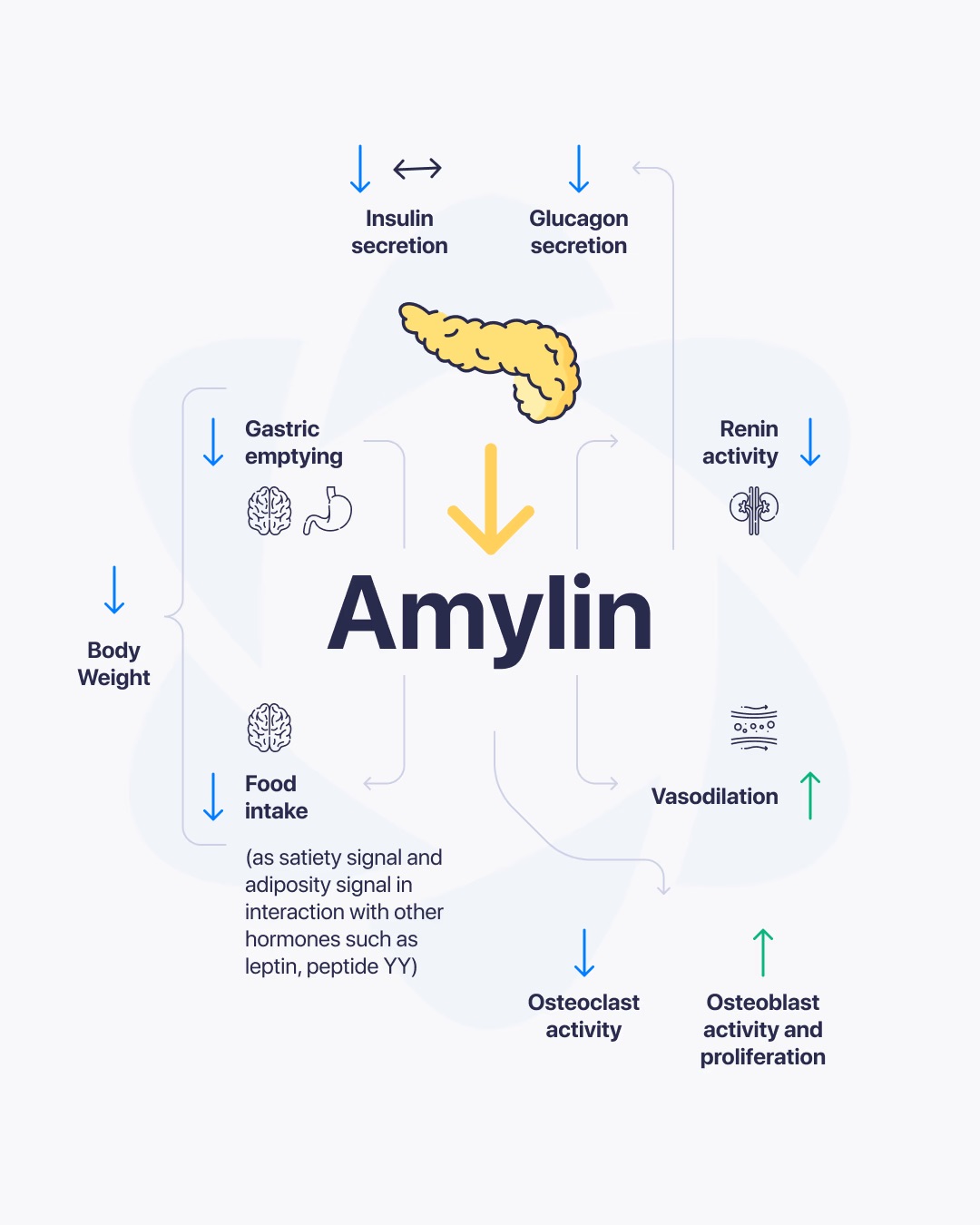
Amylin is a peptide that contributes to:
• Regulating the rate of gastric emptying
• Engaging satiety signaling pathways
• Post-meal glucose regulation in research models
Because native amylin degrades rapidly, researchers created longer-acting analogues such as cagrilintide to make these effects easier to study.
How Cagrilintide is Being Studied:
1. Activity at Appetite Receptors
In controlled research studies, cagrilintide displayed measurable activity at appetite-related receptors, which correlated with changes in food intake within the study group. This activity has been observed to shift markers of gastric motility and energy regulation in laboratory investigations.
(Reference: Lau et al., 2021)
2. Slows Gastric Emptying
Cagrilintide has been shown to reduce the speed at which food leaves the stomach. This effect has been associated with improved appetite control and more stable energy levels in research settings.
(Reference: Lau et al., 2021)
3. Complements GLP-1 Analogues
Researchers are also investigating cagrilintide alongside GLP-1 peptides such as semaglutide. Both preclinical and clinical research are examining its combined use with GLP-1 analogues, where additive effects on metabolic signaling have been observed.
(Reference: Knudsen et al., 2022)
References
-
Lau, D.C.W., et al. (2021). Once-weekly cagrilintide for weight management in people with overweight and obesity: a multicentre, randomised, double-blind, placebo-controlled and active-controlled, dose-finding phase 2 trial. The Lancet, 398(10317), 2160–2172.
-
Knudsen, L.B., et al. (2022). Dual hormone co-agonists for treatment of obesity. Trends in Molecular Medicine, 28(4), 300–314.
All products sold by Direct Peptides are strictly for laboratory research purposes only. They are not intended for human or animal consumption, medical, or therapeutic use. The information provided on this website is for educational and informational purposes only.