What Is High-Performance Liquid Chromatography (HPLC)?
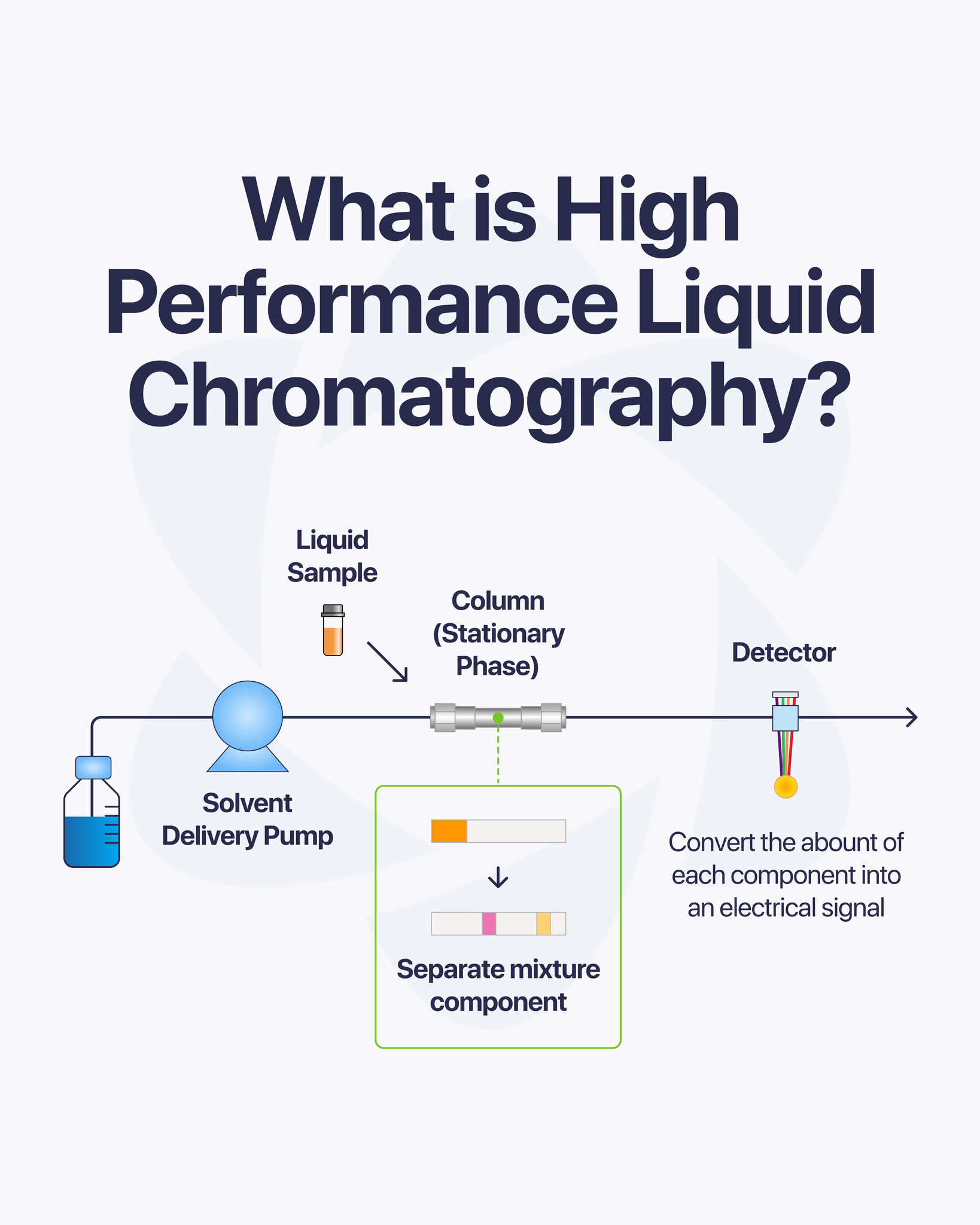
High-Performance Liquid Chromatography (HPLC) is a laboratory analytical technique used to separate, identify, and measure compounds within a mixture. The method works by passing a liquid sample through a column packed with a stationary phase while a high-pressure pump moves a solvent, known as the mobile phase, through the system. Because different compounds interact with the stationary phase differently, they travel through the column at different rates and are detected at distinct retention times.
HPLC is considered one of the most widely used analytical tools in pharmaceutical, biochemical, and peptide research due to its precision, sensitivity, and reproducibility.
(Reference: Dong, 2013)
How Does HPLC Work?
The HPLC process involves several key components working together to analyze a sample:
-
Sample Injection – A small amount of sample is introduced into the mobile phase.
-
Separation – As the sample moves through the column, individual compounds interact differently with the stationary phase and separate from one another.
-
Detection – Compounds exiting the column are measured using detectors such as UV, fluorescence, or mass spectrometry systems.
-
Data Analysis – Results are displayed as chromatograms, allowing researchers to identify compounds and determine their concentrations.
(Reference: Kazakevich & LoBrutto, 2007)
How Is HPLC Used in Research?
HPLC is widely used throughout scientific research and quality-control laboratories. In peptide and pharmaceutical research, it is commonly applied to:
-
Confirm the purity of synthesized peptides and compounds.
-
Separate closely related peptide fragments and analogs.
-
Detect trace-level impurities and byproducts.
-
Support stability testing and analytical method development.
-
Prepare samples for additional structural or biological analysis.
(Reference: Kazakevich & LoBrutto, 2007)
Key Advantages of HPLC
Researchers rely on HPLC because it offers several important benefits:
-
High Resolution – Separates compounds that may differ only slightly in chemical structure.
-
Excellent Sensitivity – Detects compounds present at very low concentrations.
-
Quantitative Accuracy – Provides reliable concentration measurements across a wide range of samples.
-
Versatility – Suitable for peptides, proteins, metabolites, pharmaceuticals, and many other compounds.
-
Scalability – Can be used for both analytical testing and large-scale purification processes.
(Reference: Swartz & Krull, 2012)
What Researchers Have Observed
HPLC has become a standard tool for quality assessment in peptide science and pharmaceutical development. Reverse-phase HPLC is frequently used to evaluate peptide purity, with researchers often reporting purity levels greater than 98% for research-grade materials. The technique also enables the detection of small amounts of contaminants, degradation products, and synthesis byproducts that may not be visible through other analytical methods.
Beyond peptide analysis, HPLC is commonly used to monitor drug stability, evaluate manufacturing processes, analyze biological samples, and measure metabolites in complex mixtures.
(Reference: Dong, 2013)
References
All products sold by Direct Peptides are intended strictly for laboratory research use only. They are not approved for human or animal consumption, medical treatment, or therapeutic applications. The information provided on this website is for educational and informational purposes only.