What Is MOTS-c?
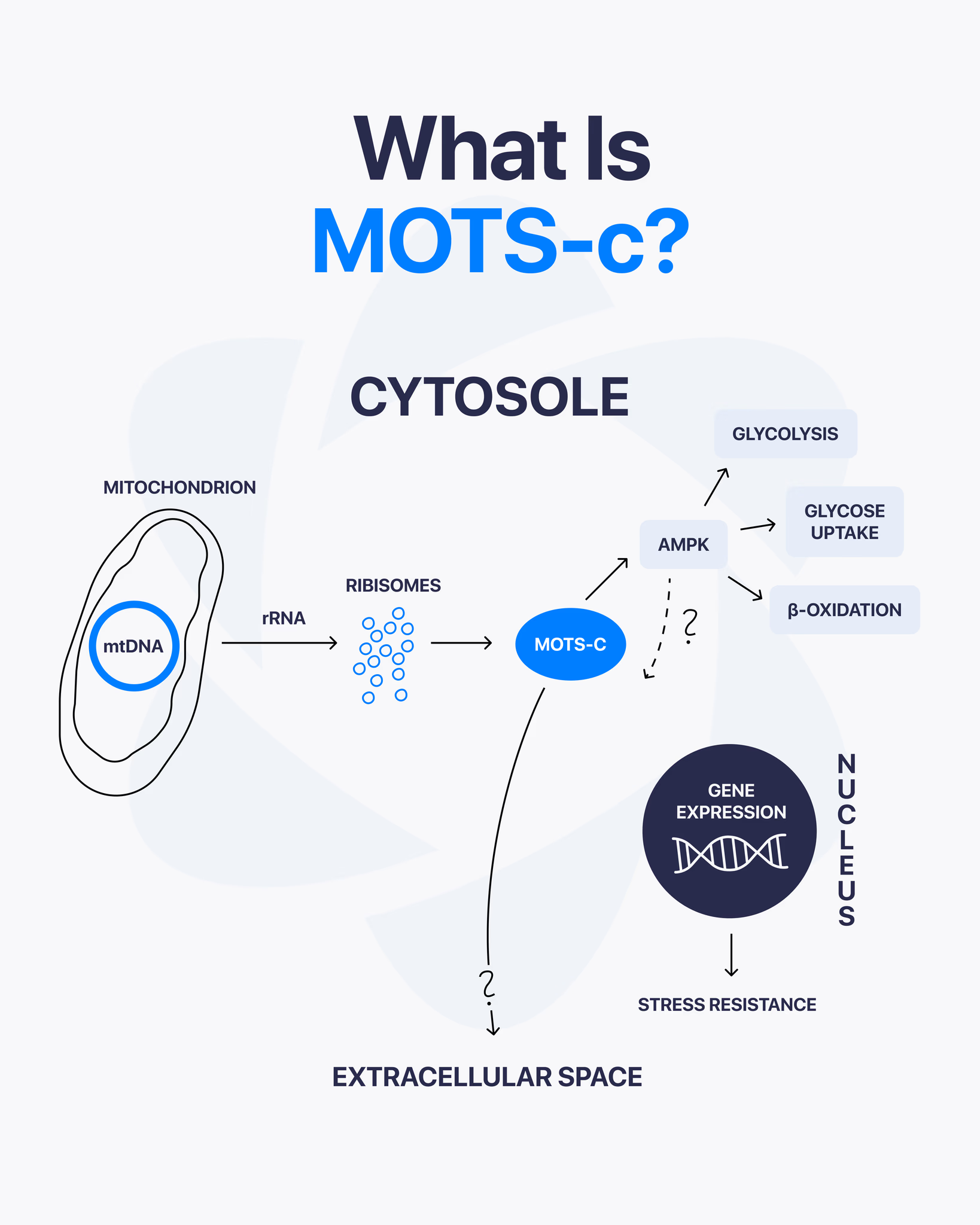
MOTS-c (Mitochondrial Open Reading Frame of the 12S rRNA type-c) is a naturally occurring peptide encoded within mitochondrial DNA. Unlike most peptides, which are produced from genes located in the cell nucleus, MOTS-c originates directly from the mitochondrial genome. This unique characteristic has generated significant scientific interest, as it highlights the role of mitochondria not only in energy production but also in cellular communication and regulatory signaling.
(Reference: Lee et al., 2015)
How Has MOTS-c Been Studied?
MOTS-c has been investigated through a variety of laboratory, animal, and human research models to better understand its biological functions and signaling mechanisms.
-
Cell culture studies have explored the peptide’s effects on metabolic regulation, glucose utilization, and cellular stress-response pathways.
-
Animal models have been used to examine potential roles in mitochondrial activity, skeletal muscle function, and overall energy balance.
-
Human studies have monitored circulating MOTS-c levels during exercise, aging, and other physiological conditions to better understand its biological behavior.
(Reference: Reynolds et al., 2021)
Key Research Observations
Several recurring findings have emerged from published research involving MOTS-c:
-
Metabolic Regulation – Research suggests that MOTS-c interacts with pathways associated with AMPK signaling, folate metabolism, and cellular energy regulation.
-
Stress Adaptation – Changes in MOTS-c levels have been observed during cellular and environmental stress, indicating a possible role in adaptive biological responses.
-
Age-Associated Changes – Some studies have reported reduced MOTS-c concentrations in aging tissues and circulating samples, suggesting a relationship with age-related biological processes.
-
Exercise Response – Human investigations have documented increases in circulating MOTS-c following acute physical activity, highlighting its potential involvement in exercise-related signaling.
(Reference: Zempo et al., 2021)
Common Research Applications
Researchers currently utilize MOTS-c in experimental settings to investigate several areas of mitochondrial and metabolic biology:
-
Studying communication pathways between mitochondria and the cell nucleus.
-
Analyzing how peptide signaling changes during metabolic and environmental stress.
-
Exploring the role of mitochondrial-derived peptides in age-related cellular processes.
-
Developing research models that examine exercise-induced signaling molecules and metabolic adaptation.
(Reference: Kim et al., 2018)
References
-
Lee, C., et al. (2015). The mitochondrial-derived peptide MOTS-c promotes metabolic homeostasis and reduces obesity and insulin resistance. Cell Metabolism, 21(3), 443–454.
-
Kim, K.H., et al. (2018). Mitochondrial peptides as regulators of metabolism. Cell Metabolism, 28(3), 330–341.
-
Reynolds, J.C., et al. (2021). MOTS-c: A mitochondrial signal regulating metabolism and aging. Frontiers in Endocrinology, 12, 678778.
-
Zempo, H., et al. (2021). Exercise increases MOTS-c levels in circulation. European Journal of Applied Physiology, 121(12), 3285–3293.
All products sold by Direct Peptides are intended strictly for laboratory research use only. They are not approved for human or animal consumption, medical treatment, or therapeutic applications. The information provided on this website is for educational and informational purposes only.