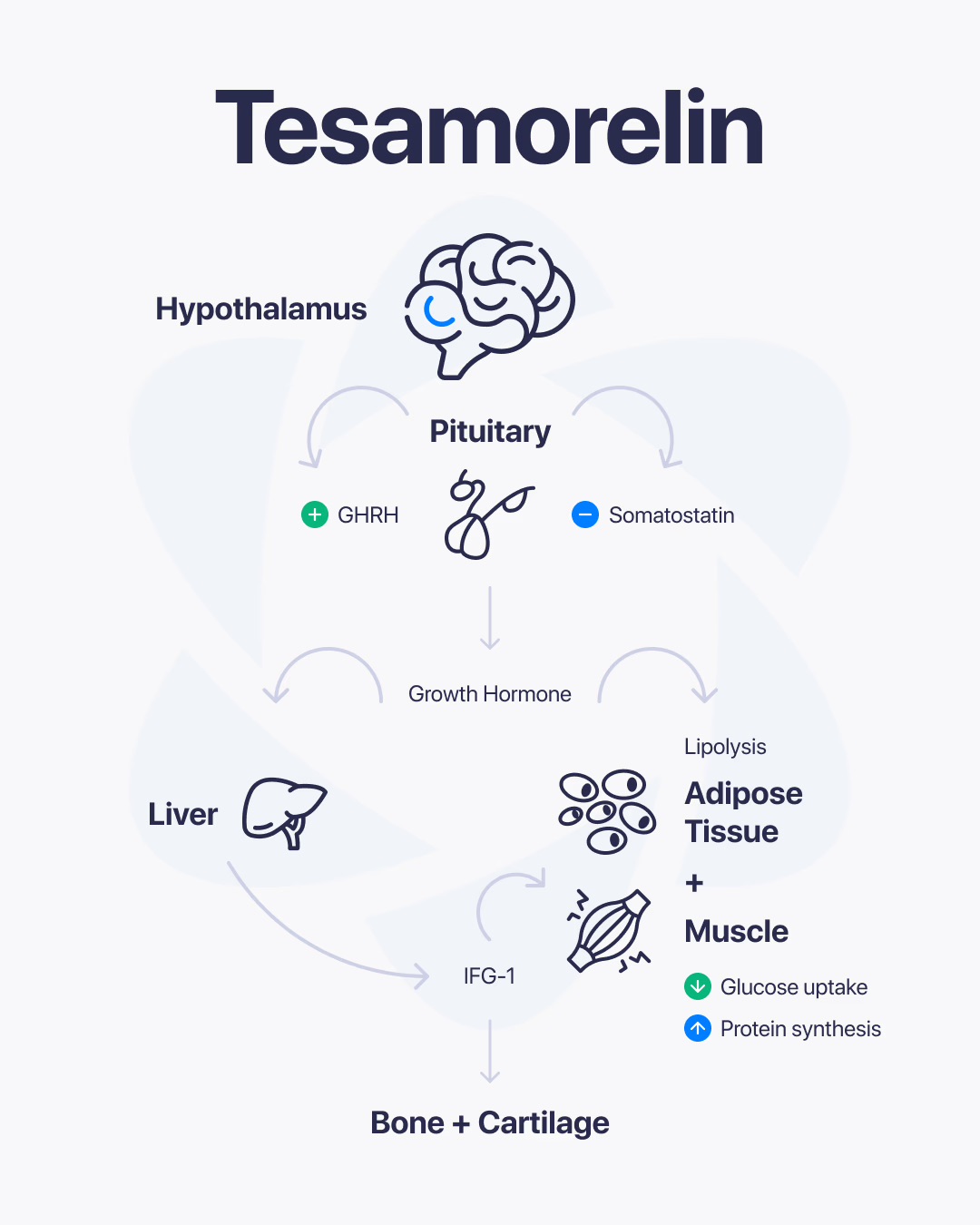
Tesamorelin is a synthetic analogue of growth hormone-releasing hormone (GHRH). It was engineered to replicate the activity of endogenous GHRH — the signal that prompts the pituitary gland to secrete growth hormone. In research, it is examined primarily for how it influences GH regulation and the metabolic pathways connected to it.
Growth hormone-releasing hormone (GHRH) is a peptide secreted by the hypothalamus. Its main roles include:
-
Triggering growth hormone (GH) release from the pituitary gland
-
Contributing to pathways involved in protein and lipid metabolism
-
Taking part in cellular signaling tied to growth and recovery
-
Helping regulate the circadian patterning of GH release in research settings
Because native GHRH degrades quickly in the body, researchers developed more stable analogues such as Tesamorelin to enable longer-duration study.
-
Observed Effects on Growth Hormone Secretion
Tesamorelin binds to GHRH receptors on the pituitary gland, prompting a natural rise in GH output. In laboratory work, this allows researchers to study the downstream effects of elevated GH, including shifts in lipid metabolism and muscle development.
(Reference: Falutz et al., 2010)
-
Effects on Visceral Adipose Tissue
One of Tesamorelin’s most-examined effects is its capacity to reduce visceral fat in certain research populations. Across multiple trials, it has been associated with measurable decreases in abdominal fat while leaving subcutaneous fat largely unaffected.
(Reference: Stanley et al., 2011)
-
Observed Effects on Glucose Pathways
Whereas some GH-related peptides can disturb glucose metabolism, Tesamorelin has shown little to no impact on insulin sensitivity in certain models, making it a recurring subject of metabolic research.
(Reference: Guaraldi et al., 2012)