Inflammation is your immune system’s first response to injury, infection, or irritation — a coordinated biological process that isolates threats, clears damaged tissue, and begins repair. When it resolves quickly, that’s normal healing at work. When it smolders for months or years without a clear trigger, it becomes a driver of serious disease. Harvard Health notes that acute inflammation typically resolves within hours to days, while persistent low-grade chronic inflammation can contribute to conditions ranging from heart disease to Alzheimer’s. If you’re experiencing high fever, spreading redness, confusion, or chest pain alongside inflammation, seek emergency care immediately.
Key Takeaways
Inflammation is a necessary immune response that becomes harmful only when it fails to resolve — managing the chronic form through lifestyle, diet, and timely medical care is the central priority.
| Point |
Details |
| Acute vs. chronic distinction |
Acute inflammation resolves in hours to days; chronic inflammation persists for months to years and drives disease. |
| Five classic signs |
Redness, heat, swelling, pain, and loss of function result from vasodilation and increased vascular permeability. |
| Key blood markers |
CRP (including hsCRP) and ESR are the primary tests; results require clinical context to interpret accurately. |
| Lifestyle drives chronic risk |
Smoking, visceral obesity, poor diet, poor sleep, and chronic stress are the top modifiable contributors to sustained inflammation. |
| When to act urgently |
High fever, spreading redness, signs of sepsis, chest pain, or neurological symptoms require immediate emergency evaluation. |
Table of Contents
What is inflammation explained, and why does your body need it?
Think of inflammation as your body’s emergency construction crew. The moment tissue is damaged or a pathogen is detected, the immune system dispatches chemical signals called cytokines and prostaglandins that widen blood vessels, increase vessel permeability, and recruit white blood cells to the site. The result: more blood flow, more immune cells, and a localized environment where threats can be neutralized and repair can begin.
That process is genuinely useful. Without it, a small cut could become a life-threatening infection. A sprained ankle would never heal. The immune system uses inflammation to wall off bacteria, break down dead cells, and lay the groundwork for new tissue.
The problem is dysregulation. When the “off switch” fails — because of a chronic infection, an autoimmune misdirection, or sustained lifestyle triggers — the same cellular machinery that protects you starts damaging healthy tissue instead. As Harvard Health puts it, inflammation is not inherently bad; the risk is when regulation fails and the response becomes chronic or misdirected. That distinction is the entire story of inflammation and health.
How do acute and chronic inflammation differ?
The two types share the same underlying biology but diverge sharply in timeline, cellular makeup, and consequences.
Acute inflammation hits fast. Within minutes of an injury or infection, neutrophils flood the site. These short-lived white blood cells are the first responders: they engulf bacteria, release enzymes that break down debris, and signal for backup. The process is intense but brief, typically resolving within hours to days once the threat is cleared. A twisted ankle, a bee sting, or a wound infection are classic examples.
Chronic inflammation is slower and quieter. When an irritant persists — or when the immune system mistakenly targets healthy tissue — the cellular cast shifts. Macrophages and lymphocytes take over from neutrophils, and the response can drag on for months or years. According to StatPearls via NCBI, chronic inflammation involves distinct histological patterns including macrophage and lymphocyte infiltrates, lymphatic vessel changes, and tissue remodeling. Conditions like rheumatoid arthritis, atherosclerosis, and inflammatory bowel disease all carry this chronic, smoldering pattern.
| Feature |
Acute inflammation |
Chronic inflammation |
| Onset |
Rapid (minutes to hours) |
Gradual or insidious |
| Typical duration |
Hours to days |
Months to years |
| Dominant cells |
Neutrophils |
Macrophages, lymphocytes |
| Typical causes |
Infection, trauma, foreign body |
Autoimmunity, persistent irritant, lifestyle factors |
| Visible signs |
Redness, swelling, heat, pain |
Often subtle; fatigue, systemic symptoms |
One nuance worth knowing: distinguishing infection-driven inflammation from sterile inflammation (no pathogen involved) matters clinically, because the evaluation and treatment differ even when the outward signs look similar.
What are the signs and symptoms of inflammation?
The five classic signs of acute inflammation
The five classical signs have been recognized since antiquity, and the underlying biology now explains each one clearly. NCBI Bookshelf describes how vasodilation and increased vascular permeability drive all five:
- Redness (rubor): Dilated blood vessels bring more blood to the area, turning skin visibly red.
- Heat (calor): Increased blood flow raises local temperature; systemic fever can follow in severe cases.
- Swelling (tumor): Fluid and immune cells leak from permeable vessels into surrounding tissue.
- Pain (dolor): Inflammatory mediators sensitize local nerve endings, lowering the pain threshold.
- Loss of function (functio laesa): Pain and swelling together restrict movement — an adaptive signal that encourages rest and protection of the injured area.
Symptoms of chronic, low-grade inflammation
Chronic inflammation rarely announces itself with a swollen joint or obvious redness. Instead, it tends to show up as persistent fatigue, unexplained weight changes, brain fog, low-grade fever, or recurrent digestive upset. These systemic symptoms reflect the ongoing release of inflammatory cytokines that affect multiple organ systems simultaneously.

Clinically, elevated C-reactive protein (CRP) is one of the most commonly used blood markers for detecting systemic inflammation. A classic observational study found that men with higher CRP levels faced meaningfully greater risk of heart attack and stroke — a finding that helped establish high-sensitivity CRP (hsCRP) as a standard tool in cardiovascular risk assessment.
What causes inflammation, and who is most at risk?
Any tissue insult can start an inflammatory response. Common direct causes include:
- Bacterial, viral, fungal, or parasitic infections
- Physical trauma (cuts, fractures, burns)
- Foreign bodies (splinters, surgical implants)
- Toxic chemicals or radiation exposure
- Allergic reactions (immune system misidentifying a harmless substance as a threat)
Lifestyle and environmental contributors to chronic inflammation
Harvard Health identifies several modifiable lifestyle factors that sustain low-grade systemic inflammation: smoking, obesity (particularly visceral fat), poor diet high in processed foods and refined carbohydrates, excessive alcohol consumption, sedentary behavior, chronic psychological stress, and disrupted sleep.
Non-modifiable risk factors include advancing age, genetic predisposition to autoimmune conditions, and sex (women have higher rates of most autoimmune diseases). These cannot be changed, but they can inform how aggressively you address the modifiable ones.
Pro Tip: Focus your energy on the modifiable factors first. Visceral fat and smoking are among the most potent drivers of chronic systemic inflammation — addressing either one produces measurable reductions in inflammatory markers within weeks to months.
Which diseases are linked to chronic inflammation?
Chronic inflammation is not a disease itself but a mechanism that contributes to many of the most common serious conditions in the United States. A PMC review covering the breadth of inflammation-linked disorders notes that it acts as one of multiple interacting mechanisms rather than a single root cause:
- Cardiovascular disease: Inflammatory processes destabilize arterial plaques in atherosclerosis, increasing the risk of heart attack and stroke.
- Type 2 diabetes: Chronic low-grade inflammation impairs insulin signaling and contributes to insulin resistance.
- Certain cancers: Persistent inflammation can promote DNA damage, tumor growth, and evasion of immune surveillance.
- Alzheimer’s disease: Neuroinflammation is increasingly recognized as a contributor to neurodegeneration, not just a consequence of it.
- Rheumatoid arthritis and other autoimmune conditions: The immune system attacks healthy tissue, producing sustained joint inflammation and systemic effects.
- Inflammatory bowel disease (IBD): Crohn’s disease and ulcerative colitis involve dysregulated mucosal inflammation in the gastrointestinal tract.
- Psychiatric conditions: Depression and anxiety show associations with elevated inflammatory markers, though the causal direction is still being studied.
The key point is proportionality. Inflammation contributes to these conditions, but it rarely acts alone. Genetic susceptibility, metabolic dysfunction, and environmental exposures all interact with inflammatory activity to determine disease risk.
How do clinicians test for and evaluate inflammation?
Common laboratory markers
Three blood tests form the core of routine inflammatory workup:
C-reactive protein (CRP / hsCRP): CRP rises sharply within hours of an acute inflammatory stimulus. The high-sensitivity version (hsCRP) detects lower-level chronic inflammation and is used in cardiovascular risk stratification. Elevated results require clinical context — CRP rises with any infection or injury, not just chronic disease.
Erythrocyte sedimentation rate (ESR): A less specific marker that measures how quickly red blood cells settle in a tube. Useful for tracking disease activity in conditions like rheumatoid arthritis or temporal arteritis, but slow to change and easily affected by unrelated factors like anemia.
Complete blood count (CBC) with white blood cell differential: An elevated WBC count suggests active infection or inflammation; the differential (neutrophil vs. lymphocyte predominance) helps distinguish acute from chronic patterns.
Imaging and biopsy
Ultrasound, MRI, and CT scanning can visualize inflamed joints, organs, or vessels when blood tests suggest a localized process. Biopsy remains the gold standard for diagnosing specific inflammatory diseases — particularly vasculitis, inflammatory bowel disease, and certain skin conditions — where tissue architecture tells the story that blood tests cannot.
Pro Tip: Routine CRP testing is most useful when you have a specific clinical question — cardiovascular risk stratification or monitoring a known inflammatory condition. Getting a CRP “just to check” without symptoms or risk factors rarely changes management and can generate anxiety over mildly elevated results that have no clear cause.
How is inflammation treated and managed?
For minor acute injuries, the standard first-aid approach remains practical: rest the affected area, apply ice for 15–20 minutes at a time to reduce swelling, use compression to limit fluid accumulation, and elevate the limb above heart level when possible. Clean any open wound promptly and monitor for signs of infection (spreading redness, warmth, pus, or fever).
Medications
- NSAIDs (ibuprofen, naproxen): Reduce pain and inflammation by blocking prostaglandin synthesis. Effective for acute injuries and mild chronic conditions; use with caution in people with kidney disease, peptic ulcer history, or cardiovascular risk.
- Acetaminophen: Controls pain but has minimal anti-inflammatory effect; useful when NSAIDs are contraindicated.
- Corticosteroids (prednisone, methylprednisolone): Potent anti-inflammatory agents used for moderate to severe flares or autoimmune conditions. Short-term use is generally well tolerated; long-term use carries risks including bone loss, blood sugar elevation, and immune suppression.
- DMARDs and biologics: Disease-modifying antirheumatic drugs (methotrexate, hydroxychloroquine) and biologic agents (TNF inhibitors, IL-6 blockers) target specific immune pathways in conditions like rheumatoid arthritis and IBD. These require specialist oversight and regular monitoring.
Long-term non-drug strategies
Weight loss in people with obesity, regular moderate exercise, smoking cessation, consistent sleep (7–9 hours), and stress reduction all reduce the chronic inflammatory load. Physiotherapy helps restore function after inflammatory joint disease. Rheumatology, gastroenterology, or cardiology referral is appropriate when a systemic inflammatory condition is suspected or confirmed.
What diet and lifestyle choices reduce inflammation?
Diet is one of the most accessible levers for managing chronic low-grade inflammation. Johns Hopkins Medicine summarizes the evidence: diets high in processed meats, refined carbohydrates, and sugary drinks are associated with higher inflammatory markers, while whole-food, Mediterranean-style patterns are linked to lower inflammation.
Foods and patterns that support lower inflammation:
- Fatty fish (salmon, sardines, mackerel) — rich in omega-3 fatty acids
- Colorful vegetables and fruits — high in antioxidants and polyphenols
- Whole grains (oats, brown rice, quinoa) over refined carbohydrates
- Legumes, nuts, and seeds
- Olive oil as the primary cooking fat
- Herbs and spices including turmeric and ginger
Foods to limit:
- Processed and cured meats (hot dogs, deli meats, bacon)
- Sugary beverages and ultra-processed snacks
- Refined carbohydrates (white bread, pastries, most fast food)
- Excessive alcohol
Pro Tip: You don’t need a perfect diet to see a benefit. Replacing one daily processed-food meal with a vegetable-forward, whole-grain alternative is a realistic starting point. Consistency over weeks matters more than perfection on any single day.
Sleep and stress management belong in the same conversation as diet. Chronic sleep deprivation and sustained psychological stress both elevate cortisol and pro-inflammatory cytokines, undoing dietary gains if left unaddressed.
When does inflammation require urgent or specialist care?
- High fever (above 103°F) that is not responding to medication
- Rapidly spreading redness, swelling, or red streaks moving up a limb
- Signs of sepsis: confusion, very low blood pressure, rapid heart rate, or difficulty breathing
- Chest pain or pressure alongside inflammatory symptoms
- Sudden neurological changes (slurred speech, weakness, vision loss)
See a clinician within a few days if you have:
- Fever persisting beyond 3 days without a clear cause
- A wound that is not improving, is draining pus, or is worsening despite basic care
- Unexplained weight loss alongside fatigue or systemic symptoms
- Joint swelling or pain affecting multiple joints simultaneously
Seek specialist follow-up for:
- Suspected autoimmune disease (rheumatology referral)
- Persistent gastrointestinal symptoms with blood or significant weight loss (gastroenterology)
- Elevated hsCRP in the context of cardiovascular risk factors (cardiology or primary care risk assessment)
Routine follow-up intervals for known chronic inflammatory conditions vary by disease and medication, but most specialists recommend reassessment every 3–6 months when the condition is stable.
What does current research say about inflammation?
The science of inflammation has moved well beyond simple “high vs. low” framing. A PMC review on inflammation regulation makes a point that gets underreported in popular coverage: inflammatory activity measured in different bodily compartments is often not highly correlated. Peripheral blood markers may not reflect what is happening in the central nervous system, gut mucosa, or joint synovium. Calling someone simply “inflamed” based on a single CRP result is an oversimplification.
Inflammation also rarely acts in isolation. It interacts with neural, metabolic, genetic, and social factors in ways that most studies still fail to fully capture. The most productive research directions now focus on multi-marker approaches, tissue-specific measurement, and interventions that target regulation rather than simply suppressing the response. Longitudinal studies tracking how lifestyle interventions shift inflammatory trajectories over years are beginning to fill that gap.
For researchers investigating the cellular mechanisms underlying tissue repair and recovery, Synthrolab’s tissue repair peptide research protocol offers a structured framework for exploring how peptide compounds interact with repair pathways at the laboratory level.
The part most people miss about inflammation
Inflammation gets framed as the enemy in most popular health coverage, and that framing does real harm. People chase anti-inflammatory supplements, avoid any food that might “cause inflammation,” and treat every elevated CRP as a crisis. The actual science is more nuanced and, in some ways, more reassuring.
Your body’s inflammatory response is not a design flaw. It is a precisely calibrated defense system that has kept humans alive through millennia of infection and injury. The problem is not inflammation itself but the conditions that prevent it from switching off: excess visceral fat, chronic stress, poor sleep, smoking, and a diet built around ultra-processed foods. Address those, and the inflammatory system tends to regulate itself.
The other thing worth saying plainly: a single blood test does not tell you whether you have “chronic inflammation.” CRP fluctuates with minor infections, stress, and even strenuous exercise. One elevated result without symptoms or risk factors is rarely actionable on its own. What matters is the pattern over time, in the context of your full clinical picture.
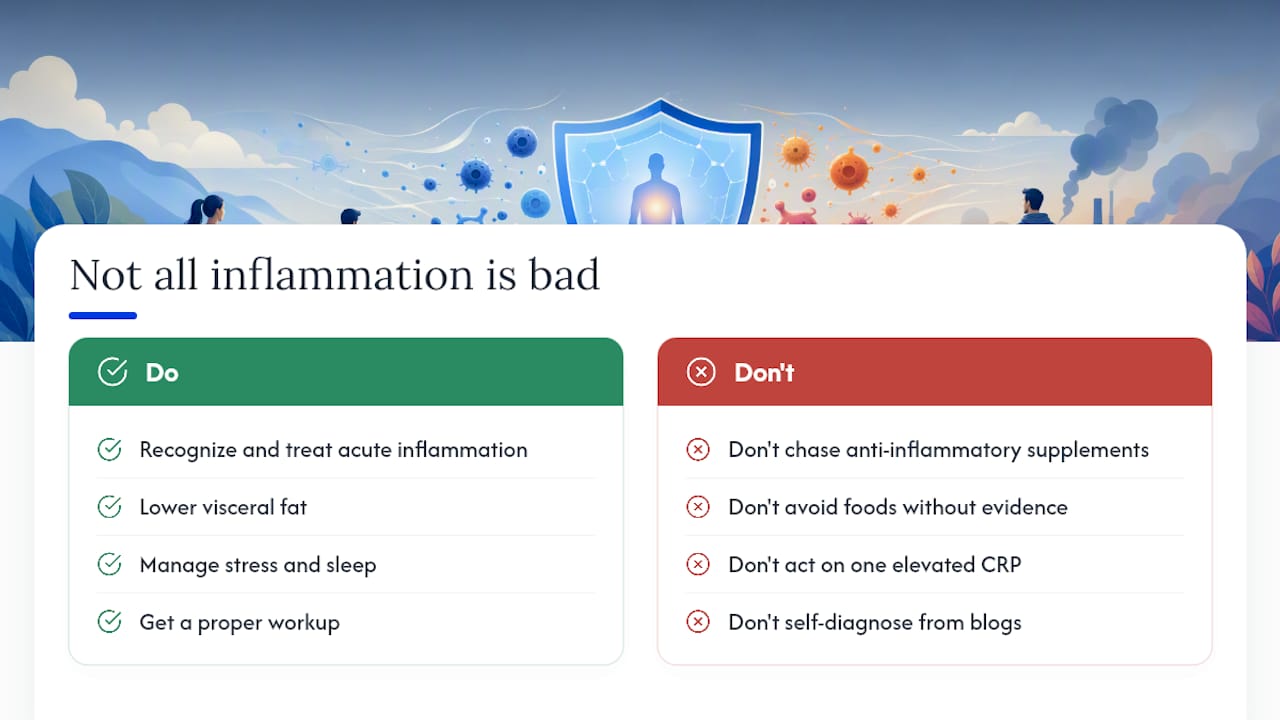
The practical takeaway is straightforward. Learn to recognize acute inflammation and treat it appropriately. Build habits that reduce the chronic triggers. Know the red flags that require urgent care. And if you have persistent unexplained symptoms, get a proper workup rather than self-diagnosing from a wellness blog.
Sources
This article is for general informational purposes only and is not a substitute for professional medical advice. Consult a qualified healthcare provider for diagnosis, treatment, or questions about your specific health situation.
Recommended
 21+ verification