Thymosin alpha 1 (Ta1) is a 28-amino-acid immunomodulatory peptide, marketed abroad in synthetic form as thymalfasin (Zadaxin), and studied as an adjunct therapy for chronic hepatitis, sepsis, and certain cancers. Clinical trial evidence is strongest for hepatitis B, more mixed for sepsis and oncology, and largely observational for COVID-19. It carries no FDA approval in the United States, and the agency has flagged real concerns about impurity and immunogenicity in bulk material.
TL;DR:
- Pharmaceutical-grade thymosin alpha 1 has the most robust evidence supporting its use in chronic hepatitis B, with consistent trial results showing benefit.
- Its sepsis mortality reduction appears promising but depends heavily on manufacturing consistency, with variable results from non-standardized sources.
- In cancer, thymosin alpha 1 shows potential as a supportive agent alongside therapy, but clinical data remains limited and not conclusive.
- COVID-19 evidence is mainly observational, with signals of immune improvement in lymphopenic patients, but lacks the randomized trials needed for definitive conclusions.
- The FDA has not approved thymosin alpha 1 in the US due to concerns over characterization and impurity control, emphasizing the importance of sourcing pharmaceutical-grade material.
Table of Contents
How Thymosin Alpha 1 Works: TLR Engagement and Immune Signaling
Thymosin alpha 1 doesn’t attack pathogens directly. It recalibrates how immune cells communicate, which is why researchers usually describe it as a biological response modifier rather than a blunt immune stimulant. That distinction matters for anyone trying to predict what the peptide will actually do in a given physiological context, because a modifier can push the immune system toward activation in one setting and toward restraint in another, depending on the starting state of the cells it touches.
The molecular story starts with Toll-like receptors (TLRs), the sensors dendritic cells and other innate immune cells use to detect danger signals. Ta1 engages TLR pathways, particularly TLR2 and TLR9, triggering the MyD88 adaptor cascade that feeds into three downstream branches: mitogen-activated protein kinase (MAPK) signaling, NF-κB activation, and interferon regulatory factor (IRF) transcriptional programs. Each branch reshapes gene expression in a slightly different direction, but the net effect is a coordinated shift in how antigen-presenting cells behave.
In dendritic cells specifically, this signaling boosts maturation markers and antigen-presentation capacity, which in turn shapes how effectively T cells get activated downstream. Thymosin alpha 1 belongs to a family of peptides that modulate immunity by activating dendritic cells and T cells through Toll-like receptors, producing measurable shifts in the surrounding cytokine environment.
Those cytokine shifts are where the clinical relevance lives. Ta1 exposure tends to raise:
- Interleukin-2 (IL-2), which supports T-cell proliferation
- Interferon-gamma (IFN-γ), central to antiviral and antitumor immune defense
- Interleukin-12 (IL-12), which helps polarize T-helper responses toward a Th1 profile
- Interleukin-6 (IL-6) and interleukin-10 (IL-10), both involved in balancing inflammation
The IL-6/IL-10 piece is worth pausing on. Ta1 doesn’t just amplify inflammation across the board. It appears to help tune the ratio between pro-inflammatory and regulatory signals, which is consistent with reports of benefit in both under-responsive states (chronic viral infection, some cancers) and over-responsive states (sepsis-associated immune dysregulation). That dual behavior is unusual for an immune-active peptide and is a big part of why researchers keep describing it as a modulator rather than a stimulant.
Natural killer (NK) cell activity also increases under Ta1 exposure in laboratory models, adding another layer to its antiviral and antitumor rationale. Combined with enhanced dendritic cell maturation and a Th1-leaning cytokine shift, the overall picture is a peptide that nudges the innate and adaptive arms of immunity to communicate more effectively, rather than simply cranking up activity in any single pathway.
Signaling speed callout: One kinetics study measured phosphorylation of p42/44 MAPK peaking within minutes of Ta1 exposure in vitro, a signaling window fast enough to rule out slow transcriptional reprogramming as the primary early mechanism. The rapid kinetics point instead to direct receptor-linked kinase activation as the first wave of response, with slower transcriptional effects (cytokine production, maturation marker upregulation) following afterward.
At the molecular level, the peptide itself is small: PubChem records list Ta1 at roughly 3,108 daltons, consistent with its 28-residue acidic sequence. That size and charge profile explain why it’s typically studied via subcutaneous injection rather than oral routes, since a peptide this size doesn’t survive gastrointestinal digestion intact.
For researchers working with related signaling peptides, understanding how cellular signaling pathways translate a molecular trigger into a downstream physiological effect is the same conceptual exercise, whether the peptide in question is Ta1, a growth factor analog, or a metabolic signaling compound.
Clinical Evidence by Indication: Hepatitis, Sepsis, Cancer, and COVID-19
Evidence quality for thymosin alpha 1 varies sharply by indication, and conflating them is one of the most common mistakes in secondary sources. The hepatitis literature is the deepest and most rigorous. Everything downstream of it gets progressively thinner.
Chronic hepatitis B and C
Thymalfasin has the longest clinical track record in chronic viral hepatitis, where it’s used as an immune adjuvant rather than a direct antiviral. Multiple randomized controlled trials, most using pharmaceutical-grade thymalfasin, have evaluated its effect on hepatitis B e-antigen (HBeAg) seroconversion and viral suppression, generally in combination with or compared against interferon-based regimens. Results across these trials show consistent directional benefit, though the effect size varies by study population, baseline viral load, and dosing duration. This is the indication where thymalfasin/Zadaxin is approved in more than 30 countries, including for chronic hepatitis B specifically.
Hepatitis C data exists but is thinner than the hepatitis B body of evidence, partly because direct-acting antivirals have largely displaced immune-adjuvant strategies for hepatitis C in the years since those trials were conducted. The historical hepatitis C trials still inform the broader immunological rationale, but they’re less clinically relevant to current treatment paradigms.
Sepsis and critical illness
Sepsis is where the randomized evidence gets more interesting and more contested. A large trial enrolling 361 patients in a randomized, double-blind, placebo-controlled design reported a reduction in 28-day mortality among patients receiving thymosin alpha 1 compared to placebo. Subsequent meta-analyses have generally reported findings pointing in the same direction, though they flag meaningful heterogeneity across the underlying trials in dosing, patient severity, and concurrent care standards.
The sepsis signal is real, but it’s not uniform. Mortality benefit shows up most clearly in trials using standardized, pharmaceutical-grade material with consistent dosing schedules. Trials with smaller sample sizes or variable material sourcing show scatter in outcomes, which is exactly what you’d expect if manufacturing consistency matters as much as the biological mechanism itself.
The mortality-reduction signal in sepsis is one of the more clinically compelling data points in the entire Ta1 literature, mostly because 28-day mortality is a hard, objective endpoint that’s difficult to skew through subjective reporting.
Oncology adjuncts
In cancer care, thymosin alpha 1 has mostly been studied as a combination agent rather than a standalone therapy, often alongside chemotherapy or immunotherapy regimens where treatment-related immunosuppression is a known problem. The rationale is straightforward: if chemotherapy suppresses lymphocyte counts and immune surveillance, an agent that restores dendritic cell and T-cell function might blunt that side effect while potentially improving antitumor immune activity.
The data here trends positive but stays limited by small trial sizes, heterogeneous cancer types, and inconsistent combination protocols. It’s a promising adjunct category, not an established standard of care, and researchers reviewing this literature should treat oncology findings as hypothesis-generating rather than confirmatory.
COVID-19 and severe respiratory infection
The COVID-19 data is almost entirely observational. Several studies during the pandemic period suggested that Ta1 use in severe cases was associated with improved outcomes specifically in lymphopenic patients, the subset of patients whose lymphocyte counts had dropped as a marker of immune dysfunction. That’s a biologically coherent finding given Ta1’s known effects on T-cell function, but observational association is a much weaker evidentiary standard than a randomized trial, and the timing of administration relative to disease stage appears to matter considerably. Randomized confirmation for COVID-19 specifically remains limited, which means this indication sits well behind hepatitis and sepsis in terms of evidentiary maturity.
The material-quality distinction that changes everything
One point gets lost across nearly every indication: trial results reflect pharmaceutical-grade thymalfasin manufactured under standardized international controls, not the variable compounded or research-grade products circulating outside clinical trial settings. Small-scale reports using uncontrolled sourcing don’t necessarily replicate the clean trial data, because impurity profiles and aggregation states can shift biological activity in ways that a 28-amino-acid peptide is particularly sensitive to. This is a running theme across the safety and sourcing discussion later in this piece, and it’s the single biggest reason to treat any anecdotal claim about Ta1 with more skepticism than a peer-reviewed RCT deserves.
U.S. Regulatory Status: What the FDA Actually Said
Thymosin alpha 1 is not FDA-approved for any indication in the United States, and that status isn’t a bureaucratic technicality. It reflects a specific evaluation the agency conducted.
The FDA reviewed Ta1 free base and Ta1 acetate as part of a 503A bulk drug substance nomination, the pathway through which compounding pharmacies request permission to use a substance in patient-specific compounded preparations. After technical review covering solubility, impurity profiling, and stability, the agency concluded that Ta1-related substances are not well-characterized and raised concerns about formulation, impurities, and immunogenicity, recommending against adding them to the 503A Bulks List.
That conclusion is narrower than a blanket safety rejection. The FDA’s language centers on characterization gaps, meaning the available data didn’t sufficiently establish consistent identity, purity, and stability profiles across manufacturing batches, not that the biological mechanism itself is unsafe. This nuance matters for how researchers and clinicians should interpret the ruling:
- The FDA’s concern is about manufacturing consistency and impurity control, not a determination that the molecule lacks biological activity.
- Aggregation-prone impurities were specifically cited as an immunogenicity risk, meaning poorly formulated material could trigger unwanted immune reactions distinct from the peptide’s intended activity.
- Stability data submitted in the nomination didn’t meet the bar the agency needed to greenlight routine compounding use.
Meanwhile, the global picture looks different. Thymalfasin under the brand name Zadaxin holds approval in more than 30 countries for chronic hepatitis B and use as an immune adjuvant, with several of those markets running well-established prescribing infrastructure around it. That gap between international approval and U.S. non-approval is exactly the kind of detail that gets flattened or omitted in marketing copy.
Any product or vendor claiming thymosin alpha 1 is “FDA-approved” in the U.S. is making a false claim, full stop. There is no FDA-approved indication for Ta1 domestically, and researchers evaluating suppliers or literature should treat that phrase as an immediate credibility red flag.
For research procurement specifically, this regulatory landscape means Ta1 is available in the U.S. primarily as a research-use compound rather than through a compounding pharmacy prescription pathway, which shifts the burden of quality verification onto documentation like certificates of analysis rather than FDA oversight of the drug substance itself.
How TA-1 Has Been Dosed and Monitored in Clinical Studies
Administration protocols across the Ta1 literature share a common route but diverge meaningfully in schedule and duration, largely because trial designs target different physiological endpoints across indications.
- Route of administration. Nearly all clinical studies use subcutaneous injection, consistent with the peptide’s size and the need to avoid gastrointestinal degradation.
- Hepatitis trials have generally used regimens combining Ta1 with interferon over extended treatment courses spanning months, reflecting the chronic nature of viral suppression as a therapeutic goal.
- Sepsis trials have tended toward shorter, more intensive dosing windows tied to the acute critical-illness timeline, given that the mortality endpoint (28-day survival) demands a faster-acting protocol.
- Oncology adjunct studies vary the most, since dosing gets layered onto existing chemotherapy or immunotherapy schedules that differ by cancer type and treatment phase.
No single dosing regimen has been standardized across indications, and that’s an important caveat for anyone trying to extrapolate a “typical dose” from the literature. Loading versus maintenance dosing distinctions exist in some trial designs but aren’t universally applied, which reflects the field’s early-stage understanding of optimal pharmacokinetics rather than any consensus protocol.
Monitoring in these trials typically tracks a combination of immune panels (lymphocyte subsets, cytokine levels), liver enzyme markers in hepatitis-focused studies, and hard clinical outcomes like mortality or viral suppression rates depending on the indication. Researchers designing or interpreting Ta1 studies should treat immune panel shifts as a mechanistic checkpoint, not a substitute for the clinical endpoint that actually matters for the question being asked.
This information describes what’s been reported in the research literature. It isn’t a treatment protocol, and anyone considering clinical use should defer entirely to local regulation, institutional review, and qualified medical oversight rather than trial dosing tables found in a review article.
Safety Profile, Side Effects, and Who Should Avoid It
Thymosin alpha 1’s safety record in clinical trials is generally favorable compared to many immunomodulatory agents, but “generally favorable” isn’t the same as “risk-free,” and the FDA’s own evaluation flagged specific mechanistic concerns worth taking seriously.
Reported adverse events across trials have skewed mild and included injection-site reactions, transient flu-like symptoms, and occasional mild fever, typically self-limiting within the trial windows. Severe adverse events tied directly to Ta1 have been uncommon in the pharmaceutical-grade trial literature, which is part of why the peptide has maintained regulatory approval abroad for decades.
The bigger concern sits at the manufacturing level rather than the biological mechanism level. The FDA’s evaluation specifically linked immunogenicity risk to aggregation and impurity profiles in the substances it reviewed, meaning a poorly formulated batch could provoke an immune reaction to the impurities or aggregated peptide structures themselves, separate from Ta1’s intended immunomodulatory activity. This is a manufacturing-quality problem as much as a molecular-safety problem, and it’s precisely why sourcing and handling practices matter so much for anyone working with Ta1 in a research setting.
Populations warranting extra caution include:
- Pregnant individuals, given the absence of adequate safety data in pregnancy across the reviewed literature
- People with active autoimmune disease, since an agent that shifts cytokine balance and T-cell activity carries theoretical risk of destabilizing an already dysregulated immune state
- Anyone combining Ta1 with other immunomodulatory agents or biologics, where cumulative or interactive immune effects haven’t been systematically studied
Pro Tip: If you’re tracking immune parameters in a research context, baseline lymphocyte counts and cytokine panels before any Ta1 exposure, then repeat at defined intervals. Sudden deviations from that baseline, especially unexpected fever or injection-site reactions that escalate rather than resolve, are the signal to pause and reassess rather than push through.
Practical monitoring in any research protocol should track injection-site response, systemic symptoms, and relevant immune markers relative to baseline, with a low threshold for stopping if reactions escalate rather than resolve within the expected short window.
Sourcing, COA Interpretation, and Storage for Research-Grade TA-1
Because Ta1 is chemically sensitive and the FDA’s own review flagged impurity-driven immunogenicity as a real risk, how a researcher sources and handles the peptide matters just as much as the underlying biology.
A certificate of analysis (COA) is the primary tool for verifying what’s actually in a vial, and reading one properly means checking more than a single purity percentage. The identity confirmation (usually via mass spectrometry matching the expected ~3,108 dalton mass) tells you the vial contains the right molecule. Endotoxin testing, reported in EU/mL, tells you whether bacterial byproducts from the manufacturing process could trigger unwanted immune activation, an especially relevant check given Ta1’s own immunomodulatory mechanism.
| COA element |
What it verifies |
Red flag to watch for |
| Identity (mass spec) |
Confirms the molecule matches Ta1’s expected sequence and mass |
Mass significantly off from ~3,108 Da |
| Purity (HPLC) |
Percentage of sample that is intact Ta1 versus degradation products |
Purity below 98%, or no method disclosed |
| Endotoxin level |
Bacterial contamination from production |
Levels above the lab’s stated acceptable threshold, or no testing performed |
| Aggregation/appearance |
Whether the peptide has clumped or degraded structurally |
Visible cloudiness or documented aggregation on analysis |
Storage practices directly determine whether that COA data stays accurate over time. Lyophilized (freeze-dried) Ta1 is comparatively stable but should be stored below negative 18 degrees Celsius to preserve structural integrity long-term. Once reconstituted, the peptide becomes far more fragile. A researcher-grade reconstituted solution generally holds stability only for a short window under refrigeration at 4 degrees Celsius, after which aggregation risk climbs and the biological activity profile can shift unpredictably.
That aggregation sensitivity connects directly back to the FDA’s immunogenicity concerns. Careful handling practices reduce it in practical ways:
- Reconstitute using appropriate diluents at conservative concentrations rather than maximizing yield per vial.
- Avoid repeated freeze-thaw cycles, which mechanically stress peptide structure and promote aggregation.
- Filter solutions where indicated to remove particulates before use.
- Store reconstituted product at the recommended refrigerated temperature and discard after the stability window rather than pushing use past it.
Pro Tip: Treat a COA’s absence, not just a poor result, as the disqualifying signal. A supplier that can’t produce third-party batch testing documentation on request is asking you to trust a molecule the FDA itself says isn’t well characterized, without giving you the one tool that could verify what you’re actually working with.
Researchers evaluating whether pharmaceutical-grade versus research-grade material is appropriate for a given experiment should match documentation rigor to the question being asked: exploratory mechanistic work may tolerate research-grade material with solid COA verification, while any work intended to inform clinical translation needs the manufacturing consistency that only pharmaceutical-grade sourcing reliably provides. For a broader look at how thymosin variants differ in structure and documentation standards, see this guide to thymosin peptide variants, and for practical steps on verifying COAs before ordering, the process applies across the thymosin family, not just Ta1.
What the Evidence Still Can’t Answer
The Ta1 literature has real depth in hepatitis and a genuinely interesting sepsis signal, but several gaps limit how confidently researchers can generalize findings across populations and indications.
- Western RCT replication. A meaningful share of the strongest hepatitis and sepsis trials originate from specific regional research networks; independent replication in broader, more diverse patient populations would strengthen confidence in effect sizes.
- Standardized endpoints across trials. Comparing studies is harder than it should be because outcome measures differ by trial (seroconversion rates, mortality percentages, cytokine shifts), making cross-study meta-analysis more approximate than ideal.
- Comparator material consistency. Future trials need explicit head-to-head comparisons using identical pharmaceutical-grade material, isolating manufacturing variability as a confound.
- Immunophenotype stratification. Trials that stratify patients by baseline lymphopenia or specific immune signatures, rather than treating all sepsis or COVID-19 patients as one group, would likely reveal which subpopulations benefit most.
Priority trial designs going forward should be randomized, placebo-controlled, use pharmaceutical-grade thymalfasin exclusively, and pre-specify immune biomarker timelines, since some cytokine shifts appear within days while clinical outcome differences (like mortality) take weeks to resolve. Translational biomarkers worth tracking longitudinally include lymphocyte subset recovery and IFN-γ/IL-10 ratios, both plausible early signals of whether the drug is doing what the mechanism predicts before a hard clinical endpoint is reached.
Any future trial expansion also needs to grapple with the same characterization questions the FDA raised: a randomized trial built on inconsistently characterized material will produce results just as hard to interpret as the smaller compounded reports researchers are already struggling to weigh against pharmaceutical-grade data.
Synthro Lab’s Approach to Thymosin Research
I’ve spent enough time reading through Ta1’s clinical literature to notice a pattern that annoys me: sources that either oversell the peptide as a cure-all or dismiss it entirely because it lacks FDA approval. Neither read is honest. The hepatitis data is genuinely strong. The sepsis mortality signal is real but heterogeneous. The FDA’s concerns are specific and technical, not a wholesale rejection.
Synthrolab’s position on this is straightforward: research-grade peptides only earn trust through documentation, not marketing language. Every batch we distribute gets independent testing for identity, purity, and endotoxin levels, with certificates of analysis available before you order, not after you ask twice. We don’t make clinical claims about outcomes, because that’s not our role. Our role is making sure researchers working with a molecule this sensitive to formulation know exactly what’s in the vial.
That’s the standard we’d want applied to our own research, and it’s the one we hold every product to.
— Mitch
Get Research-Grade Thymosin Peptides With Verified COAs
Reading the clinical literature is one thing. Getting peptide material that actually matches what a certificate of analysis promises is a separate problem, and it’s the one that trips up more researchers than the science itself.
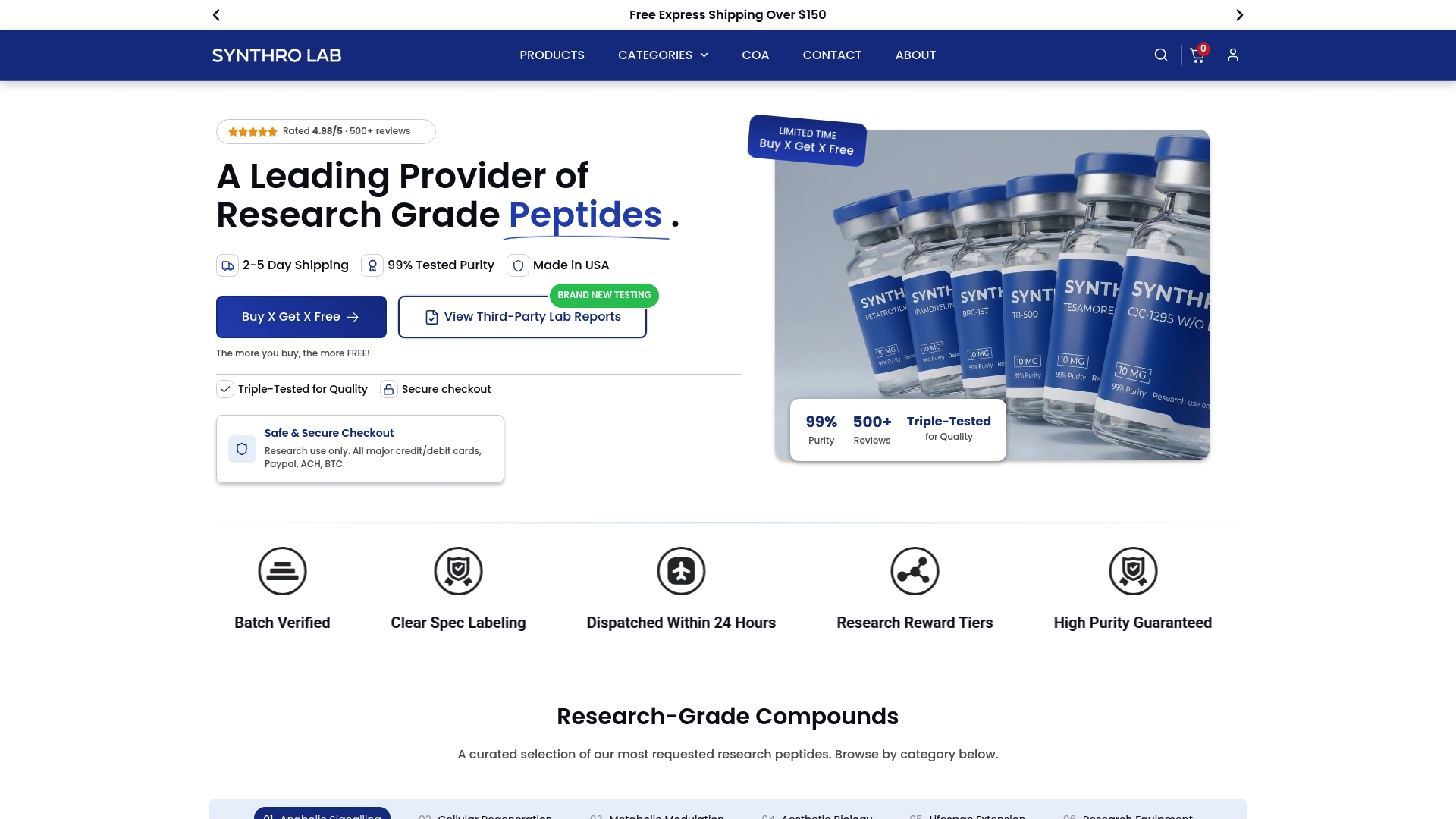
Synthrolab exists to solve that second problem. Every peptide we distribute, thymosin variants included, ships with independent batch testing for purity and identity, so you’re not relying on a manufacturer’s word alone. Given how sensitive Ta1 is to aggregation and impurity buildup, that documentation isn’t a nice add-on. It’s the difference between a research result you can trust and one you can’t reproduce.
If you’re new to working with peptides generally, our guide on peptide types, benefits, and quality standards walks through what to check before you order anything, thymosin or otherwise. Browse the current documentation and specifications, then decide what fits your research protocol.
Sources
Recommended
 21+ verification