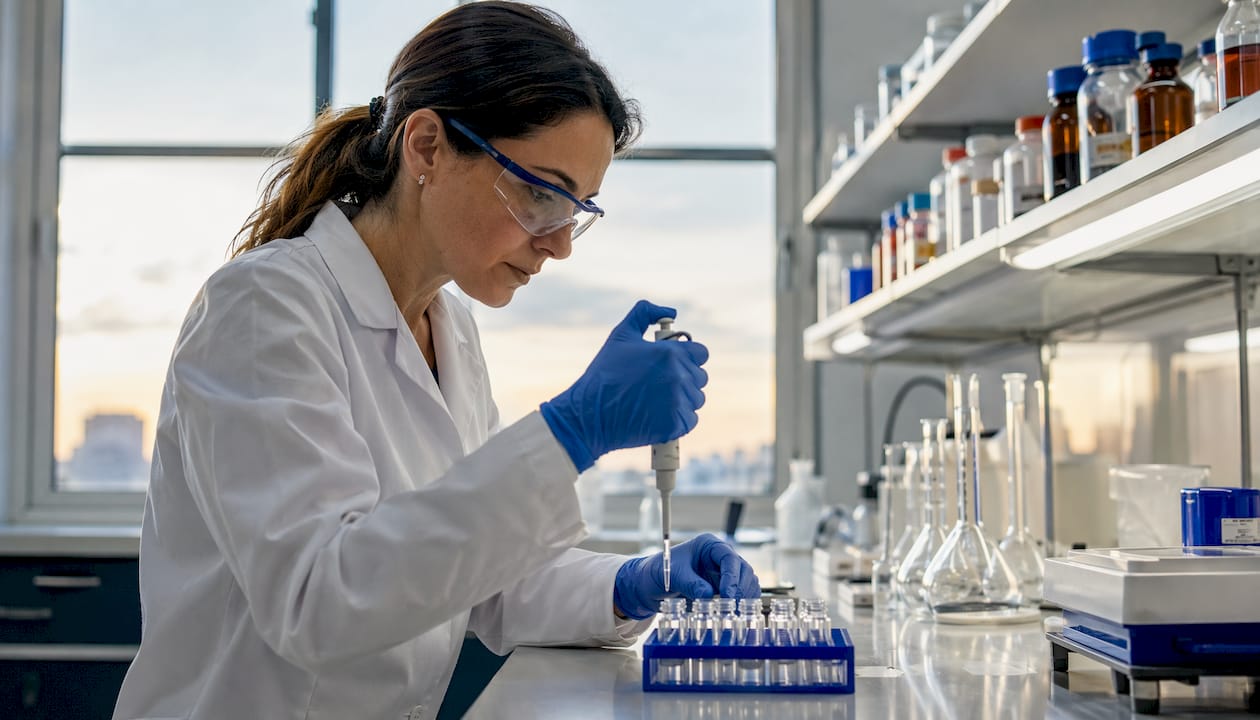
Tissue repair peptide research protocols define the dosing, administration routes, cycling schedules, and molecular targets that make experimental regeneration studies reproducible and translatable. The three peptides dominating preclinical tissue repair research right now are BPC-157, TB-500, and GHK-Cu. Each targets a distinct but overlapping set of repair pathways, and each demands its own handling logic in the lab.
Here is what a well-structured protocol covers across all three:
- Key peptides: BPC-157 (body protection compound), TB-500 (thymosin beta-4 fragment), and GHK-Cu (copper tripeptide)
- Primary delivery routes: subcutaneous injection, intramuscular injection, and oral gavage; topical application for GHK-Cu in dermal models
- Preclinical dosing ranges: BPC-157 at 1–10 mcg/kg, TB-500 at 2.0–7.5 mg per dose, GHK-Cu at 0.5–2.0 mg/kg depending on model and endpoint
- Cycling: a 5-days-on, 2-days-off schedule is the most widely cited approach for preserving receptor sensitivity and preventing neutralizing antibody formation during extended studies
- Molecular pathways: PI3K/Akt, MAPK, TGF-β signaling, and NF-κB inhibition drive angiogenesis, extracellular matrix remodeling, and inflammation resolution across all three compounds
- Stacking: BPC-157 and TB-500 are frequently co-administered for synergistic soft tissue repair; GHK-Cu is added for collagen remodeling and scar modulation
- Safety monitoring: track injection site reactions, hematology panels at baseline and study midpoint, and peptide stability via HPLC before each dosing cycle
The sections below break each peptide down by mechanism, dosing table, and protocol steps, then cover combination strategies and research design best practices.
Table of Contents
How BPC-157 drives tissue repair and what the dosing data shows
BPC-157 is a 15-amino-acid synthetic peptide derived from a gastric protein, and its most studied mechanism is the upregulation of vascular endothelial growth factor (VEGF) receptors. By amplifying VEGF signaling, BPC-157 induces angiogenesis in ischemic or damaged tissue, accelerating the formation of new capillary networks that supply oxygen and nutrients to the repair site. Alongside that, it modulates collagen fiber organization in a way that reduces aberrant cross-linking, which matters enormously in tendon and ligament models where scar architecture directly determines functional recovery.
The peptide also engages the PI3K/Akt and MAPK pathways, promoting fibroblast proliferation and extracellular matrix deposition. In gastrointestinal models, BPC-157 shows particular efficacy in restoring mucosal integrity, making it one of the few peptides with strong preclinical evidence across both musculoskeletal and gut tissue repair applications.
BPC-157 preclinical dosing reference
| Dose | Low to moderate ranges used in preclinical studies | Once daily | Variable cycle lengths commonly around several weeks | Subcutaneous near injury site preferred in tendon and ligament models; oral administration used for gastrointestinal studies; intramuscular reserved for deeper tissue targets | Rodent models commonly used
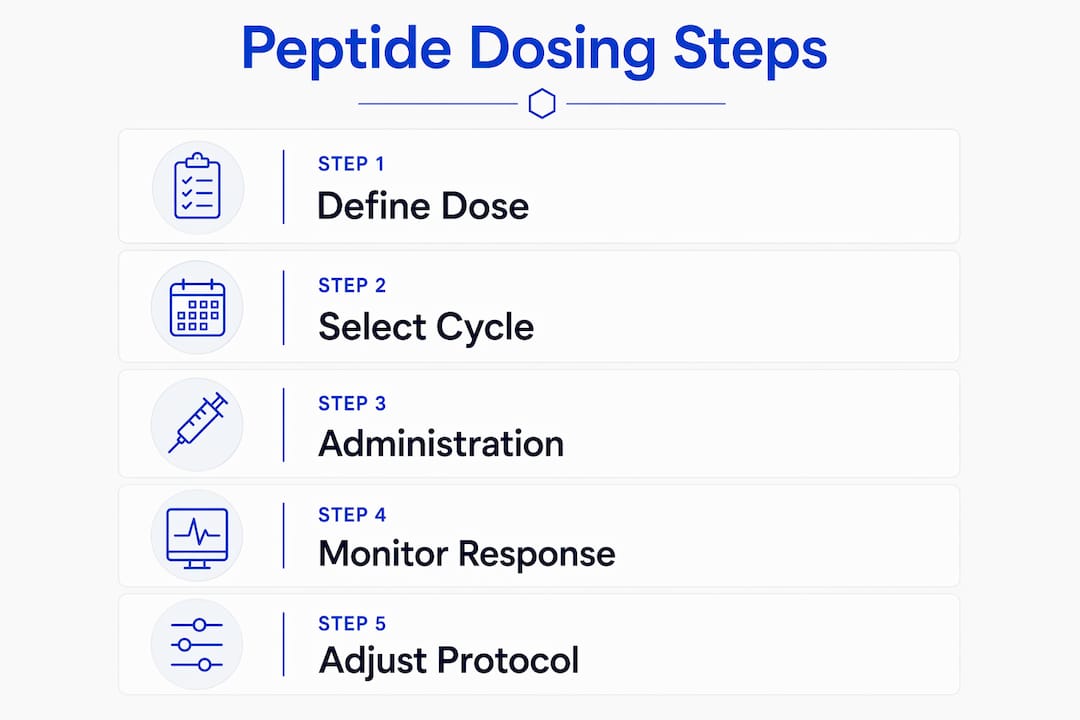
Subcutaneous administration near the injury site is preferred in most tendon and ligament models because it allows localized peptide concentration without systemic dilution. Oral administration remains viable for gastrointestinal endpoint studies, reflecting demonstrated peptide stability in gastric acid in rodent models. Intramuscular injection is reserved for deeper tissue targets or when subcutaneous access is limited by the model anatomy.
BPC-157 protocol steps
- Reconstitute lyophilized BPC-157 in bacteriostatic water at 0.9% NaCl; verify concentration by UV spectrophotometry before use
- Store reconstituted solution at 2–8°C; discard after 28 days or upon visible turbidity
- Administer at the same time each day to minimize circadian variability in receptor expression
- Run a 5-on/2-off weekly cycle for studies exceeding 3 weeks to limit receptor downregulation
- Collect tissue samples at 7, 14, and 28 days post-initiation for histological and biomechanical endpoints
- Include a vehicle-only control group and a sham-surgery group in all musculoskeletal models
- Document injection site appearance at each dosing event; photograph any local reaction for the study record
How TB-500 enhances cell migration and what dosing schedules work in practice
TB-500’s core mechanism is actin polymerization regulation. Specifically, it binds to G-actin (monomeric actin) and promotes its sequestration, which shifts the intracellular balance in a way that enhances cell motility. Progenitor cells, including satellite cells in muscle and tenocytes in tendon tissue, migrate more efficiently to the injury site when TB-500 is present. That migration effect, combined with the peptide’s documented anti-inflammatory properties, makes it particularly useful in models where chronic low-grade inflammation is slowing repair.
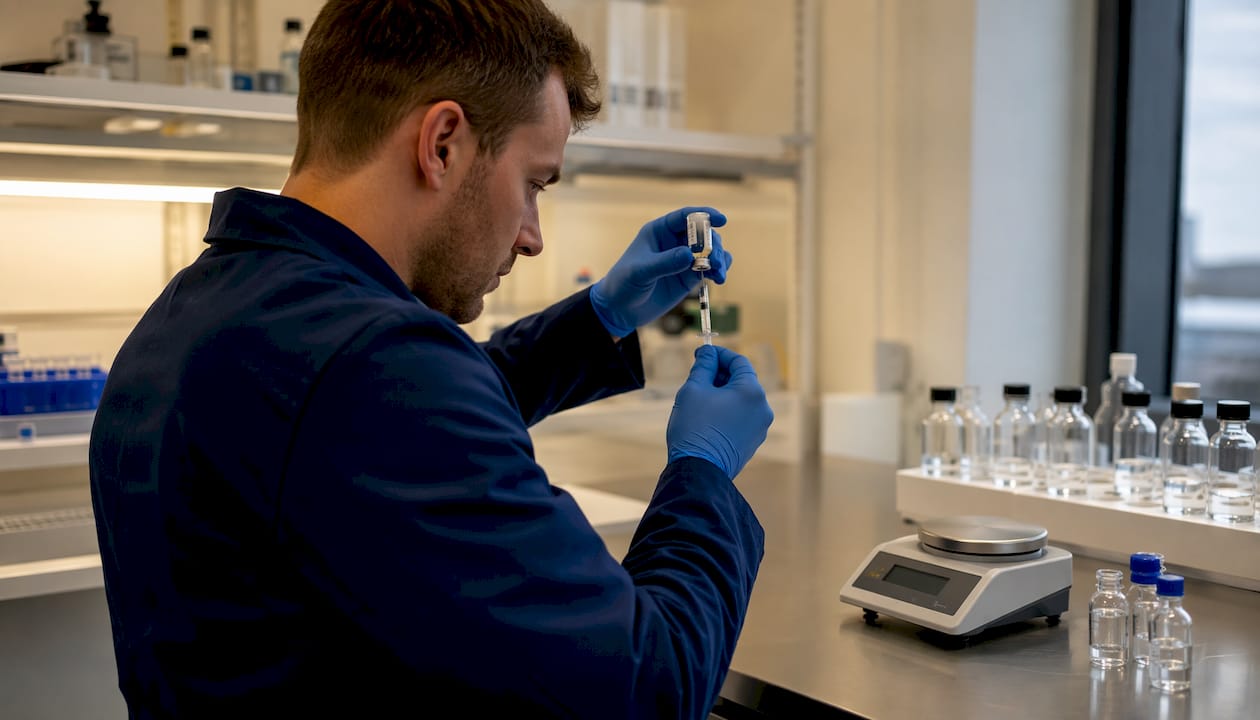
TB-500 also synergizes with BPC-157 in a mechanistically logical way: BPC-157 builds the vascular scaffold, and TB-500 recruits the cells that populate it. Researchers running combination protocols consistently report that the two peptides together produce faster histological repair scores than either alone in rodent soft tissue models.
TB-500 preclinical dosing reference
| Loading | Initial phase | Moderate to higher doses reported in preclinical usage | Multiple times weekly | Subcutaneous or intramuscular injection | Early weeks of protocol
| Maintenance | Following phase | Lower doses to sustain effect | Less frequent weekly dosing common | Subcutaneous injection | Following initial dosing phase
The loading-then-maintenance approach is consistent with TB-500’s pharmacodynamics where higher initial doses saturate binding sites followed by lower maintenance doses to avoid receptor fatigue. Some acute injury models may omit extended dosing phases and conclude after maintenance dosing periods.
TB-500 protocol steps
- Reconstitute in sterile bacteriostatic water; TB-500 is more stable in slightly acidic solutions (pH 4.5–5.5), so avoid alkaline diluents
- Administer subcutaneously in the dorsal scruff for rodent models; intramuscular injection in the quadriceps is acceptable for larger animal models
- Use a 29–31 gauge needle to minimize tissue trauma at the injection site
- Record body weight twice weekly; dose adjustments based on weight are standard in rodent studies exceeding 4 weeks
- Assess range-of-motion or gait analysis metrics at baseline, week 2, and week 4 for musculoskeletal endpoints
- Pair with BPC-157 in a separate syringe unless combining immediately before injection (see stacking section)
- Monitor for signs of systemic inflammation via serum CRP or IL-6 at study midpoint
What GHK-Cu does to gene expression and how to design a dosing protocol around it
GHK-Cu (glycyl-L-histidyl-L-lysine copper complex) operates at a level of biological complexity that sets it apart from most research peptides. It modulates matrix metalloproteinases (MMPs), enzymes that degrade extracellular matrix components, in a bidirectional way: it upregulates MMPs needed to break down fibrotic scar tissue while simultaneously stimulating collagen and elastin synthesis to rebuild healthy matrix. The net effect in tissue repair models is a shift away from disorganized fibrosis toward structured, functional connective tissue.

Beyond matrix remodeling, GHK-Cu drives fibroblast proliferation and exhibits antioxidant activity by chelating free copper ions that would otherwise catalyze oxidative damage at the repair site. Its gene expression effects are broad: studies have identified over 4,000 genes whose activity shifts in response to GHK-Cu exposure, including genes governing collagen synthesis and anti-inflammatory cytokine production. That breadth makes it a strong candidate for studies targeting skin, wound healing, and connective tissue endpoints, and it also introduces complexity in interpreting transcriptomic data.
GHK-Cu preclinical dosing reference
| Topical | Hydrogel or cream | Formulations at low concentrations used in wound healing models | Once or twice daily | Several weeks | Hydrogel or cream base | Provides controlled local release
| Subcutaneous | Injection | Low mg/kg dosing reported variably | Once daily | Several weeks | Bacteriostatic water | Prepare fresh; avoid co-storage with other peptides
| Intra-articular | Injection | Low mg per joint range | Weekly | Several weeks | Saline | Requires sterile technique
Topical formulations with hydrogel carriers offer spatiotemporal peptide release beneficial in wound healing models. For subcutaneous protocols, preparing fresh solution prior to each dosing is important due to GHK-Cu’s susceptibility to oxidation and potential interactions with other peptides in solution.
GHK-Cu protocol steps
- Verify peptide purity by HPLC before initiating any study; GHK-Cu is susceptible to oxidation during shipping and storage
- Store lyophilized powder at -20°C; reconstituted solution at 4°C for no more than 7 days
- For subcutaneous studies, rotate injection sites to prevent local tissue changes from confounding histological endpoints
- Monitor for histamine-like injection site reactions; antihistamines such as loratadine or cetirizine can manage these reactions without interfering with the peptide’s primary mechanism
- Include MMP activity assays (zymography or fluorescent substrate assays) as a functional endpoint alongside histology
- Run transcriptomic analysis (RNA-seq or qPCR panel) at study endpoint to capture gene expression shifts
- Document copper ion concentration in tissue samples at necropsy to confirm peptide delivery and distribution
Combination and stacking strategies for synergistic tissue repair research
The rationale for co-administering BPC-157, TB-500, and GHK-Cu is mechanistic, not arbitrary. BPC-157 establishes vascular supply, TB-500 drives cell recruitment and reduces inflammation, and GHK-Cu remodels the extracellular matrix and modulates gene expression. These three processes are sequential in natural wound healing, which means targeting all three simultaneously with a stacked protocol compresses the repair timeline in experimental models.
The most important handling rule for any combination protocol: mix peptides only immediately before injection. GHK-Cu’s copper complex creates acidity interactions that can inactivate BPC-157 and TB-500 if they share a vial for more than a few minutes. Prepare each peptide in its own stock solution, draw the doses sequentially into a single syringe immediately before administration, and inject within 2 minutes of mixing.
Recommended combination protocols
- Full stack (BPC-157 + TB-500 + GHK-Cu): Use for comprehensive soft tissue repair models targeting tendon, ligament, or wound healing endpoints. Administer BPC-157 at 5 mcg/kg and TB-500 at 5 mg per dose subcutaneously, with GHK-Cu at 1.0 mg/kg in a separate injection or mixed immediately before dosing. Run a 5-on/2-off weekly cycle for 6 weeks.
- BPC-157 + TB-500 (vascular and cellular focus): Best for musculoskeletal injury models where matrix remodeling is a secondary concern. Combine in a single syringe immediately before injection; this pairing is chemically more stable than any combination involving GHK-Cu.
- BPC-157 + GHK-Cu (matrix and angiogenesis focus): Useful for dermal wound healing or gastrointestinal mucosal repair models. Administer BPC-157 subcutaneously and GHK-Cu topically in a hydrogel carrier to avoid mixing incompatibilities entirely.
- TB-500 + GHK-Cu (anti-inflammatory and remodeling focus): Appropriate for chronic inflammation models or fibrosis studies. Prepare fresh at each dosing event; do not pre-mix.
- Cycling alignment: When running a full stack, align all three peptides to the same 5-on/2-off schedule to simplify dosing logistics and reduce the risk of protocol drift across a multi-week study.
- Washout periods: For studies comparing stacked versus single-peptide arms, build in a 2-week washout between crossover phases to allow receptor resensitization and clearance of residual peptide activity.
- Interaction monitoring: Run serum peptide concentration assays (LC-MS/MS) at week 1 and week 4 to confirm that co-administration is not altering individual peptide pharmacokinetics in your specific model.
Pro Tip: When designing a stacking study, power your sample size calculation on the primary endpoint for the weakest-effect peptide in the stack. If TB-500 alone produces a smaller effect size than BPC-157 in your tissue model, use TB-500’s effect size as the basis. This prevents underpowering the combination arm and gives you a defensible statistical rationale for the full protocol.
Expert recommendations for rigorous tissue repair peptide study design
The single biggest reproducibility problem in peptide research right now is dosing variability. Current literature shows wide variation in peptide dosing, routes, and cycle durations across published studies, which makes cross-study comparison nearly impossible and slows clinical translation. Standardizing your protocol from the start is not just good science; it is the difference between a publishable dataset and one that sits in a drawer.
Study design and controls
Rigorous experimental design requires at minimum four groups in any tissue repair peptide study: vehicle control, sham surgery or injury control, single-peptide treatment, and combination treatment when applicable. Blinding the outcome assessors to group assignment is non-negotiable for histological and biomechanical endpoints, where subjective scoring introduces significant bias. Pre-register your primary endpoint and statistical analysis plan before data collection begins.
Safety and toxicity monitoring
- Collect baseline hematology (CBC, liver enzymes, creatinine) before dosing begins
- Repeat at study midpoint and at necropsy to detect any cumulative organ stress
- Monitor body weight twice weekly; a loss exceeding 15% of baseline triggers protocol review under most IACUC guidelines
- Document all injection site observations at every dosing event with standardized scoring criteria
Peptide purity and stability verification
Never assume purity from a certificate of analysis alone. Run your own HPLC verification on each new lot before initiating a study. GHK-Cu is particularly vulnerable to oxidation during transit; a lot that passed QC at the manufacturer may have degraded by the time it reaches your lab. Mass spectrometry confirmation of molecular weight is a 30-minute step that prevents months of wasted work.
Delivery method also affects stability. Hydrogel-based delivery platforms provide spatiotemporal control of peptide release and protect labile compounds from enzymatic degradation in the tissue microenvironment. For injectable protocols, bacteriostatic water is preferred over sterile water because the benzyl alcohol preservative slows microbial growth without affecting peptide structure at standard concentrations.
Statistical analysis and data interpretation
- Pre-specify your primary and secondary endpoints in the study protocol before data collection
- Use ANOVA with post-hoc correction (Tukey or Bonferroni) for multi-group comparisons; report effect sizes alongside p-values
- For histological scoring data (ordinal scales), use non-parametric tests (Kruskal-Wallis with Dunn’s correction)
- Report all adverse events and animal exclusions transparently; selective reporting is the fastest route to a retraction
- Consider mixed-effects models for repeated-measures designs where individual animal trajectories matter
Regulatory and ethical considerations
All tissue repair peptide studies in the United States require IACUC approval before any animal work begins. The 3Rs framework (Replacement, Reduction, Refinement) should be documented in your protocol submission, with explicit justification for the species, sample size, and injury model chosen. For studies involving novel peptide combinations not previously characterized in vivo, a dose-escalation pilot with a small cohort (n = 3–5 per group) is both ethically sound and scientifically prudent before committing to a full-powered study.
Peptides like BPC-157, TB-500, and GHK-Cu are not FDA-approved therapeutics and are classified as research compounds in the United States. They may not be administered to humans outside of an approved IND application. Any publication arising from their use should clearly state the research-only status of the compounds and avoid language that implies clinical recommendation.
Pro Tip: Run a 5-on/2-off dosing schedule as your default for any study exceeding 3 weeks. Smart cycling preserves receptor sensitivity and reduces the risk of neutralizing antibody formation, both of which can silently erode your treatment effect over time and make your results look weaker than the peptide actually is.
Synthrolab supplies the research-grade compounds your protocol demands
Designing a rigorous tissue repair peptide study is only as good as the compounds you start with. Synthrolab provides research-grade BPC-157, TB-500, and GHK-Cu verified by third-party HPLC and mass spectrometry, with certificates of analysis available for every lot. That is the baseline any serious preclinical study requires, and it is what separates a dataset worth publishing from one that cannot be replicated.
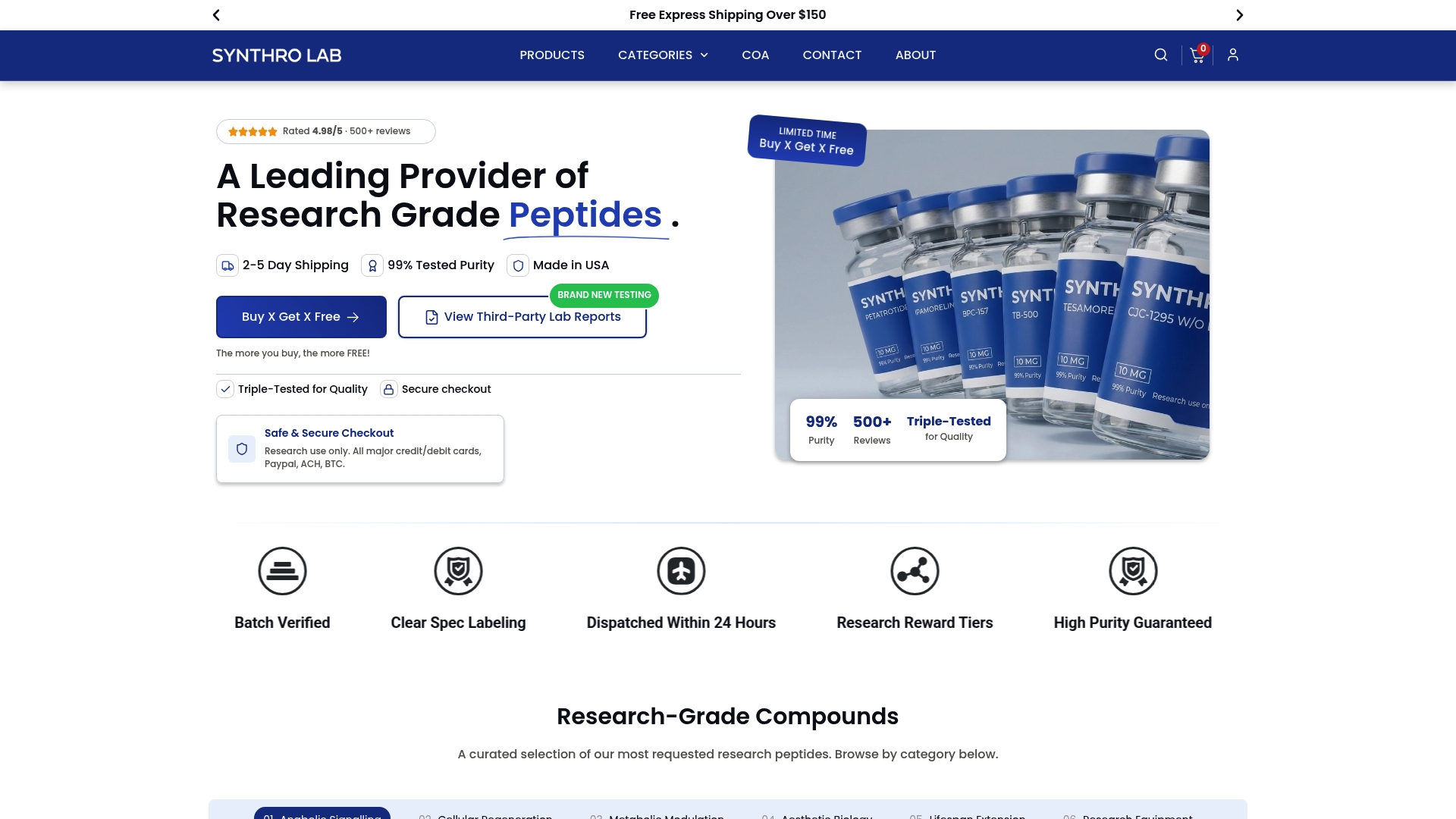
Synthrolab’s compounds are formulated specifically for laboratory use, with lot-to-lot consistency that matters when you are running multi-week cycling protocols where even small purity variations compound across dosing events. The cellular regeneration catalog includes individual peptides and combination sets, so you can source a full stacking protocol from a single verified supplier rather than reconciling COAs from three different vendors. Researchers who need to verify quality documentation before ordering can review the certificate of analysis directly on the site. Start your next tissue repair study with compounds you can actually trust.
Key Takeaways
Effective tissue repair peptide research requires standardized protocols, verified compound purity, and mechanistically grounded combination strategies across BPC-157, TB-500, and GHK-Cu.
| Point |
Details |
| Cycling prevents receptor fatigue |
A 5-on/2-off weekly schedule preserves receptor sensitivity and limits neutralizing antibody formation in extended studies. |
| Mix combination peptides fresh |
Combine BPC-157, TB-500, and GHK-Cu only immediately before injection to prevent degradation from acidity interactions. |
| Verify purity before every study |
Run HPLC and mass spectrometry on each new lot; GHK-Cu is especially vulnerable to oxidation during transit. |
| Standardize endpoints and controls |
Include vehicle, sham, single-peptide, and combination groups; blind outcome assessors to reduce scoring bias. |
| Synthrolab for verified compounds |
Synthrolab supplies third-party verified BPC-157, TB-500, and GHK-Cu with lot-specific COAs suited for preclinical research protocols. |
Recommended
 21+ verification