For US-based labs sourcing research-grade alpha peptides, Synthrolab is the recommended supplier. Before you click checkout on any peptide order, complete three checks: confirm the exact sequence and CAS number against your experimental target, request the batch Certificate of Analysis (COA) with both HPLC and LC-MS data, and verify the product carries “Research Use Only” (RUO) labeling with an accompanying MSDS. These steps take minutes and prevent the far more expensive problem of running an assay with the wrong or substandard material.
Common alpha peptides researchers order from Synthrolab include:
- Thymosin alpha-1 (TA-1): immunomodulation and dendritic/NK cell studies
- Alpha-MSH and analogs: melanocortin receptor signaling, cytokine suppression, metabolic pathway work
- HGH Peptide Fragment 176-191: metabolic and lipolytic signaling assays
- IGF-1: anabolic and growth factor pathway research
Request the COA and confirm RUO labeling before purchase. Contact Synthrolab’s technical team directly with your lot number and project scope to get the right documentation before your order ships.
Table of Contents
Which alpha peptides do researchers actually order?
The word “alpha” in a peptide name can mean three entirely different things: a structural feature (alpha-helix conformation), a family subtype designation (alpha-MSH within the melanocortin family), or a vendor brand label. That naming ambiguity is the single most common source of procurement errors. Always verify sequence and CAS number, not just the product name.
Here are the peptides researchers most commonly order under the “alpha” umbrella, with their primary lab applications:
- Thymosin alpha-1 (TA-1): 28 amino acids; used in immunomodulation studies targeting dendritic cells, NK cell activation, and TLR pathway assays. Common vial sizes are typically provided in small milligram amounts, lyophilized.
- Alpha-MSH and analogs (e.g., Melanotan II): Acts through MC1 and MC4 receptors; used in pigmentation studies, appetite/metabolic signaling assays, and cytokine suppression models. Lyophilized, typically in small vial sizes suitable for research use.
- Alpha defensins: Short cationic peptides used in antimicrobial assays and innate immunity models. Verify the specific defensin subtype (HNP-1, HNP-2) by CAS before ordering.
- Alpha-synuclein fragments: Used in neurodegeneration models, particularly Parkinson’s-related aggregation and toxicity assays. Confirm the fragment range (e.g., 1-60, 61-140) against your assay design.
- HGH Peptide Fragment 176-191: C-terminal fragment of human growth hormone; used in lipolytic signaling and metabolic pathway studies. Available lyophilized in 5 mg vials.
- IGF-1: Insulin-like growth factor 1; used in anabolic signaling, cell proliferation, and receptor-binding assays.
One procurement caution worth flagging: “AlphaPept” is a Python-based proteomics framework for mass-spectrometry data analysis, not a peptide compound. Researchers searching for alpha peptides occasionally land on AlphaPept documentation, which has nothing to do with chemical peptide procurement.
For melanocortin system work, receptor subtype selection matters more than the peptide name. MC4 receptor studies require analogs with confirmed MC4 binding affinity; a generic “alpha-MSH” listing without receptor selectivity data is insufficient for pathway-specific experiments.
What quality signals should you require before ordering?
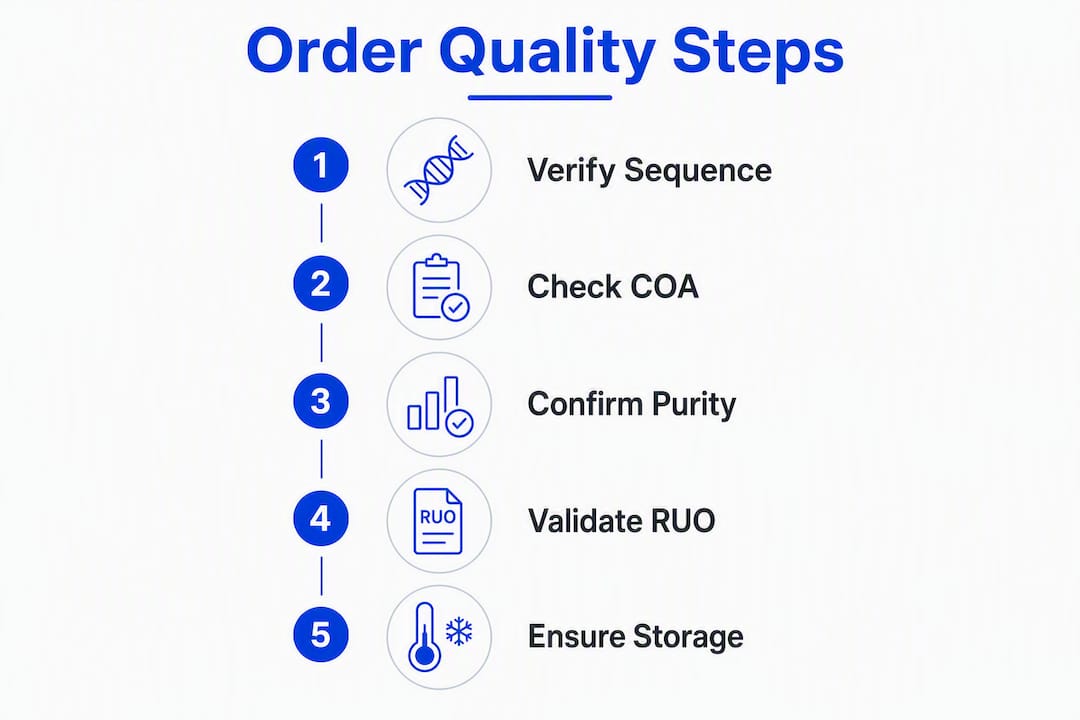
Purity by HPLC is the baseline. Research-grade peptides should carry a purity specification of ≥95% by HPLC area percent, with the assay method clearly stated on the COA. Some applications, particularly receptor-binding assays and in vivo animal studies, warrant ≥98%. The COA should disclose the method, not just the result.
What a complete COA contains
| COA Component |
What to Check |
| Lot / batch number |
Must match the vial label exactly |
| Peptide sequence and CAS |
Confirm against your target before use |
| HPLC trace and area percent |
Method stated; single dominant peak |
| LC-MS spectrum |
Confirms molecular weight matches sequence |
| Water content (Karl Fischer) |
Relevant for accurate mass-based dosing |
| Residual solvents |
Acetonitrile, TFA levels disclosed |
| Endotoxin (LAL assay) |
Required for cell-based and in vivo assays |
Third-party or independent batch testing adds a layer of confidence that in-house QC alone cannot provide, particularly for cross-lab reproducibility. When a supplier conducts both synthesis and QC internally, ask whether the analytical data was generated on a separate instrument or by an independent laboratory.
A practical acceptance checklist before you approve a lot:
- COA is present and references the specific lot number on the vial
- Sequence and CAS match your experimental target
- HPLC purity ≥95% (or ≥98% for sensitive assays), method disclosed
- LC-MS confirms molecular weight within ±1 Da of theoretical
- Lot-to-lot consistency statement available for repeat orders
- Endotoxin data present if the peptide will contact live cells or animals
Always request the CAS number and full sequence alongside the COA. Suppliers who cannot provide both are not operating at research-grade standards. Synthrolab’s COA page gives researchers direct access to batch documentation before purchase.
What does “Research Use Only” mean for US labs?
Most research peptides sold in the United States, including Thymosin alpha-1, alpha-MSH analogs, HGH Fragment 176-191, and IGF-1, are not FDA-approved for human therapeutic use. Harvard Health notes that claims for non-FDA-approved peptides frequently lack robust human clinical evidence, and safety and efficacy remain unverified for many products sold outside regulated pharmaceutical channels.
RUO labeling is the supplier’s declaration that the product is intended for laboratory research, not for human administration. For US labs, this means the product should arrive with:
- “Research Use Only” or “Not for Human Use” clearly stated on the label and documentation
- An MSDS or SDS covering hazard classification, handling, and disposal
- Intended-use language in the order confirmation and invoice
Supplement-grade products marketed as “Thymogen Alpha-1” or similar names are not substitutes for laboratory-grade TA-1. They carry different quality controls, different documentation, and are formulated for consumer use, not bench assays.
Pro Tip: Document the intended research use on your internal procurement record at the time of order. If your institution has an IRB or compliance office, confirm whether your peptide experiments fall under their review scope before ordering. One line in your lab notebook noting “for in vitro receptor-binding assay, RUO” is often sufficient, but institutional requirements vary.
This article is general information for research procurement purposes, not clinical or dosing advice. Confirm current regulatory requirements with your institutional compliance officer or a qualified professional for your specific situation.
How to place an order and what to expect on delivery
Pre-order checklist
- Confirm peptide sequence and CAS number against your assay design
- Request the batch COA (HPLC + LC-MS) before committing to a lot
- Select vial size and quantity based on your experiment’s molar requirements
- Ask about minimum order quantities (MOQ) for your target peptide
- Inquire about sample vials if you need to validate the material before bulk purchase
- Confirm accepted payment methods (credit card, institutional PO, wire transfer)
Shipping and cold-chain considerations
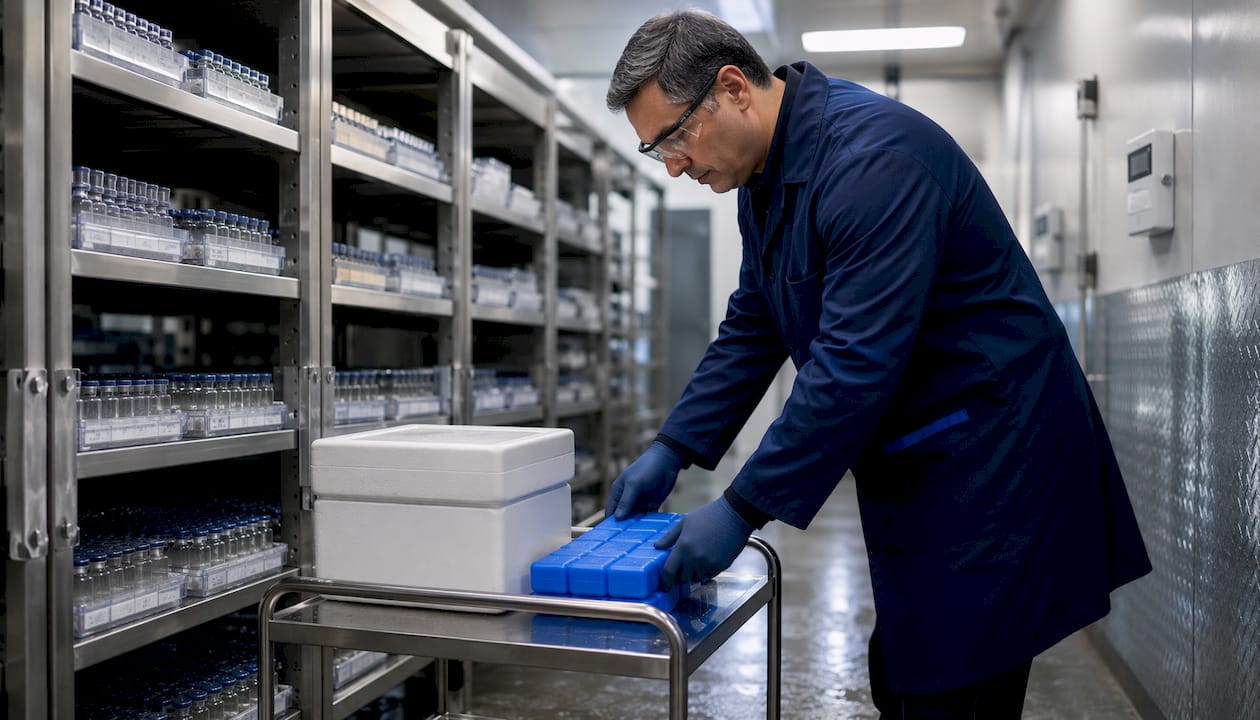
Lyophilized peptides are stable at ambient temperature for short transit periods, but most suppliers ship with cold packs or dry ice for overnight delivery to preserve integrity. What drives shipping cost upward: heavier shipments, destinations outside the continental US, temperature-controlled packaging, and expedited overnight options. For in-stock items, same-day processing is common; custom or bulk synthesis orders typically require additional lead time depending on sequence complexity and quantity.
Pricing factors
Price per milligram varies by peptide complexity, purity specification, and vial size. Bulk orders and multi-vial packs typically carry per-mg discounts. Factor in cold-chain packaging and expedited shipping when calculating total landed cost. A peptide beginners guide from Synthrolab covers procurement basics for new lab members who need to understand these cost components before their first order.
How to store and reconstitute lyophilized alpha peptides
Storage recommendations
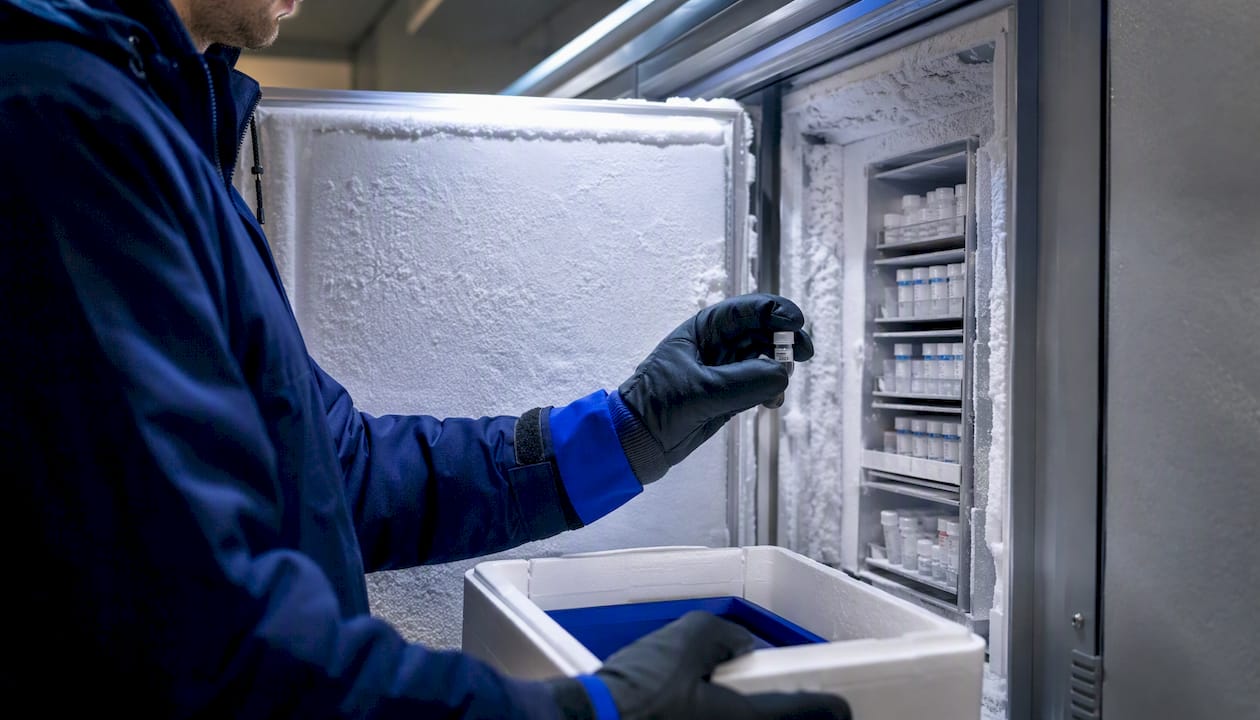
Lyophilized peptides are stable long-term at -20°C, protected from light and moisture. Once reconstituted, stock solutions should be stored at -80°C in single-use aliquots to avoid repeated freeze-thaw cycles, which degrade activity over time.
| Form |
Recommended Storage |
Typical Shelf Life |
| Lyophilized (sealed vial) |
-20°C, desiccated, dark |
2+ years |
| Lyophilized (opened vial) |
-20°C, desiccated, reseal immediately |
6–12 months |
| Reconstituted stock solution |
-80°C, single-use aliquots |
3–6 months |
| Working dilution |
4°C, use within 1-2 days |
1-2 days |
Step-by-step reconstitution
- Allow the sealed vial to equilibrate to room temperature before opening to prevent condensation from entering the lyophilized cake.
- Calculate your target concentration (nmol/µL or mg/mL) based on the assay requirements and the COA-confirmed net peptide weight.
- Select an appropriate solvent. Sterile water or bacteriostatic water works for most hydrophilic peptides; DMSO or dilute acetic acid (0.1%) may be needed for hydrophobic sequences. Synthrolab’s peptide water guide covers solvent selection in detail.
- Add solvent slowly down the side of the vial; do not vortex. Gently swirl or invert until fully dissolved.
- Aliquot immediately into low-binding microtubes sized for single-use volumes.
- Freeze aliquots at -80°C. Label each tube with peptide name, lot number, concentration, date, and your initials.
Sterile technique throughout is non-negotiable for any peptide destined for cell-based or in vivo assays. Use endotoxin-tested solvents and certified low-binding plasticware. Dispose of unused reconstituted material according to your institution’s chemical waste protocols.
What documentation and technical support should your supplier provide?
A research-grade supplier should hand over more than just a vial. The documentation package that supports experimental reproducibility includes:
- Certificate of Analysis (COA) with lot number, sequence, HPLC trace, and LC-MS data
- MSDS/SDS covering hazard classification, first aid, storage, and disposal
- Storage and reconstitution sheet specific to the peptide or product family
- Certificate of origin where required by institutional procurement policy
- Recommended assay references or application notes for the peptide’s primary research use
Technical support from a supplier’s scientific team should be accessible before and after purchase. Reasonable requests include sequence confirmation, suggested HPLC conditions for in-lab identity verification, reporter assay recommendations, and guidance on control peptide selection. Suppliers who can only answer billing questions are not equipped for research accounts.
Before placing a bulk order, request the COA and technical datasheet for the specific lot you intend to purchase. Lot-level documentation, not catalog-level specifications, is what matters for reproducibility across experiments and labs.
What does the evidence say about key alpha peptides?
Thymosin alpha-1 is among the best-characterized immunomodulatory peptides in the research literature. Animal studies show TA-1 can restore immune function in athymic mice and may modulate pathways linked to neuroinflammation. Its primary experimental targets are dendritic cell maturation, NK cell activation, and TLR signaling. For assay design, measure cytokine output (IL-12, IFN-γ) and NK cell cytotoxicity as primary endpoints.
Alpha-MSH acts through the melanocortin receptor family, suppressing pro-inflammatory cytokines including TNF-alpha and IL-6, and modulating appetite signaling via hypothalamic MC4 receptor interaction. Researchers designing melanocortin pathway experiments should select analogs with confirmed receptor subtype selectivity rather than ordering generic alpha-MSH without binding data.
For formulation-related experiments, the Cleveland Clinic notes that peptide effectiveness in topical or delivery-system contexts depends heavily on validated delivery chemistry. Simply adding a peptide active to a formulation without a penetration carrier is unlikely to produce reliable results.
Experimental design note: Many non-approved research peptides lack large-scale human clinical trials. Animal and in vitro findings are the primary evidence base for most alpha peptides currently available for research. Design experiments with appropriate controls, validate peptide identity in-lab using HPLC or mass spec, and treat in vivo animal data as hypothesis-generating rather than directly translatable to human physiology.
Suggested starting points for literature review: PMC reviews on thymosin alpha-1 mechanisms, melanocortin system physiology, and the peptides.org TA-1 summary for historical clinical context. For cognitive and neurological applications, Synthrolab’s cognitive peptide research guide provides experimental design context for peptides with CNS-adjacent mechanisms.
Key Takeaways
Research-grade alpha peptides require sequence/CAS verification, a lot-specific COA with HPLC and LC-MS data, and RUO labeling before any experiment begins.
| Point |
Details |
| Verify sequence and CAS first |
Never order by name alone; confirm the exact sequence and CAS number against your assay target. |
| Require HPLC + LC-MS on the COA |
Accept ≥95% purity by HPLC area percent; LC-MS must confirm molecular weight within ±1 Da. |
| Confirm RUO labeling and MSDS |
Every research peptide should arrive with RUO labeling and a complete SDS for safe handling and disposal. |
| Store lyophilized at -20°C |
Reconstituted stock goes to -80°C in single-use aliquots; working dilutions are stable 1-2 days at 4°C. |
| Synthrolab for US research orders |
Synthrolab supplies independently batch-tested peptides with accessible COAs and technical support for experimental reproducibility. |
Why documentation quality separates good suppliers from adequate ones
The COA is where supplier quality becomes visible or doesn’t. A lot number on a vial that doesn’t match the COA, an HPLC trace without a stated method, or a molecular weight confirmed only to the nearest whole number: these are not minor administrative gaps. They are signals that the analytical process was not rigorous enough to support reproducible science.
What I find underappreciated in peptide procurement discussions is how much the documentation package matters beyond the purity number itself. A 98% HPLC purity figure means little if the assay method is unstated, the LC-MS data is missing, or the lot number cannot be traced back to a specific synthesis batch. Reproducibility across labs depends on lot-level traceability, not catalog-level specifications.
Synthrolab’s approach, providing independently batch-tested peptides with accessible COAs, lot-specific analytical data, and technical support for assay design, addresses the part of peptide procurement that most researchers only discover is broken after an experiment fails. The reasons researchers choose Synthrolab come down to documentation transparency and the ability to get a scientific answer from the supplier before the order ships, not after.
Synthrolab: research-grade peptides with full batch documentation
Synthrolab supplies independently batch-tested, research-grade peptides for US labs, including Thymosin alpha-1, alpha-MSH analogs, HGH Fragment 176-191, and IGF-1, each available in standard vial sizes with lot-specific COAs covering HPLC purity, LC-MS confirmation, and endotoxin data where applicable. MSDS documentation ships with every order. Cold-chain packaging and expedited overnight shipping are available for temperature-sensitive lots.
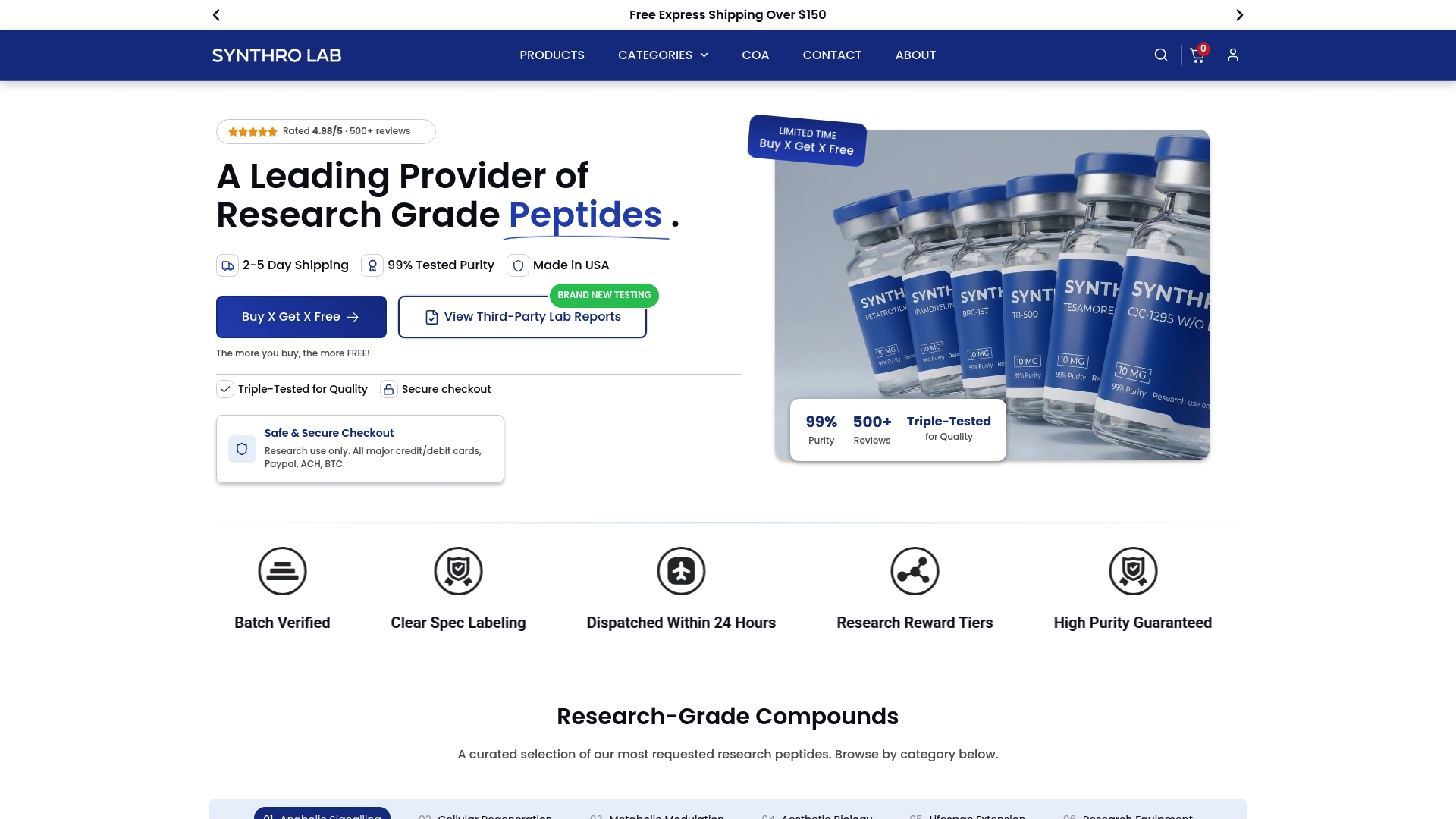
The catalog covers peptide types and quality metrics across cellular regeneration, anabolic signaling, and metabolic modulation categories. Sample vials are available on request for lot validation before bulk purchase. Payment by credit card and institutional purchase order is accepted.
To order or verify documentation: view the catalog at synthrolab.com, access batch COAs directly at the COA page, or contact the technical team with your project scope, target peptide, and required lot documentation. Mention your assay type and any endotoxin or purity requirements upfront so the right lot can be confirmed before shipment.
Useful sources
- Thymosin alpha-1: mechanisms and research applications (PMC) — Primary mechanistic review; use for TA-1 pathway and experimental design context.
- Melanocortin peptides and physiological roles (PMC) — Receptor subtype mapping for alpha-MSH analog selection and cytokine assay endpoints.
- Harvard Health: peptides, potential benefits, and safety concerns — Safety and regulatory context for non-FDA-approved research peptides.
- Cleveland Clinic: peptides for skin care — Delivery and formulation considerations for topical or skin-model peptide experiments.
- AlphaPept proteomics framework (PubMed) — Clarifies that AlphaPept is a mass-spec data tool, not a peptide compound; prevents procurement confusion.
- Thymosin alpha-1 background summary (peptides.org) — Historical clinical context and amino acid profile for TA-1 experimental background.
- Alpha peptide naming and procurement guide (seekpeptides.com) — Explains naming ambiguity and procurement validation steps.
Request supplier COAs and MSDS documents for every lot you purchase; published literature covers mechanisms, but only lot-level documentation confirms the identity and purity of the specific material in your lab.
Recommended