Exenatide, liraglutide, dulaglutide, semaglutide, and tirzepatide are the five FDA-approved injectable GLP-1 pathway compounds in routine clinical use, alongside oral semaglutide (Rybelsus) as the only approved non-injectable option. Orforglipron and danuglipron represent the next wave: oral, non-peptide small molecules still in clinical trials. Classification matters more than brand recognition here: each compound falls into a peptide GLP-1 receptor agonist, a dual GIP/GLP-1 agonist, or a small-molecule oral agonist, and each carries a distinct regulatory status tracked by the FDA and referenced in the American Diabetes Association treatment guidance.
- Exenatide — exendin-4 backbone peptide, FDA-approved for T2DM
- Liraglutide — human GLP-1 backbone peptide, approved for T2DM and (higher dose) obesity
- Dulaglutide — Fc-fusion peptide, approved for T2DM
- Semaglutide — human GLP-1 backbone peptide, approved for T2DM and obesity
- Tirzepatide — dual GIP/GLP-1 agonist peptide, approved for T2DM and obesity
- Oral semaglutide (Rybelsus) — same peptide backbone as injectable semaglutide, oral tablet formulation
- Orforglipron, danuglipron — investigational, non-peptide oral small-molecule agonists
Key Takeaways
GLP-1 pathway compounds range from approved peptide receptor agonists like semaglutide and tirzepatide to investigational oral small molecules like orforglipron, all converging on the same glucose-dependent cAMP/PKA signaling mechanism.
| Point |
Details |
| Six approved agents anchor the class |
Exenatide, liraglutide, dulaglutide, semaglutide, tirzepatide, and oral semaglutide cover current FDA-approved options. |
| Classification depends on backbone |
Human GLP-1 backbone, exendin-4 backbone, dual GIP/GLP-1 agonism, and non-peptide small molecules are the four working categories. |
| Mechanism explains the side effect profile |
GLP-1R activation raises cAMP and PKA activity, driving both glucose-dependent insulin release and CNS-mediated nausea. |
| Investigational agents are moving toward oral and multi-receptor designs |
Orforglipron, danuglipron, and retatrutide represent the next generation beyond single-target peptide injectables. |
| Synthrolab supplies research-grade materials for this work |
Batch-tested peptides with certificates of analysis are available for laboratory investigation of GLP-1 pathway mechanisms. |
Table of Contents
Examples of GLP-1 Pathway Compounds by Molecular Class
Grouping these agents by molecular backbone is more useful for citation purposes than grouping by brand name, since backbone determines immunogenicity, half-life, and often adverse effect profile. Six classes cover essentially everything currently approved or in late-stage development.
Human GLP-1 backbone analogs modify the native 30-amino-acid human GLP-1 sequence to resist DPP-4 degradation. Liraglutide achieves this through fatty acylation that promotes albumin binding. Semaglutide extends the same principle with a longer fatty acid chain and an amino acid substitution, stretching its half-life to roughly a week. Both are FDA-approved.
Exendin-4 backbone agents derive from a peptide first isolated from Gila monster venom, which shares roughly 50% sequence homology with human GLP-1 but resists native degradation on its own. Exenatide is the direct pharmaceutical product of this discovery, available as a twice-daily injection or an extended-release once-weekly microsphere formulation. It is FDA-approved but generally considered less potent than newer human-backbone analogs.
Dual GIP/GLP-1 agonists activate two incretin receptors simultaneously. Tirzepatide is the only approved example, engineered as a single peptide that binds both the GIP receptor and the GLP-1 receptor with balanced affinity. It carries FDA approval for both type 2 diabetes and chronic weight management.
Fc-fusion and albumin-fusion peptides attach a GLP-1 analog to a larger protein carrier to slow renal clearance. Dulaglutide fuses a modified GLP-1 peptide to an IgG4 Fc fragment, producing a once-weekly injectable.
Non-peptide small-molecule agonists are the newest and most operationally distinct class. Orforglipron and danuglipron activate the GLP-1 receptor through an entirely different chemical scaffold that is not a peptide at all, meaning it survives oral administration without special formulation tricks. Neither is FDA-approved; both remain investigational, with ongoing trials tracked in recent pharmacology reviews.
Indirect modulators don’t bind the GLP-1 receptor directly. DPP-4 inhibitors (sitagliptin, linagliptin) work by blocking the enzyme that degrades endogenous GLP-1, raising native hormone levels rather than mimicking the hormone itself. This mechanistic difference is a common point of confusion in the literature and worth flagging explicitly in any classification framework.
| Class |
Representative examples |
Regulatory status |
| Human GLP-1 backbone |
Liraglutide, Semaglutide |
FDA-approved (T2DM and/or obesity) |
| Exendin-4 backbone |
Exenatide |
FDA-approved (T2DM) |
| Dual GIP/GLP-1 agonist |
Tirzepatide |
FDA-approved (T2DM and obesity) |
| Fc/albumin-fusion peptide |
Dulaglutide |
FDA-approved (T2DM) |
| Oral peptide (same backbone, oral delivery) |
Oral semaglutide (Rybelsus) |
FDA-approved (T2DM) |
| Non-peptide small molecule |
Orforglipron, Danuglipron |
Investigational (clinical trials) |
| Indirect modulator (DPP-4 inhibition) |
Sitagliptin, Linagliptin |
FDA-approved (T2DM), distinct mechanism |
How Does GLP-1 Receptor Activation Actually Work?
GLP-1 receptor agonism triggers a straightforward second-messenger cascade: receptor binding activates adenylate cyclase, which raises intracellular cAMP and activates protein kinase A, and PKA activation in pancreatic beta cells is what drives glucose-dependent insulin secretion. The glucose-dependency is the operative detail. These compounds amplify insulin release only when blood glucose is already elevated, which is why they carry a much lower intrinsic hypoglycemia risk than sulfonylureas or exogenous insulin.
The same receptor signaling suppresses glucagon secretion from pancreatic alpha cells, compounding the glucose-lowering effect from the opposite direction. But GLP-1 receptors aren’t confined to the pancreas.
- Gastrointestinal tract: slows gastric emptying, blunting post-meal glucose spikes
- Hypothalamus: activates satiety circuits, reducing caloric intake independent of glycemic effects
- Peripheral tissues: emerging evidence points to anti-inflammatory and autophagy-related effects in liver and adipose tissue
The clinical behavior of any GLP-1 pathway compound traces back to where its target receptors sit. CNS receptor activity drives appetite suppression and, at the extreme, the nausea that limits tolerability. Pancreatic receptor activity drives the glycemic benefit. Understanding this receptor distribution explains why a single molecular class produces such a wide symptom and efficacy profile across patients.
This distribution also explains a clinical paradox researchers ask about often: why do GI side effects and metabolic benefit rise together? Both originate from the same receptor family, just expressed in different organs.
Molecular engineering, not just dose, determines how long a GLP-1 compound stays active. Three modification strategies dominate the approved compounds: fatty acid acylation for albumin binding (liraglutide, semaglutide), Fc-fusion to a larger carrier protein (dulaglutide), and extended-release microsphere encapsulation (once-weekly exenatide).
- Liraglutide: daily subcutaneous injection, half-life around 13 hours
- Exenatide: twice-daily injection (short-acting) or once-weekly extended-release microsphere formulation
- Dulaglutide: once-weekly subcutaneous injection via Fc-fusion design
- Semaglutide: once-weekly subcutaneous injection, or once-daily oral tablet (Rybelsus) with a specialized absorption enhancer
- Tirzepatide: once-weekly subcutaneous injection
Metabolism differs by molecule too. Most peptide GLP-1 agonists undergo proteolytic catabolism rather than renal excretion, which matters when designing studies involving patients with reduced kidney function. Exenatide is a partial exception, with a meaningful renal clearance component that requires caution in advanced renal impairment.
Pro Tip: When comparing pharmacokinetic data across studies, check whether a trial reports terminal half-life or effective half-life, since extended-release and Fc-fusion formulations often show a much longer effective duration of action than their raw plasma half-life suggests.
What Clinical Evidence Supports These Compounds?
Approved indications split cleanly along two lines: type 2 diabetes management for all six approved agents, and chronic weight management for semaglutide, high-dose liraglutide, and tirzepatide specifically. The evidence base behind these indications comes largely from large randomized controlled trials rather than observational data.
Trial data across the GLP-1 receptor agonist class shows consistent reductions in HbA1c and body weight, with the strongest cardiovascular and renal risk-reduction signals concentrated in the newer, more potent agents. Cardiovascular outcome trials have demonstrated reduced major adverse cardiac events for several agents in populations with existing cardiovascular disease, and renal outcome data show slowed progression toward kidney failure in at-risk diabetic populations.

The magnitude of the newer compounds’ effect is what shifted clinical practice patterns. Semaglutide and tirzepatide have produced marked weight reductions in trial populations, a scale of effect that older agents like exenatide and liraglutide rarely approached.
Three caveats belong in any research interpretation of this evidence. Trial populations often skew toward patients who tolerated the drug well enough to complete the study, inflating apparent effectiveness relative to real-world adherence. Cost remains a significant access barrier that shapes which populations end up represented in longer-term outcome data. And tolerability, not efficacy, is usually what determines whether a patient stays on therapy long enough to realize the metabolic benefits these trials measure.
Safety Profile and Monitoring Considerations
Gastrointestinal effects dominate the adverse event profile across every approved GLP-1 pathway compound: nausea, vomiting, and diarrhea are the most frequently reported, typically clustering around dose initiation and titration steps. CNS GLP-1 receptors in the area postrema mediate this aversion response, and it’s the leading cause of treatment discontinuation, affecting a small percentage of patients severely enough to stop therapy.
Less common but clinically important signals include a pancreatitis association flagged in postmarketing surveillance, and thyroid C-cell tumor findings observed in rodent studies (not confirmed in human data, but reflected in current labeling caution). Some trials have also noted modest reductions in lean muscle mass alongside fat mass loss, a finding of particular interest to researchers studying body composition outcomes.
Hypoglycemia risk from GLP-1 agents alone is low given their glucose-dependent mechanism. Risk rises meaningfully when these agents are combined with insulin or sulfonylureas, since those add-on drugs bypass the glucose-dependency safeguard entirely.
A practical monitoring checklist for clinical or research use:
- Screen baseline GI history and set expectations for transient nausea during titration
- Check pancreatic enzymes if a patient reports significant abdominal pain
- Assess renal function before initiating agents with meaningful renal clearance
- Review concomitant insulin or sulfonylurea use and adjust doses proactively to offset hypoglycemia risk
- Counsel on expected GI tolerance timelines to support adherence through the titration period
Investigational GLP-1 Pathway Compounds Worth Tracking
Beyond the six approved agents, several investigational compounds are reshaping how researchers think about receptor targeting strategy. Retatrutide, a triple agonist targeting GIP, GLP-1, and glucagon receptors simultaneously, has produced notable weight-loss signals in mid-stage trials. HM15211 represents another multi-agonist approach in earlier development, explored alongside other pleiotropic applications in obesity, NASH, and inflammatory disease research.

On the oral small-molecule side, orforglipron and danuglipron remain the two names to know. Neither is peptide-based, and both aim to solve the practical problem that injectable peptides create: adherence friction and manufacturing cost. Ongoing development of these molecules reflects a broader pivot toward oral, non-peptide GLP-1 receptor agonism.
Pro Tip: If you’re selecting an investigational compound for a mechanistic study rather than a translational efficacy trial, prioritize receptor selectivity and signaling bias data over headline weight-loss figures. A cleaner mechanistic profile often matters more than trial-stage efficacy numbers when the goal is isolating a specific signaling pathway.
The Field Is Moving Past Single-Receptor Thinking
The trajectory here is unmistakable: single-receptor peptide injectables are giving way to multi-receptor agonists and oral small molecules, and that shift changes how you should design a study, not just what drug you pick. Treating these compounds as glucose-lowering agents alone misses most of what they do.
The more useful frame, and the one I’d push researchers toward, is systemic metabolic modulator: something acting on the pancreas, gut, brain, and possibly liver and adipose tissue at once. Interpret your endpoints accordingly.
Sourcing Research-Grade Materials for GLP-1 Pathway Studies
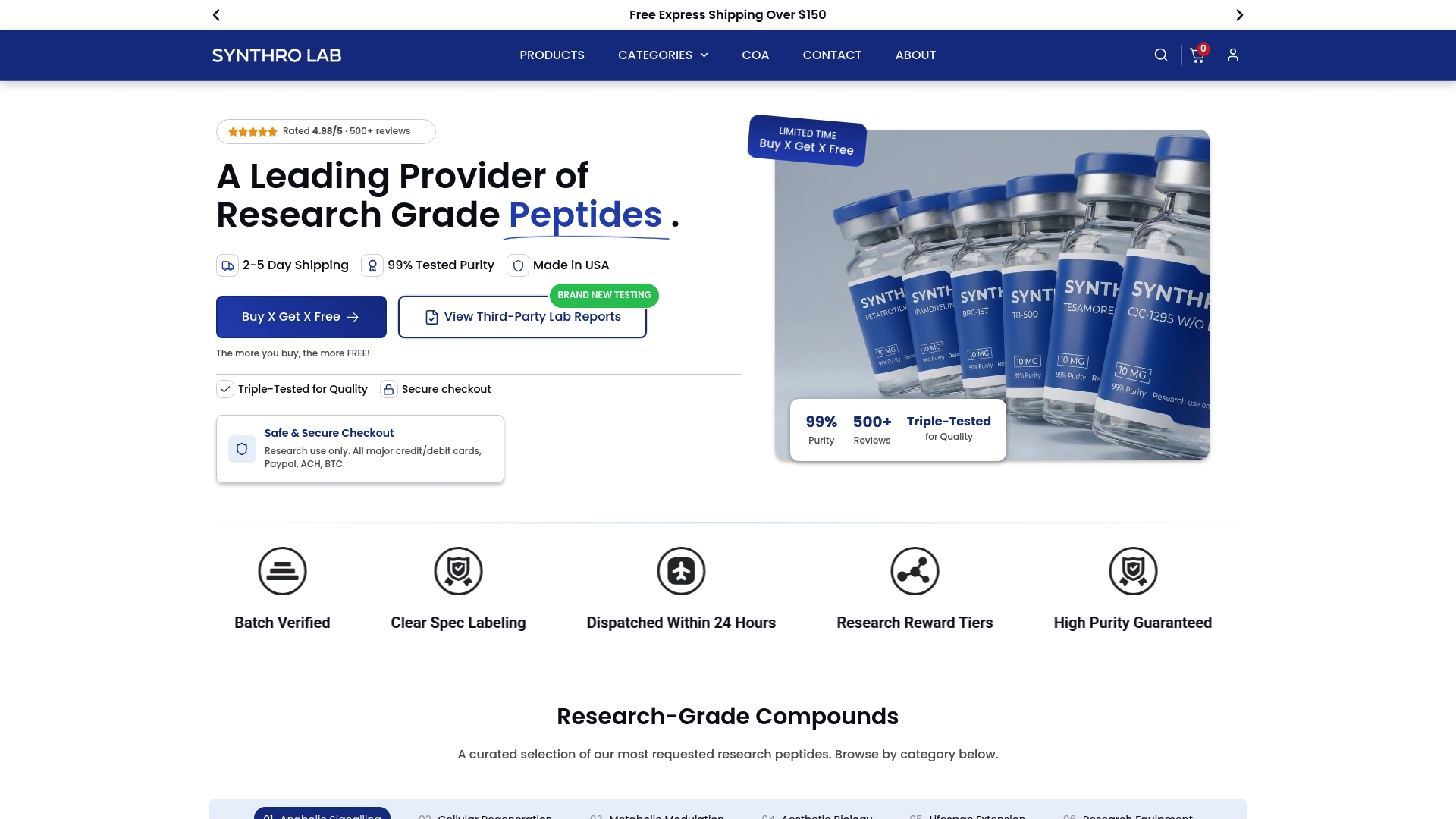
Studying receptor selectivity, signaling bias, or metabolic modulation across this compound class requires materials with verified purity, not just a plausible label. Synthrolab supplies research-grade peptides across the metabolic modulation category, each independently batch tested with a certificate of analysis, giving investigators a documented purity baseline before a compound ever reaches the bench.
For labs building out comparative work on peptide backbones and receptor targeting, the guide to peptide types and quality standards breaks down what a certificate of analysis should actually verify before you trust a vendor’s purity claim. These products are intended strictly for laboratory research, not for human consumption, and any use requires appropriate institutional and regulatory approval. Browse the current catalog to source materials for your next protocol.
Frequently Asked Questions
What are the main examples of GLP-1 pathway compounds used in research and clinical practice?
The core approved examples are exenatide, liraglutide, dulaglutide, semaglutide, tirzepatide, and oral semaglutide (Rybelsus). Orforglipron and danuglipron are the leading investigational oral small molecules currently in trials.
What’s the difference between a GLP-1 receptor agonist and a GLP-1 pathway modulator?
A direct agonist, like semaglutide, binds and activates the GLP-1 receptor itself. An indirect modulator, like a DPP-4 inhibitor, raises levels of the body’s own GLP-1 by blocking the enzyme that normally breaks it down.
Are any GLP-1 pathway compounds not peptides?
Yes. Orforglipron and danuglipron are non-peptide small molecules designed for oral administration without the absorption-enhancer technology that oral semaglutide requires. Both remain investigational rather than FDA-approved.
Why does tirzepatide get classified differently from semaglutide?
Tirzepatide activates both the GIP receptor and the GLP-1 receptor, making it a dual agonist, while semaglutide activates only the GLP-1 receptor. This dual mechanism is part of why tirzepatide has shown larger weight-loss effects in trials.
How does glucose-dependent insulin secretion reduce hypoglycemia risk?
GLP-1 receptor agonists only amplify insulin release when blood glucose is already elevated, unlike insulin or sulfonylureas, which can lower glucose regardless of the current level. Risk rises mainly when these agents are combined with insulin or sulfonylureas.
This article is general information, not a substitute for advice from a qualified doctor. Consult a qualified healthcare professional about your own circumstances before acting on anything here.
Sources
These sources carry trial identifiers and mechanistic detail suited for direct citation in clinical or preclinical research.
Recommended
 21+ verification