No peptide has been proven to extend human lifespan. Among the compounds marketed for healthy aging, GLP-1 receptor agonists and the mitochondrial peptide elamipretide (SS-31) carry the strongest human clinical evidence, while popular names like BPC-157 and Epithalon remain largely preclinical. Anyone considering peptide therapy for aging should treat medical supervision, verified sourcing, and lab monitoring as non-negotiable starting points.
TL;DR:
- GLP-1 receptor agonists have the strongest evidence for metabolic and cardiovascular benefits, but their relevance to lifespan extension remains indirect.
- Elamipretide received FDA approval for Barth syndrome in 2025, making it the most clinically advanced mitochondrial peptide but not approved for general aging.
- Most marketed peptides lack extensive human trial data, and their long-term safety profiles remain uncertain, especially outside regulated pharmaceutical channels.
- Risks of peptide use include injection infections, hormonal imbalances, and untracked side effects due to limited long-term research.
- Genuine benefits are mainly seen in patients with specific conditions like sarcopenia or metabolic diseases; healthy adults lack solid evidence for elective longevity.
Synthrolab
Support Evidence-Based Peptide Research
Synthrolab provides research-grade peptides and laboratory compounds for investigating cellular signalling, metabolism, mitochondria, and longevity mechanisms.
Visit Synthrolab
Table of Contents
What Are Longevity Peptides and How Do They Work?
Peptides are short chains of amino acids that act as signaling molecules, either binding directly to cell receptors or triggering hormone cascades downstream. Some function as receptor agonists that mimic natural hormones, others as secretagogues that stimulate the pituitary gland, and still others target tissue repair, mitochondrial function, or telomere biology through less-understood pathways. This is where the term “anti-aging peptides” gets murky: it lumps together drugs with FDA-reviewed trial data alongside compounds tested mostly in rodents.

The gap matters because pharmacokinetics differ wildly by class. A peptide that raises growth hormone in a 25-year-old athlete does not necessarily behave the same way in a 65-year-old with reduced receptor sensitivity. Reviews of the field consistently point to a translational gap between preclinical peptide data and human outcomes, meaning a mechanism that looks compelling in a petri dish or a mouse study frequently fails to reproduce in controlled human trials. That gap is the single biggest reason to read peptide research skeptically, peptide by peptide, rather than trusting a class-wide label like “longevity-enhancing compounds.”
How Strong Is the Evidence for Each Major Peptide?
Evidence quality varies enormously across the peptides marketed for healthy aging, and treating them as one category obscures real differences in trial rigor.
- GLP-1 receptor agonists have the deepest evidence base of any peptide-adjacent therapy discussed here. Large randomized trials show consistent metabolic and cardiovascular benefits, including reduced cardiovascular events in high-risk populations. Their relevance to aging is indirect, built on improved metabolic markers rather than a direct longevity endpoint, but the trial infrastructure behind them dwarfs anything else on this list.
- SS-31 (elamipretide) is the most clinically advanced mitochondrial-targeted peptide in development. It received FDA approval in 2025 for Barth syndrome, a rare genetic mitochondrial disorder, and remains in Phase II/III trials for other mitochondrial conditions. That approval is disease-specific, not a general aging indication, but it is the clearest regulatory milestone any peptide on this list has reached.
- Growth hormone secretagogues like sermorelin and ipamorelin stimulate the body’s own GH release rather than injecting synthetic hormone directly. Small studies in older adults show shifts in body composition and IGF-1 levels, but they also carry metabolic tradeoffs worth watching, which the growth hormone peptide research literature outlines in more depth.
- BPC-157 and TB-500 produce striking tissue-repair results in animal models, and researchers studying gut and tissue repair pathways have documented compelling preclinical mechanisms. Controlled human trials remain scarce.
- Epithalon and related Khavinson bioregulators show lifespan extension in animal studies and appear in older observational cohorts from Russian research groups, but modern Western randomized trials are essentially absent, and theoretical concerns about telomerase activation and cancer risk have not been resolved.
- GHK-Cu and thymosin alpha-1 have real human data in narrow contexts, mainly topical skin applications for GHK-Cu and immune modulation for thymosin alpha-1. Neither has trial data supporting broader anti-aging or lifespan claims.
Reviews of biomarker trials add a useful caution here: several NAD+ precursor studies successfully raise NAD+ levels in blood, but raising a biomarker is not the same as proving a clinical aging outcome. The same logic applies across most peptides on this list.
Are Longevity Peptides FDA-Approved in the United States?
No peptide currently carries an FDA approval for an anti-aging indication. Elamipretide’s 2025 approval covers Barth syndrome specifically, a narrow genetic disease population, and doesn’t extend to general longevity or wellness use, as the SS-31 development history makes clear.
Most peptides marketed for longevity fall outside standard prescription channels entirely. The FDA maintains guidance flagging certain bulk drug substances used in compounding as presenting significant safety risks, which restricts which peptides compounding pharmacies can legally prepare. That leaves a large “research-grade” market operating outside pharmaceutical regulation, intended for laboratory investigation rather than human self-administration. Clinicians and investigators working with these compounds need to understand that distinction before assuming research-channel products meet pharmaceutical-grade standards.
What Are the Real Risks of Using Longevity Peptides?
Risk profiles differ by class, but several patterns recur. Growth hormone secretagogues can cause water retention, joint discomfort, and measurable shifts toward insulin resistance with prolonged use. Injectable peptides of any type carry infection and sterility risks when sourcing or reconstitution practices are lax. And for a large share of these compounds, long-term human safety data simply doesn’t exist yet, which makes informed consent genuinely difficult, since the person consenting can’t be told what a decade of exposure looks like.
Clinicians who work with peptide protocols generally track a specific panel:
- IGF-1 to monitor growth hormone axis activity in anyone using secretagogues.
- Comprehensive metabolic panel to catch kidney or liver changes early.
- Fasting insulin and HbA1c to flag emerging insulin resistance.
- Lipid panel and hsCRP as general cardiometabolic and inflammatory markers.
- Cancer surveillance appropriate to age and risk, especially relevant if telomerase-related agents are under consideration.
- DEXA body composition scan to objectively measure whether an intervention is doing anything at all.
Pro Tip: If a vendor won’t produce a certificate of analysis, or a clinic pushes dose escalation without ordering any of the labs above, treat that as a hard stop, not a negotiating point.
Who Actually Benefits From Peptide Therapy Right Now?
The clearest candidates are narrower than marketing suggests. Older adults with sarcopenia risk, patients with metabolic disease who fit GLP-1 indications, and research or clinical populations enrolled in monitored trials represent the population with genuine evidence behind treatment. Healthy adults seeking elective longevity benefits are working with far thinner data.
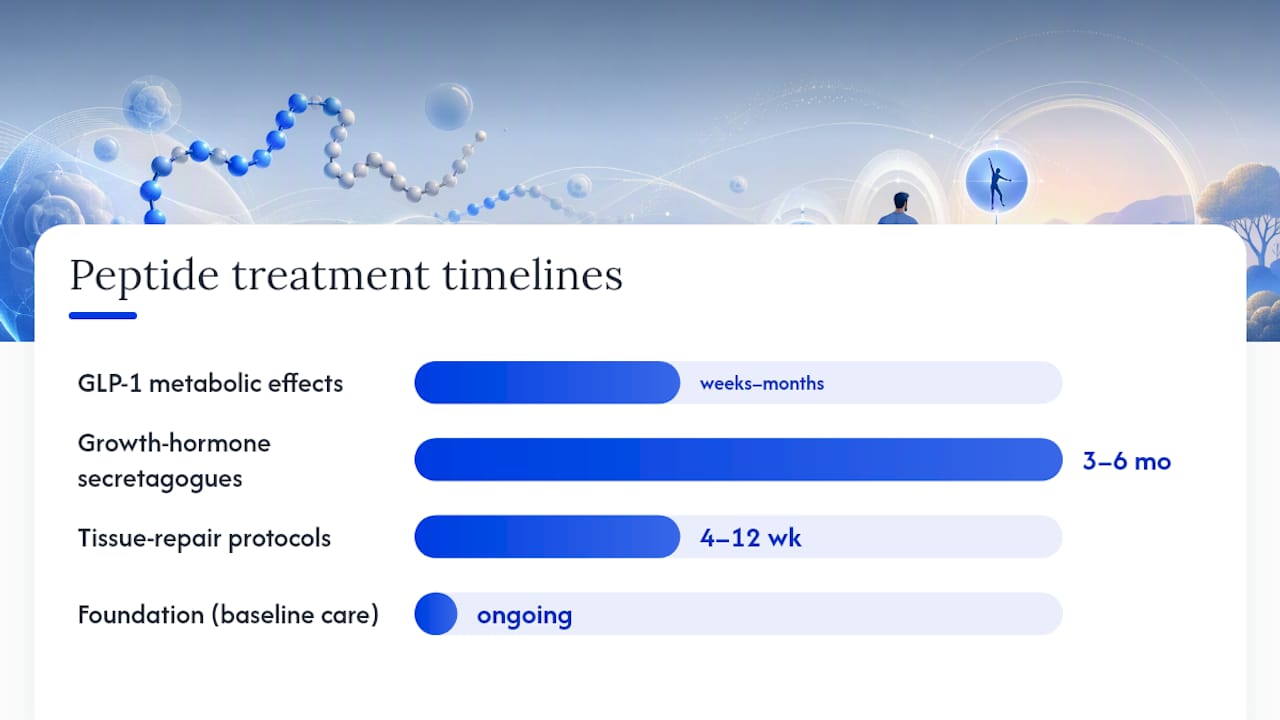
Timelines vary by class. GLP-1 metabolic effects show up within weeks to a few months. Growth hormone secretagogues typically need three to six months before body composition changes become measurable. Tissue-repair protocols run in four to twelve week cycles tied to specific injuries. Clinicians who take this field seriously tend to treat peptides as secondary optimization, something layered onto a foundation of sleep, resistance training, and nutrition rather than a substitute for it.
How Synthrolab Supports Peptide Research
Research-grade peptides and laboratory compounds with independent batch testing and certificates of analysis provide researchers with a documented purity record rather than a marketing claim. Storage and reconstitution guidance matters as much as the compound itself: peptides degrade quickly when mishandled, and shelf-life depends on temperature control from the moment a vial arrives. These products are intended for laboratory research into cellular signaling and longevity mechanisms, not for self-administration outside a clinical or research setting.
What Have Clinical Trials Actually Shown So Far?
The trial record for these compounds is lopsided. GLP-1 receptor agonists sit on a mountain of randomized controlled trial data, including large cardiovascular outcomes trials that changed prescribing guidelines nationwide. That evidence base is why GLP-1s get treated differently from the rest of this list: they are approved therapeutics with population-level outcome data, not experimental research compounds.
Elamipretide’s trial history looks different. Its path to Barth syndrome approval involved Phase II and III studies in a small, well-defined patient population with a specific mitochondrial defect, and functional endpoint results across those trials have been mixed even as the disease-specific approval went through. That nuance gets lost when the approval is cited as blanket proof that mitochondrial peptides work for general aging, which it does not establish.
For growth hormone secretagogues, tissue-repair peptides, and bioregulators like Epithalon, the human trial record is thin: small sample sizes, short follow-up windows, and often no placebo control. Reviews of the field note that reporting quality varies widely across peptide studies, and readers evaluating any trial should check for randomization, pre-registered endpoints, and outcomes that go beyond a biomarker change. A study showing a peptide “improved a marker of inflammation” is a different animal from one showing it reduced actual disease events. Right now, only GLP-1 receptor agonists and, in a narrow disease context, elamipretide clear that bar.
Do Longevity Peptides Interact With Other Medications?
Yes, and the interactions that matter most involve drugs common in aging populations. GLP-1 receptor agonists slow gastric emptying, which can alter absorption timing for oral medications taken alongside them, including some thyroid medications and oral contraceptives. They also compound hypoglycemia risk when combined with insulin or sulfonylureas, a pairing that requires dose adjustment under physician supervision.
Growth hormone secretagogues raise particular concern for patients on insulin or other glucose-lowering drugs, since GH elevation pushes blood sugar in the opposite direction. Anyone on anticoagulants should be cautious with any injectable peptide protocol given the added bleeding and bruising risk at injection sites. Peptides marketed for tissue repair are frequently stacked with anti-inflammatory supplements like curcumin or fish oil; there’s no clinical trial data validating these combinations, and stacking multiple untested agents multiplies the number of unknown interactions rather than the benefit. The research on stacking multiple peptides simultaneously generally recommends introducing one compound at a time specifically so any adverse reaction or interaction can be traced to its source.
Patients on statins, blood pressure medications, or thyroid hormone replacement should flag any new peptide protocol to the prescriber managing those drugs, since dose recalibration is common once metabolic parameters start shifting.
Is It Ethical to Use Experimental Peptides for Anti-Aging?
The ethical debate around longevity peptides splits along a few fault lines that don’t get resolved by better marketing copy. The first is consent: can someone meaningfully consent to a compound when long-term human safety data doesn’t exist for it? Bioethicists researching human enhancement generally argue that informed consent requires disclosing the actual uncertainty, not glossing over it with confident language borrowed from approved pharmaceuticals.
The second fault line is access and equity. Peptide protocols are expensive and largely self-pay, which means early access to any real benefit concentrates among wealthier patients, echoing older debates about hormone replacement therapy and elective enhancement medicine. The third is the line between treatment and enhancement itself. Using elamipretide for a diagnosed mitochondrial disease is categorically different from a healthy 50-year-old using an unapproved mitochondrial peptide hoping to feel younger, yet both get discussed under the same “longevity peptide” umbrella in casual conversation.
Physicians at academic medical centers have pushed back specifically on marketing that blurs mechanism and outcome, warning that online promotion of research peptides often conflates plausible biology with unproven human benefit. That criticism isn’t an argument against the research itself. It’s an argument against selling hope as if it were data.
Why Evidence-First Peptide Evaluation Beats Hype
The gap between what a compound does in a mouse and what it does in a person is where most longevity claims quietly fall apart, and that gap deserves more skepticism than it gets in most wellness coverage. Cautious optimism is the right posture: some of these mechanisms are genuinely promising, and dismissing the whole category would be as lazy as buying into it uncritically. Anyone experimenting with peptide protocols, clinician or researcher, should start with a single agent, measure objective markers before and after, and only add complexity once that baseline is understood.
— Mitch
Research-Grade Peptides Built for Traceable Investigation
If you’re a researcher trying to evaluate these compounds directly instead of relying on secondhand claims, sourcing quality is the variable most articles skip past. Research-grade peptides and laboratory compounds with independent batch testing and a certificate of analysis for every product provide a documented purity record rather than relying on a vendor’s word.
The beginner’s guide to safe peptide sourcing walks through storage, reconstitution, and how to read a certificate of analysis before you order anything. For a broader look at peptide types and quality standards across categories, the peptide quality and types overview covers what separates research-grade product from unregulated online sellers. Clinics, labs, and research institutions looking for bulk supply or technical support can request wholesale pricing directly from Synthrolab’s team. All products are sold for laboratory research use, not human self-administration.
This article is general information, not a substitute for advice from a qualified doctor. Consult a qualified healthcare professional about your own circumstances before acting on anything here.
Sources
FAQ
What Is the Best Peptide for Longevity?
No single peptide qualifies as “best” for longevity because no peptide has proven lifespan extension in humans. GLP-1 receptor agonists have the strongest randomized trial evidence for metabolic and cardiovascular outcomes relevant to healthy aging, while elamipretide (SS-31) is the most clinically advanced mitochondrial-targeted peptide.
Are Longevity Peptides Legit?
Some are legitimate pharmaceuticals with strong trial data, like GLP-1 receptor agonists, while others marketed under the same umbrella term remain experimental compounds with little to no human trial data. The term “longevity peptide” itself isn’t a regulatory category, so legitimacy has to be assessed peptide by peptide.
What Is a Longevity Peptide?
A longevity peptide is a short-chain amino acid compound marketed or studied for its potential to influence aging-related processes such as mitochondrial function, tissue repair, or metabolic health. The evidence quality behind that label ranges from robust human trials to preclinical animal data only.
Is There a Downside to Taking Peptides?
Yes. Risks include injection-site infection, hormonal side effects like insulin resistance from growth hormone secretagogues, and the broader problem that many peptides lack long-term human safety data, making informed decision-making genuinely difficult.
Recommended
 21+ verification